
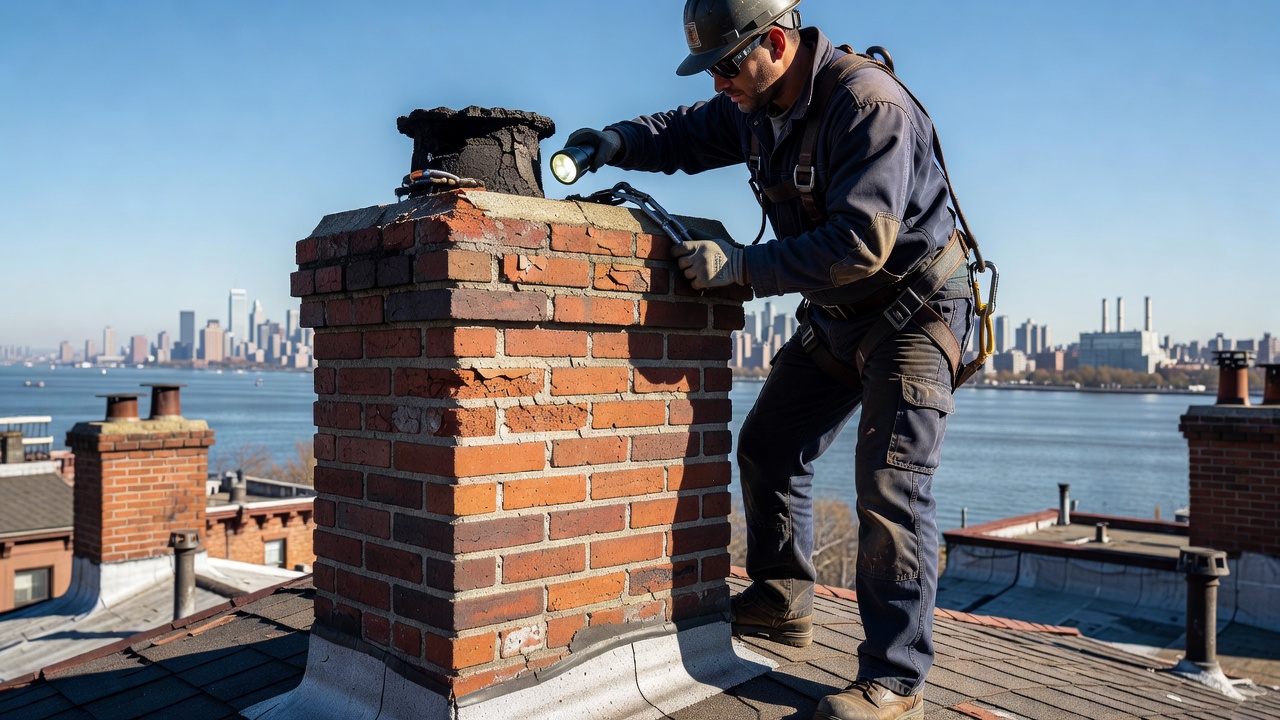
Chimney Repair in Upper East Side
If you need chimney repair on the Upper East Side, choosing a contractor familiar with older masonry buildings and Manhattan properties is important. Chimneys in townhouses, brownstones, and prewar apartment buildings can develop problems involving cracked crowns, deteriorating mortar, damaged flashing, spalling brick, and failing flue liners.
The right repair depends on the chimney’s construction, age, exposure, and maintenance history. Some problems can be addressed with localized masonry work, while others require more extensive repairs or liner replacement. An inspection helps identify the underlying issue before work begins.
Why Older Upper East Side Chimneys Need Attention
The Upper East Side includes a mix of historic townhouses, prewar apartment buildings, and newer residential properties. Many older buildings have masonry chimneys that have experienced decades of exposure to rain, temperature changes, and normal wear.
Freeze-thaw cycles can contribute to masonry deterioration. Water enters small cracks and porous materials, freezes, and expands. Repeated cycles can widen cracks, weaken mortar joints, and cause brick faces to flake or separate. This damage is commonly called spalling.
Chimney crowns also need attention because they protect the top of the masonry structure from water intrusion. Cracks or deteriorated sections can allow moisture to enter the chimney. Flashing around the roof connection is another important area to inspect because failed flashing can allow water into the roof assembly and surrounding building materials.
The East River’s proximity does not mean every Upper East Side chimney experiences the same moisture or wind damage. Building orientation, roof exposure, construction materials, and maintenance history all influence how a chimney ages.
Common Chimney Repairs on the Upper East Side
The appropriate repair depends on the inspection findings. Common chimney repair services include the following.
-
Tuckpointing and mortar joint repointing: Deteriorated mortar is removed and replaced with compatible material. On older buildings, matching the original masonry is important. Mortar that is too hard for the surrounding brick can contribute to brick damage rather than protect it.
-
Chimney crown repair and rebuilding: Small cracks may be repairable, while extensive deterioration may require rebuilding the crown. A properly constructed crown should direct water away from the masonry and include suitable protection at its edges.
-
Flashing repair and replacement: Damaged step flashing, counter-flashing, or chimney saddles may need repair or replacement to address water entry where the chimney meets the roof.
-
Flue liner repair and relining: Cracked or deteriorated clay tiles may require repair or replacement. Depending on the chimney and connected appliance, a suitable stainless-steel or other approved liner system may be recommended.
-
Spalled brick replacement: Severely damaged bricks may need to be removed and replaced. The contractor should also investigate the moisture source to reduce the likelihood of recurring damage.
-
Firebox rebuilding: Damaged firebrick and refractory mortar may need replacement with materials designed for fireplace temperatures.
The repair method should be based on the chimney’s actual condition. For example, replacing damaged brick without addressing water entry may allow the deterioration to return.
How Chimney Repair Projects Should Be Managed in Manhattan
Repair work in Manhattan buildings often requires additional coordination. A townhouse may have limited roof access, while a co-op or condominium may require advance approval from building management.
Before work begins, homeowners and building representatives should clarify:
-
Whether the contractor needs access to the roof, attic, fireplace, or other shared areas
-
Whether building management requires advance approval or specific work hours
-
How workers and materials will enter the property
-
Whether elevator reservations or protective coverings are required
-
How debris will be contained and removed
-
Whether permits or historic-preservation approvals are necessary
For exterior work on a designated landmark or a building within a New York City historic district, the Landmarks Preservation Commission may need to review the proposed work. Certain masonry repairs and restoration projects require approval even when the work does not require a Department of Buildings permit. Requirements depend on the property’s designation and the proposed scope.
The contractor should establish the applicable requirements before starting work rather than assume that all chimney repairs follow the same approval process.
Why a Chimney Inspection Matters Before Repair
A repair estimate should be based on an assessment of the chimney, not simply the most visible defect.
A Level 1 inspection is generally appropriate for routine evaluation when the chimney and appliance are being used as before and no significant changes or damage are known.
A Level 2 inspection may be appropriate when the appliance or fuel type changes, after a chimney fire or other potentially damaging event, when a property is sold or transferred, or when a Level 1 inspection cannot establish whether the chimney is suitable for continued use. It includes examination of additional accessible areas and a video scan of the flue interior when possible.
A Level 2 inspection is not automatically necessary for every chimney repair. The appropriate inspection level depends on the system’s history and the conditions identified.
After the inspection, ask for a written explanation of the findings. Photographs, video documentation, and a clear repair proposal can help property owners and building managers understand why the work is recommended.
Choosing a Chimney Repair Contractor on the Upper East Side
Before hiring a contractor, verify the company’s qualifications and ask for documentation relevant to the work.
For residential home improvement work in New York City, a Home Improvement Contractor license may be required. NYC’s Department of Consumer and Worker Protection generally requires a license for covered residential repair and improvement work. However, certain exceptions apply, including specific work arrangements involving multiple dwellings and building owners or boards. The applicable requirement depends on the property and contract.
Ask the contractor for:
-
Proof of applicable licensing and insurance
-
Experience with the type of chimney and masonry involved
-
A written description of the proposed repair
-
Details about the materials and methods to be used
-
An explanation of any required permits or building approvals
-
A projected schedule and plan for protecting the property
For co-op and condominium projects, confirm whether the building requires certificates of insurance, additional-insured documentation, workers’ compensation evidence, or other contractor paperwork. Requirements vary by building.
Frequently Asked Questions About Chimney Repair on the Upper East Side
My co-op board requires a licensed contractor for chimney work. What should I check?
Ask the building management office for its contractor requirements before scheduling the work. These may include proof of insurance, workers’ compensation documentation, licensing information, work-hour restrictions, and certificates naming the building or management company as an additional insured.
Also confirm whether the proposed work requires a New York City Home Improvement Contractor license or another approval. The rules can differ depending on whether the work is contracted by an individual apartment owner or by the building owner or board.
The brick on my townhouse chimney is flaking. Does the entire chimney need to be rebuilt?
Not necessarily. Spalling can affect individual bricks, several courses, or larger sections of masonry. The appropriate repair depends on how deeply the brick has deteriorated and whether the surrounding structure remains sound.
Localized brick replacement and repointing may be sufficient in some cases. More extensive deterioration may require partial rebuilding. A professional inspection is needed before deciding on the scope.
How long does chimney repair take in a prewar Manhattan building?
The schedule depends on the repair, access conditions, materials, and approval requirements. A localized masonry repair may take less time than a full liner replacement or chimney rebuild.
Building access can also affect the timeline. Rooftop work, elevator reservations, material delivery, and co-op approval may need to be coordinated before the contractor arrives. Ask for a project-specific schedule rather than relying on a general estimate.
Does chimney repair require a New York City permit?
Not every repair requires a Department of Buildings permit. NYC distinguishes between ordinary repairs and work that requires formal approval or permits. Historic properties may also need Landmarks Preservation Commission approval for certain exterior repairs, even when a DOB permit is not required.
The contractor and property representative should confirm the requirements for the specific building and proposed work before construction begins.
Schedule a Chimney Repair Assessment on the Upper East Side
Cracked crowns, deteriorating mortar, damaged flashing, and failing liners should be evaluated before they lead to more extensive problems. A professional assessment can help identify the cause of the damage and determine whether localized repairs or more substantial work are necessary.
Chimney Manhattan is the company named in the original service information. Before scheduling, confirm its current Upper East Side service coverage, applicable licensing, insurance, and experience with townhouse and multi-unit building projects.
Contact the company to request an inspection and written estimate. Ask what the assessment includes, whether building approvals may be necessary, and how the proposed repair will be coordinated with property management.
A clear inspection and repair plan can help protect the chimney, surrounding masonry, and the building itself.
Related from Chimney Manhattan: Chimney Sweep Lower East Side · Chimney Repair NYC — Expert Masonry & Structural Repairs in Manhat · Chimney Flashing Repair NYC — Stop Leaks Before They Wreck Your Home