
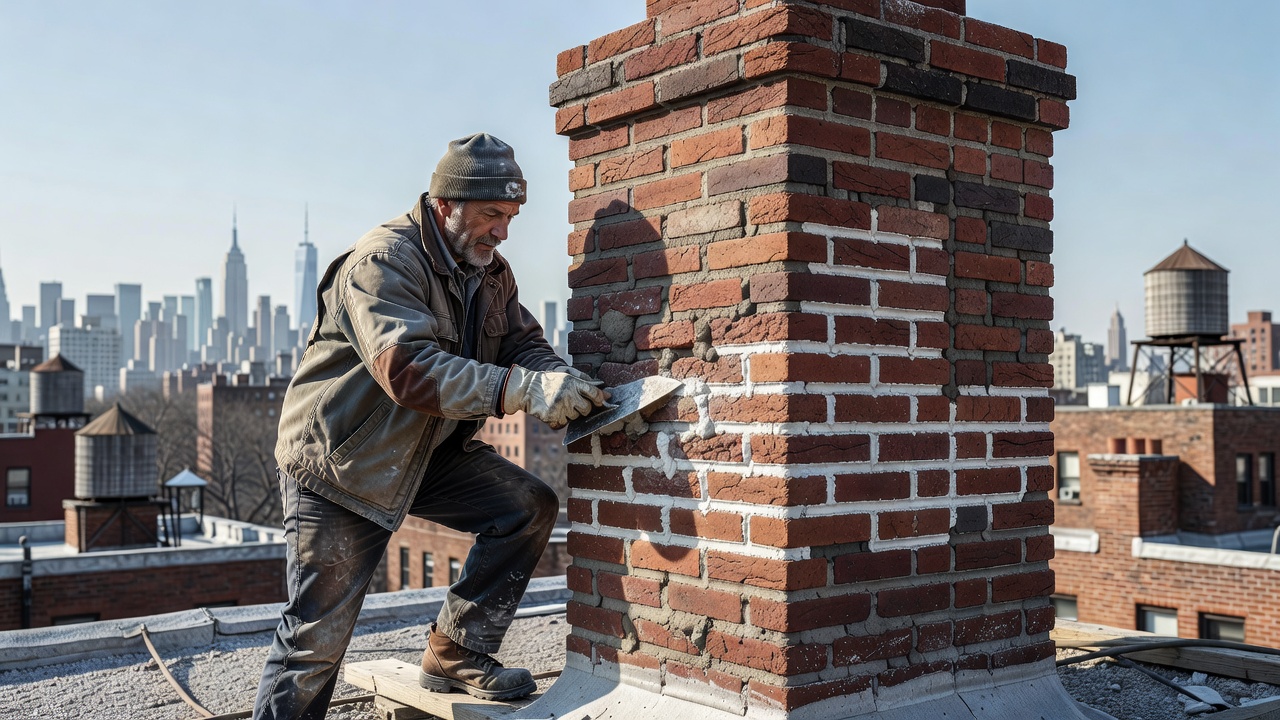
Masonry And Brick Repair in Manhattan
If you need Masonry And Brick Repair in Manhattan, Chimney Manhattan is the local team built for exactly that job. We service chimneys, fireboxes, crowns, and exterior masonry throughout the borough from Inwood and Washington Heights down through Harlem, the Upper West Side, Midtown, Chelsea, the Village, and all the way to Battery Park. Our masons understand the specific brick types, mortar formulas, and urban conditions that define Manhattan’s aging building stock, and we show up with the right materials to match them.
Masonry And Brick Repair Manhattan is not a generic service here it’s a neighborhood-by-neighborhood discipline that demands real knowledge of local construction history and the punishing climate that accelerates deterioration in this city.
Why Manhattan Buildings Need Masonry And Brick Repair More Than Most
Manhattan’s masonry faces a uniquely brutal combination of stressors that you simply don’t find in the suburbs. Understanding them is the first step toward protecting your building.
Freeze-Thaw Cycling on Pre-War Brick
Most residential buildings along the Upper West Side, Morningside Heights, and Hamilton Heights were constructed between 1880 and 1940 using soft, porous Roman brick and lime-based mortars. Every winter, moisture infiltrates microscopic cracks, freezes, expands, and fractures the face of the brick a process called spalling. By spring, you’ll see chunks of brick face littering fire escapes and rear courtyards. Left unaddressed, a single spalled brick column can compromise an entire chimney stack within three to five seasons.
Salt Air and Pollution Loading from the Hudson and East River
Buildings within a few blocks of the Hudson River waterfront Riverside Drive, West End Avenue, the far west edges of Hell’s Kitchen, and the Battery Park City esplanade absorb airborne chlorides year-round. Salt crystallizes inside the brick pore structure and forces the face apart from the inside out, a process called sub florescence. Combined with decades of diesel soot from the FDR Drive and the West Side Highway, the mortar joints on many Manhattan chimneys have effectively turned to powder inside while still appearing intact from the street.
Rooftop Vibration and Mechanical Load
Manhattan rooftops carry unusual burdens: HVAC equipment, water tanks, satellite arrays, elevator machinery. Buildings in Midtown South, Murray Hill, and the Flatiron District in particular vibrate subtly from subway lines below the IRT and BMT routes run directly beneath many masonry structures. That low-frequency vibration slowly loosens mortar joints over decades, eventually leaving chimney stacks structurally disconnected at the crown even when they look solid from below.
Tuck-Pointing Failures from Well-Intentioned but Wrong Repairs
One of the most common problems we find in the West Village, SoHo, and Tribeca is over-hard Portland cement mortar troweled into joints originally designed for soft lime mortar. Because Portland cement is far more rigid than pre-war brick, it forces movement stress into the brick face rather than allowing the joint to flex and sacrifice itself as intended. The result: horizontal cracking lines across entire chimney courses that look cosmetic but signal deep structural compromise. Reversing this error requires careful mechanical removal and proper lime-based repointing work that demands a mason who knows the difference.
Our Masonry and Brick Repair Manhattan Process
We don’t show up, slap mortar on the most visible damage, and leave. Our process is methodical because Manhattan’s buildings demand it.
Step 1 — Visual and Tap Survey
Every repair engagement begins with a close-range inspection of the chimney stack, crown, firebox throat, smoke chamber, and any accessible exterior masonry. Our masons tap brick courses systematically to detect hollow pockets that indicate moisture has already penetrated the bond between brick and mortar. We note the brick type, the original mortar composition where identifiable, and the pattern of deterioration.
Step 2 — Mortar Analysis and Mix Matching
This step is what separates genuine masonry restoration from patch jobs. For pre-war Manhattan buildings which account for the vast majority of our work we formulate a mortar mix that matches or is slightly softer than the original. We never apply a harder mortar to a softer substrate. For landmarked buildings in the Greenwich Village Historic District, the Carnegie Hill Historic District, or Strivers’ Row in Harlem, we consult the NYC Landmarks Preservation Commission (LPC) guidelines to ensure our materials and methods are compliant before we pick up a grinder.
Step 3 — Joint Preparation
Old or incompatible mortar is removed mechanically to a minimum depth of three-quarters of an inch never by chisel blows that can fracture the adjacent brick. On narrow joints common to rowhouses in the East Village and Hamilton Heights, we use diamond-tipped oscillating tools that remove mortar cleanly without widening the joint.
Step 4 — Brick Replacement Where Necessary
Severely spalled or fractured brick is replaced individually. We source matching brick from regional suppliers and specialty salvage yards a critical detail for buildings subject to LPC review. Color, texture, and coursing must be consistent; a mismatched replacement brick on a landmarked Upper West Side townhouse is a citation waiting to happen.
Step 5 — Crown Repair and Waterproofing
The chimney crown is the concrete or mortar cap that seals the top of the chimney stack. It is the single most exposed masonry element on a Manhattan rooftop and is routinely cracked by thermal expansion, freeze-thaw, and foot traffic from HVAC maintenance crews. We rebuild or repair crowns with a proper overhang and drip edge so water sheds away from the stack rather than running down its face. After all masonry work cures, we apply a vapor-permeable penetrating sealer that blocks liquid water while allowing moisture vapor to escape — never a film sealer that traps moisture inside and accelerates freeze damage.
Based in NYC, Serving All of Manhattan
Chimney Manhattan is a New York City chimney and masonry company. We are not a franchise dispatching subcontractors from New Jersey. Our crews are familiar with Manhattan job-site realities: coordinating with building superintendents, working within co-op and condo board inspection windows, navigating Department of Buildings (DOB) permit requirements for structural masonry repairs, and managing scaffold logistics on narrow sidewalks in compliance with NYC DOT rules. We carry the insurance levels required by Manhattan co-op boards and file all necessary DOB permits when the scope of work demands them.
Neighborhoods and Areas We Serve
- Inwood and Marble Hill
- Washington Heights and Fort George
- Hamilton Heights and Sugar Hill
- Harlem and East Harlem (El Barrio)
- Morningside Heights and Hudson Heights
- Upper West Side (including Riverside Drive historic rowhouses)
- Upper East Side and Carnegie Hill
- Yorkville and Lenox Hill
- Midtown West and Hell’s Kitchen (Clinton)
- Midtown East, Murray Hill, and Kips Bay
- Gramercy Park and Stuyvesant Town area
- Chelsea and the Flatiron District
- Greenwich Village and West Village
- East Village and Alphabet City
- NoHo, SoHo, and Nolita
- Tribeca and the Financial District
- Battery Park City and Lower Manhattan
- Two Bridges and the Lower East Side
If your building is in Manhattan and has a masonry issue, we can reach you. Call us to confirm availability for your specific block.
Frequently Asked Questions About Masonry and Brick Repair in Manhattan
My co-op board requires a licensed contractor for masonry work on the chimney. Do you meet that requirement?
Yes. We are fully licensed and insured to perform masonry and chimney repair work in New York City, and we carry the liability and workers’ compensation coverage levels that Manhattan co-op and condo boards typically require. We can provide certificates of insurance directly to your managing agent and file required DOB permits for structural repairs. If your board has a specific contractor vetting process, contact us and we’ll walk through it with your super or property manager before any work begins.
My building is in the Greenwich Village Historic District. Can you repair the chimney without running into Landmarks Preservation Commission issues?
This is a real concern and one we take seriously. For chimneys on landmarked buildings or within LPC-designated historic districts which include large swaths of Greenwich Village, the Upper West Side, Carnegie Hill, and Harlem some masonry repairs require a Certificate of No Effect or a Certificate of Appropriateness from the LPC before work begins. We are familiar with those requirements, use historically appropriate lime-based mortars and matching brick sourced to meet LPC standards, and can advise you on whether your specific repair triggers a permit filing. We’ve worked on landmarked rowhouses throughout the Village and on the Upper West Side and understand the process from start to finish.
How urgent is it to fix spalling brick on my Manhattan chimney if the fireplace still seems to draw fine?
Very urgent and the two issues are not as separate as they appear. Spalling brick exposes the interior masonry system to water infiltration. Once water enters the chimney structure, it attacks the mortar joints, the smoke chamber parging, the flue tile liner, and eventually the firebox itself. Manhattan winters average roughly 30 freeze-thaw cycles per season in the boroughs, and each cycle widens the damage. A chimney that draws fine today can develop a structurally compromised stack or a cracked flue liner within two or three seasons if spalling is left unaddressed. The cost to repair a spalled exterior course is a fraction of the cost to rebuild a deteriorated flue liner or reset a leaning stack. Schedule an inspection before the next heating season begins.
Schedule Your Masonry And Brick Repair Inspection in Manhattan Today
Damaged brick and failing mortar do not stabilize on their own in a Manhattan winter. Every month you wait is another freeze-thaw cycle working against your building’s masonry. Chimney Manhattan provides honest, thorough inspections and clear repair estimates with no pressure and no upselling. We’ll tell you exactly what needs to be done now, what can wait, and why in plain language you can bring to your co-op board or building manager.
Call Chimney Manhattan today to schedule your masonry inspection. We serve all Manhattan neighborhoods, work within co-op board and DOB requirements, and bring genuine masonry expertise to every job not a caulk gun and a coat of paint.
Phone: (212) 999-1234
Service Area: All of Manhattan, New York City
Scheduling: Available Monday through Saturday. Same-week appointments often available.
Related from Chimney Manhattan: Masonry And Brick Repair in Manhattan