
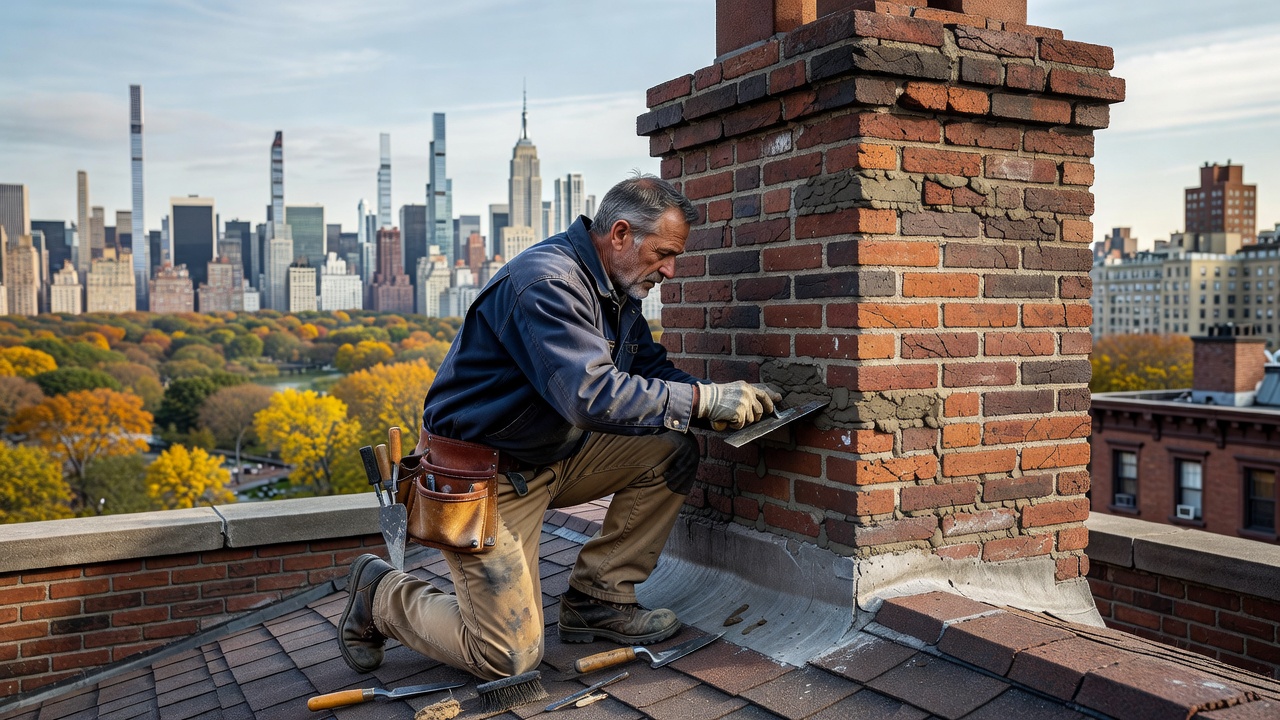
Masonry And Brick Repair in Manhattan
If you need Masonry And Brick Repair in Manhattan, Chimney Manhattan is the local team ready to help serving neighborhoods from Inwood to the Financial District with hands-on masonry expertise built around New York City’s specific building stock and climate. Masonry And Brick Repair in Manhattan is not a seasonal luxury; after every freeze-thaw cycle that rolls through the borough between November and March, cracked mortar joints and spalled bricks become urgent safety and code concerns, especially on the pre-war chimneys that crown so many Upper West Side brownstones and East Harlem tenements.
We work directly from our Manhattan base, which means we arrive familiar with what a February nor’easter does to a 1920s limestone-faced chimney on Riverside Drive and we bring the right materials to match the historic mortar profiles that Landmarks Preservation Commission guidelines often require in landmarked districts like the Upper East Side Historic District or Greenwich Village.
Why Manhattan’s Winters Hit Brick and Mortar Harder Than You’d Expect
Manhattan sits in USDA Hardiness Zone 7b, but chimney masonry on a rooftop 60 or 80 feet above street level experiences something closer to Zone 6 conditions wind chill, freeze-thaw cycling, and acid rain from urban air quality all accelerate mortar deterioration at roughly twice the rate of brickwork at ground level. The borough’s specific challenges include:
- Freeze-thaw spalling: Water infiltrates hairline cracks during October rains, freezes in January, and physically pops the face off bricks a process called spalling that is epidemic on the soft “salmon” bricks common in pre-1940 Manhattan construction.
- Acid rain erosion: Urban pollution in a dense borough like Manhattan converts rainfall to mild sulfuric acid, which eats calcium-rich historic mortar far faster than rural equivalents.
- Thermal expansion from rooftop heat islands: Dark tar-and-gravel roof membranes on Manhattan’s flat rooftops retain heat and transmit it directly to chimney bases, creating micro-expansion stress at the crown and flashing junction.
- Settlement cracks in high-rise adjacent buildings: Midtown and Lower Manhattan construction the constant parade of new foundation drilling along Second Avenue, Hudson Yards, and the Far West Side sends ground vibrations through the bedrock and into the footings of neighboring walk-ups and brownstones, cracking mortar joints from the bottom up.
- Salt air from the Hudson and East River: Buildings along Riverside Boulevard, Battery Park City, and the East River waterfront see accelerated efflorescence and mortar washout from salt-laden air.
Left unaddressed, these issues allow water into your chimney’s interior, rusting fireboxes, rotting adjacent floor joists, and eventually threatening the structural integrity of the entire stack.
The Masonry and Brick Repair Work We Actually Do Here in Manhattan
Every masonry repair job starts with a visual inspection and, where warranted, a Level II chimney inspection camera scan so we understand what is happening inside the flue before we touch the exterior. From there, our Manhattan masonry work typically includes:
- Tuckpointing and repointing: We remove deteriorated mortar to a minimum depth of ¾ inch (the industry standard per ASTM C270) and pack it with a mortar mix matched to the compressive strength of your original brick. In landmarked buildings in Chelsea, the West Village, or Carnegie Hill, we use pre-hydrated Type N or lime-putty mortars that meet LPC specifications never a hard Portland-cement mix that can crush soft historic brick.
- Spalled brick replacement: We source salvage bricks from demolition yards in the Bronx and Brooklyn critical for matching the color and texture of pre-war Manhattan clay brick that is no longer manufactured.
- Crown repair and rebuilding: Chimney crowns on Manhattan row houses are often poured concrete that has cracked and lifted. We rebuild crowns with a sloped, reinforced crown that overhangs the stack by at least 2 inches on each side to shed water clear of the masonry below.
- Flashing repair and step-flashing installation: The junction between the chimney and the roof is the single most common point of water entry we see in Manhattan. We use stainless steel or copper step-flashing and counterflashing embedded into the mortar joint not just caulked, which fails within a few seasons in the city’s temperature swings.
- Waterproofing with vapor-permeable sealers: We apply a breathable, siloxane-based penetrating sealer never a film-forming sealer that traps moisture inside the brick.
- Lintel and corbel repair: Steel lintels above fireplace openings in Manhattan townhouses frequently rust and expand, fracturing the brickwork above the opening a structural repair we handle with lintel replacement and rebricking.
The Neighborhoods and Buildings We Know by Name
Chimney Manhattan is based in and serves the entire borough of Manhattan, including every neighborhood from the tip of the island northward. We work regularly in:
- Upper Manhattan: Inwood, Washington Heights, Hamilton Heights, Harlem, East Harlem (El Barrio), Manhattanville, Morningside Heights
- Upper West Side and Upper East Side: Riverside Drive townhouses, Central Park West co-ops, Fifth Avenue buildings, Carnegie Hill brownstones, Yorkville
- Midtown: Hell’s Kitchen, Clinton, Murray Hill, Kips Bay, Turtle Bay, Tudor City where older low-rise buildings sit in the shadow of glass towers and absorb construction vibration year-round
- Downtown and Lower Manhattan: Greenwich Village, West Village, SoHo, Tribeca, the Financial District, Battery Park City, Two Bridges, Chinatown, the Lower East Side
- East Side: Gramercy Park, Stuyvesant Town, Alphabet City, the East Village
We are also familiar with the building typologies specific to Manhattan the Flemish-bond brownstone fronts of the West 80s, the painted brick row houses of Harlem, the limestone-clad co-ops of Park Avenue, and the exposed-brick loft buildings of SoHo and Tribeca. Each building type has its own masonry vocabulary, and we speak it.
How We Work Around Manhattan’s Unique Access and Logistics
Getting masonry materials and scaffolding to a Manhattan rooftop is not the same as pulling into a suburban driveway. We are experienced with:
- Street-work permits from the NYC Department of Transportation for sidewalk shed and scaffold installation
- Coordinating deliveries during off-peak hours to avoid Midtown congestion pricing zones and block-face restrictions
- Working in building co-ops and condos that require insurance certificates, board notification, and restricted work hours typically 8 a.m. to 5 p.m. on weekdays per most Manhattan building rules
- Accessing rooftops via interior building stairs when aerial lifts cannot be permitted on narrow side streets in the Village or on landmarked blocks
We carry full general liability insurance and workers’ compensation coverage, and we provide certificates of insurance in the format required by most Manhattan co-op and condo boards upon request.
Frequently Asked Questions About Masonry and Brick Repair in Manhattan
Do I need Landmarks Preservation Commission approval before repointing a chimney on my Manhattan brownstone?
It depends on whether your building is in a designated historic district or is itself a landmarks-listed property. If you are in areas like the Greenwich Village Historic District, the Riverside–West End Historic District, or the Harlem and Hamilton Heights historic districts, exterior masonry work including repointing typically requires an LPC permit. We are familiar with the documentation and mortar specification requirements the LPC expects, and we can help you identify whether your address falls within a regulated district before work begins.
My building is in Midtown near a major construction site. Could subway or foundation drilling have caused my chimney cracks?
Yes, and this is more common than most Manhattan homeowners realize. Ground-borne vibration from pile driving, rock blasting, and tunnel boring like the work that accompanied the Second Avenue Subway extension and continues on various Midtown developments can propagate through the Manhattan schist bedrock and manifest as diagonal stair-step cracking in chimney mortar joints, particularly at the base of the stack. If you suspect construction-related damage, we recommend documenting the cracks with dated photographs and getting a professional assessment promptly, as there are time-limited procedures for filing vibration damage claims with the NYC Department of Buildings.
How long does tuckpointing on a Manhattan rooftop chimney typically take, and when is the best season to schedule it?
A standard single-flue chimney repointing on a Manhattan row house or brownstone assuming access is manageable typically takes one to two days of crew time. The ideal scheduling window in New York City is late spring (mid-April through June) or early fall (September through mid-October). Mortar needs to cure at temperatures above 40°F for at least 72 hours, which rules out most January and February work windows. Booking in spring also lets repairs cure fully before the next freeze-thaw season begins in November the timeline that does the most damage to neglected mortar joints.
Schedule Your Masonry and Brick Repair Consultation in Manhattan Today
A spalled brick or open mortar joint in Manhattan is not a cosmetic inconvenience it is a water infiltration pathway that can cause thousands of dollars in interior damage within a single winter season, and in serious cases it is a falling-masonry hazard with real liability implications under New York City Local Law 11 (Façade Inspection Safety Program), which governs exterior masonry on buildings taller than six stories.
Do not wait until after the next nor’easter to find out how serious the damage is. Chimney Manhattan is ready to inspect, assess, and repair your chimney masonry with the local knowledge, material matching, and regulatory familiarity that Manhattan buildings specifically demand.
Call Chimney Manhattan today or use our online contact form to schedule a professional masonry inspection and get a clear, itemized estimate no pressure, no jargon, just straight answers from a team that knows Manhattan chimneys.
Related from Chimney Manhattan: Masonry And Brick Repair in Manhattan