
Essential Chimney Sweep Washington Heights Manhattan: When Your Fireplace Is Telling You Something
Most Washington Heights residents don’t think about their chimney until something goes wrong. But your chimney is usually pretty loud about it if you know what to listen for. A chimney sweep Washington Heights Manhattan homeowners schedule in fall is almost always less expensive, less disruptive, and far safer than the emergency call that comes after ignoring the signs. This post is about those signs. Know them. Take them seriously.
Last winter, a family on Cabrini Boulevard near 181st Street called us in a panic. They’d been using their fireplace all season without issue or so they thought. One evening, their smoke detector went off during a fire that seemed to be burning fine. No visible smoke in the room. No obvious problem. Our technician found nearly three-quarters of the flue blocked by third-degree glazed creosote and a partial liner collapse that had been funneling carbon monoxide toward the living space. The fireplace looked and sounded normal. It wasn’t.
That’s the danger. These problems hide. But they do leave clues.
Warning Signs Your Chimney Needs Attention Right Now
A Smell Like Campfire — Even When Nothing Is Burning
Walk past your fireplace on a warm day, or after rain, and catch a whiff of old smoke? That’s not normal. It usually means creosote or soot has built up heavily inside the flue, or that water is getting in and activating those deposits. The Chimney Safety Institute of America states that creosote is the leading cause of chimney fires, and that glazed, third-degree creosote is extremely difficult to remove and highly flammable. A campfire smell between fires is a direct signal that you have a buildup problem. Call a pro now doesn’t wait for the next season.
Smoke Backing into the Room
If smoke rolls back into your living space when you have a fire going, something is blocking or restricting airflow in your flue. In Washington Heights, where many buildings along Fort Washington Avenue and Pinehurst Avenue were built in the 1920s and 1930s, partial liner deterioration and animal nesting inside the flue are common causes. A bird or squirrel nest can block enough of the flue to create a serious backdraft situation. This is a call-a-pro-now sign, full stop.
White Staining on the Outside of Your Chimney
That chalky white residue on the brick exterior is called efflorescence. It means water is moving through your masonry and carrying mineral salts to the surface as it evaporates. On its own, you can keep an eye on it through one season and schedule a non-urgent inspection. But if the staining is heavy, recurring, or appearing alongside crumbling mortar joints, you’re looking at active water infiltration that will accelerate liner and firebox damage. In Manhattan’s climate freeze-thaw cycles every winter this deteriorates faster than most people expect.
Crumbling or Missing Mortar Joints at the Crown or Chimney Top
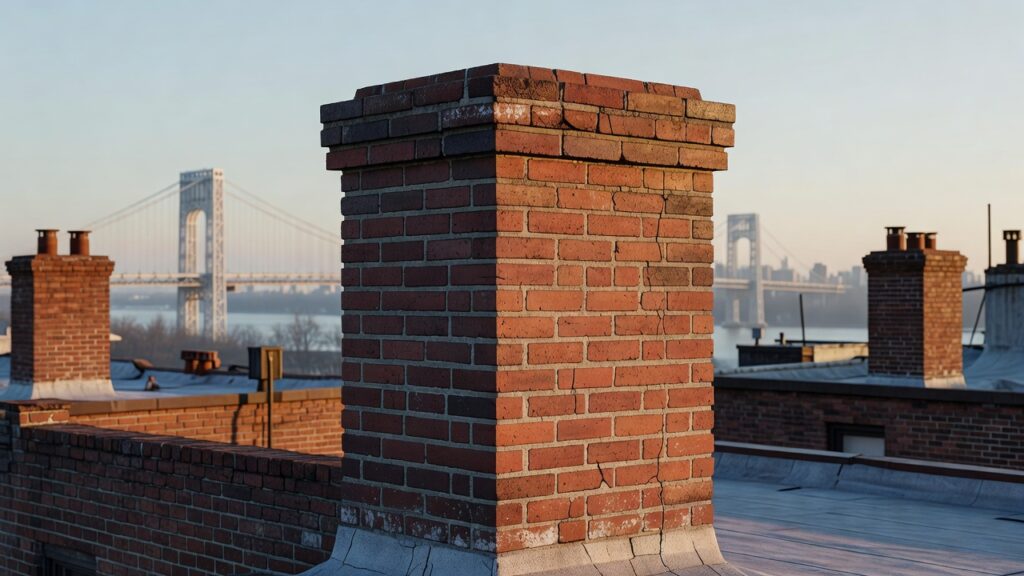
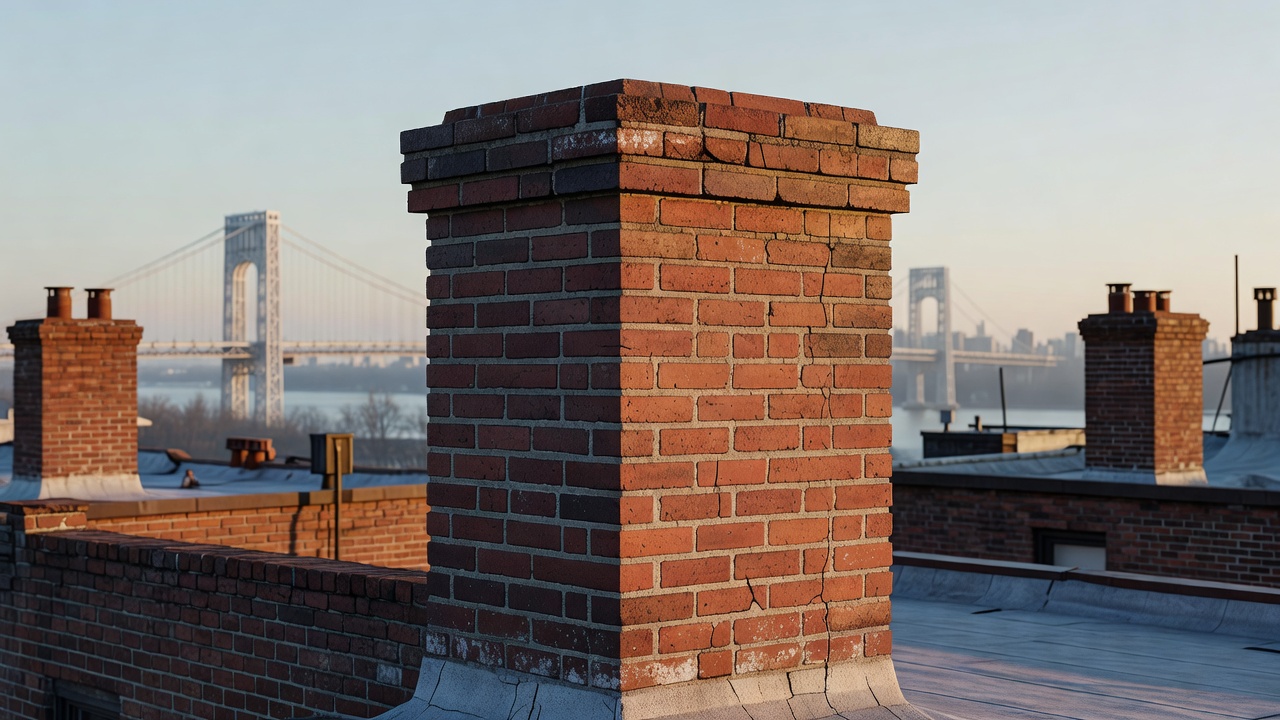
Lean out a window or get on the roof if it’s safe, and look at the cap and crown of your chimney. Mortar that is cracked, missing, or crumbling is an open door for water. Once water gets into the liner system, you’re looking at spalling brick, rusted dampers, and in serious cases, a compromised liner that allows combustion gases including carbon monoxide to enter the living space. Call a pro now. This is not a “watch it” situation in a building that runs heat from October through April.
A Damper That Is Stuck, Corroded, or Won’t Seal Properly
Your damper should open and close smoothly and seal tightly when closed. If it grinds, won’t budge, or you can feel cold air coming down the flue when it’s supposed to be shut, the damper is compromised. A failed damper costs you heat and energy every single month, but more importantly, a damper that won’t fully open during a fire restricts venting. Keep an eye on minor stiffness sometimes a sweep can clean and adjust it during a routine visit. If it’s stuck open or won’t close at all, schedule the appointment before your next fire.
Dark Staining Around the Fireplace Opening or on the Firebox Wall
Smoke stains that appear above the firebox opening, on the mantel, or on the wall surrounding your fireplace indicate that smoke is escaping the system somewhere it shouldn’t be. This can point to a flue that’s too small for the firebox opening, a partial blockage, or a damaged smoke chamber. In townhouses and co-ops from Inwood down through Morningside Heights, we see this frequently in renovated units where the fireplace was opened back up without an updated inspection. Call a pro now staining on the wall means the smoke went somewhere other than the flue.
Shaling — Small Pieces of Tile or Flue Liner at the Bottom of the Firebox
Open your firebox and look at the floor. Do you see small, flat fragments of clay tile? That’s called shaling, and it means your liner is actively breaking apart from the inside. The National Fire Protection Association’s standard NFPA 211 requires that chimneys, fireplaces, and vents be inspected at least once a year and cleaned as necessary and a deteriorating liner is exactly the kind of hazard that inspection is designed to catch before it becomes a fire or a carbon monoxide incident. Shaling is a call-a-pro-today sign. Do not use the fireplace until the liner is assessed.
Visible Rust on the Damper or Firebox
Rust inside the firebox is a symptom of chronic moisture. Water is getting in through the crown, cap, flashing, or liner joints and sitting. Rust on the damper plate usually means the damper no longer seals well. If you’re seeing rust and haven’t had an inspection in more than a year, keep an eye on it only if the rust is surface-level and the damper still functions. If the damper is flaking or pitted, or if the rust has spread to the firebox walls, schedule an inspection before you run another fire.
The Carbon Monoxide Risk Nobody Talks About Enough
We work in a lot of buildings between 155th Street and Dyckman Street, and the question we hear most often is some version of: “But I have a carbon monoxide detector.” Detectors are essential. They are not a substitute for a functioning, structurally sound chimney. The U.S. Fire Administration reports that heating fires account for approximately 15 percent of all residential structure fires, with chimney-related failures being a leading cause. Carbon monoxide can accumulate in a living space well below the threshold that triggers most standard alarms, particularly in an older building with shared flue systems which is common in pre-war Washington Heights apartment buildings and co-ops.
The signs above are your early warning system. A professional sweep and inspection is the follow-through.
What a Professional Chimney Sweep in Washington Heights Actually Does
When our team shows up to a Washington Heights address, we’re not just brushing soot. We’re doing a systematic inspection of the firebox, smoke chamber, damper, liner, crown, cap, and flashing looking for every one of the warning signs described above and a dozen more that aren’t visible to the naked eye without proper lighting and tools. For buildings with multiple units sharing a flue chase, we note any signs of cross-venting or shared flue issues, which are building code concerns under New York City’s fire code requirements for multi-family dwellings.
A standard Level 1 inspection and cleaning in 2026 typically runs between $225 and $375 for a single flue in a residential Manhattan unit, depending on access and condition. If the signs above are present, the cost of ignoring them is orders of magnitude higher.
Frequently Asked Questions
How often should I schedule a chimney sweep in Washington Heights, Manhattan?
NFPA 211 recommends a professional inspection and cleaning at least once per year for any chimney that is in use. In Washington Heights, where many buildings are pre-war and flues may be shared or have aging clay tile liners, we recommend scheduling before the heating season begins typically September or October so any issues are identified before you start running fires regularly. If you’ve had a particularly heavy burning season or notice any of the warning signs above, don’t wait for the annual cycle.
Can I use my fireplace if I’m seeing some of these warning signs?
It depends on the sign. Minor efflorescence or a slightly stiff damper may allow for cautious continued use while you schedule a non-urgent appointment. But shaling tile fragments in the firebox, smoke backing into the room, or a campfire smell with no fire burning are reasons to stop using the fireplace immediately and call a professional. When in doubt, don’t run a fire. The cost of an inspection is far lower than the cost of a chimney fire or a carbon monoxide incident.
My building’s super says the chimney was cleaned last year. Do I still need my own inspection?
Building-wide cleanings vary significantly in scope and quality. They often address shared flue passages but may not include a detailed inspection of your individual firebox, damper, or the liner section serving your unit. The CSIA recommends hiring a certified chimney sweep who can document the condition of your specific system in writing. If you’re actively using your fireplace especially in a co-op or rental unit with a shared flue a personal inspection is worth the investment. We can provide a written report you can share with your building management if needed.
Schedule Your Free Chimney Sweep Today
If you recognized one or more of these warning signs in your own fireplace, don’t sit on it. Our team serves Washington Heights, Inwood, Hamilton Heights, and the full length of Manhattan. We know these buildings their ages, their quirks, and their flue layouts and we’ll give you a straight answer about what we find. Contact Chimney Manhattan today to schedule your inspection and cleaning before the problem gets more serious or more expensive.