
Essential Chimney Waterproofing Manhattan NYC: 2026 Guide for Upper East Side Residents
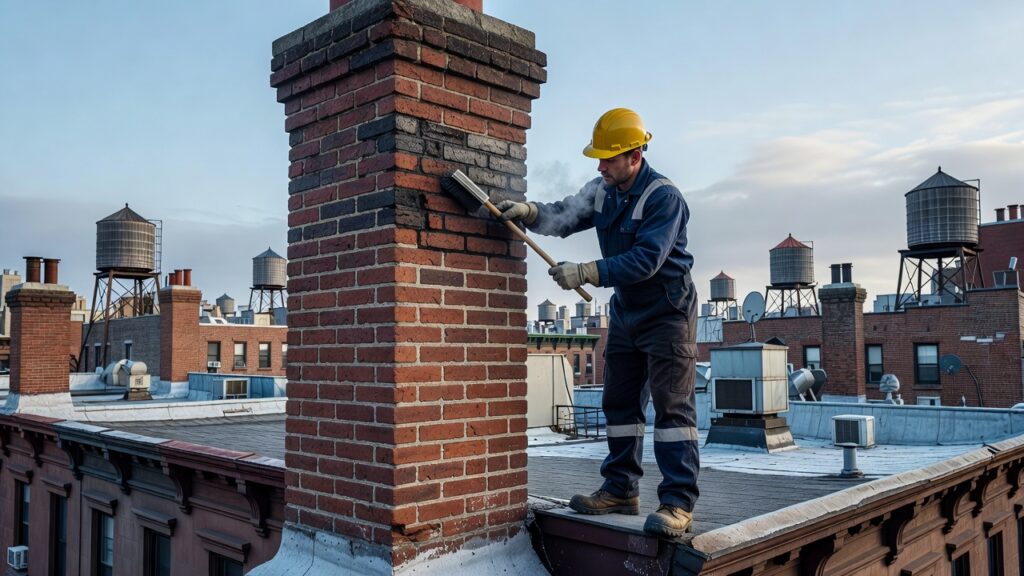
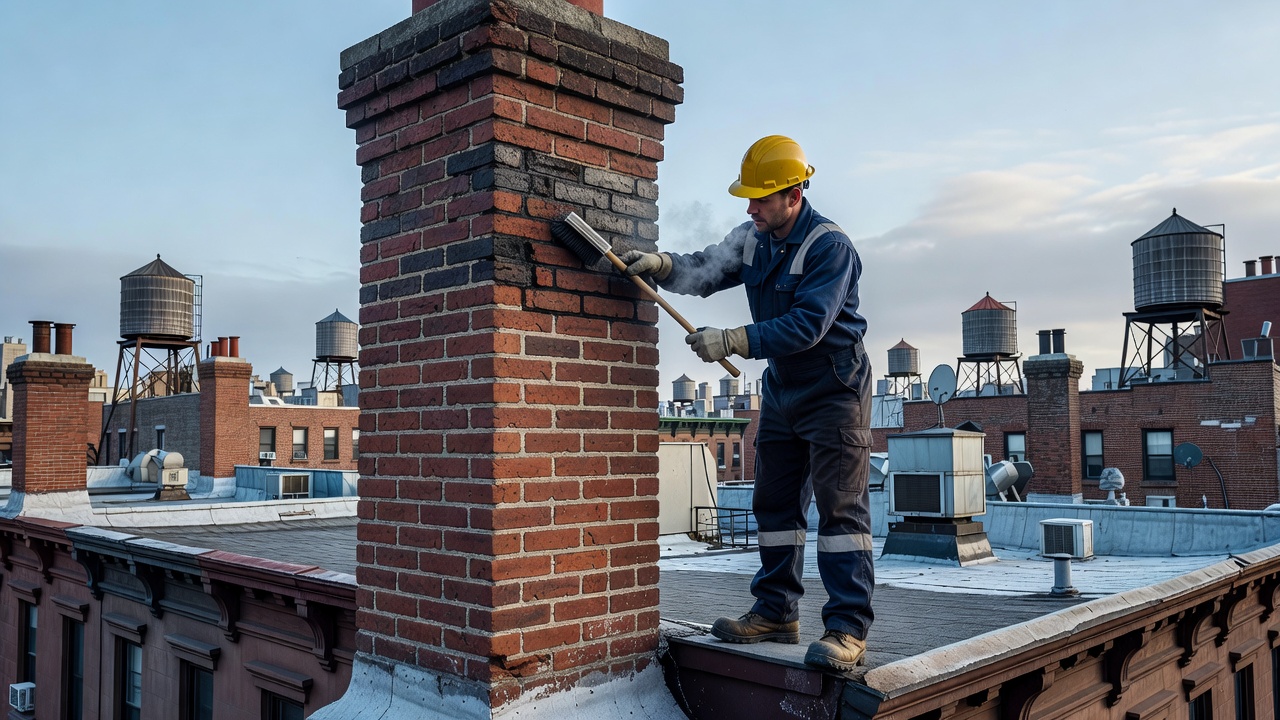
Your chimney sits exposed on a Manhattan rooftop twelve months a year, and in this city, that means something. A co-op owner on East 84th Street near Lexington Avenue called us last spring after her fireplace started weeping rust-colored stains down the firebox walls. The building super had already patched the crown once. The problem was back inside six weeks. What she needed and what a lot of Upper East Side homeowners eventually discover was proper chimney waterproofing Manhattan NYC professionals are trained to do. Not caulk. Not roof tar. Actual penetrating sealant applied to a prepared, sound masonry surface.
This post lays out what that job actually involves, what a capable homeowner can handle themselves, and where the line is between a reasonable weekend project and something that quietly gets worse if you guess wrong.
Why Water Is the Real Enemy of Manhattan Chimneys
Brick and mortar are porous. Every freeze-thaw cycle and New York runs through dozens of them between November and March forces water deeper into those pores. It expands, it contracts, it widens hairline cracks. On a prewar brownstone on East 91st Street or a limestone-trimmed townhouse on Fifth Avenue in Carnegie Hill, the masonry itself may be over a hundred years old. The original lime mortar is often softer than the brick it holds, which is actually by design, but that softness also means it absorbs moisture readily.
Add in the freeze-thaw cycle, acid rain, and the condensation that builds inside a flue during cold months, and you have a system that pushes water in from every direction. According to the National Fire Protection Association (NFPA 211), chimneys, fireplaces, and vents should be inspected at least once per year and cleaned as necessary to reduce fire and carbon monoxide risks and water damage found during those inspections is one of the most common reasons a chimney goes from functional to structurally compromised without the owner noticing.
What the Full Waterproofing Job Actually Looks Like
Done right, chimney waterproofing is not a single product applied in an afternoon. It is a sequence, and skipping steps in that sequence is why so many “repaired” chimneys leak again the following winter.
First, the chimney gets a proper inspection ideally a Level 2, which includes camera inspection of the flue liner. You cannot seal overactive deterioration and expect good results. Second, any failed mortar joints get tuckpointed and any cracked or deteriorated crown gets rebuilt or resurfaced. Third, the flashing at the roofline is checked. Flashing failure accounts for a significant share of what homeowner’s mistake for chimney leaks water follows the chimney stack down and enters at the roof plane, not necessarily through the masonry itself. Fourth, only after all that prep work is done does the penetrating sealant go on.
The product matters too. Paint-grade sealers trap moisture. Professional-grade penetrating sealants the kind that are vapor-permeable let the masonry breathe while blocking liquid water from entering. That distinction is not marketing language; it is the reason improperly sealed chimneys on the Upper West Side and in Yorkville fail after one or two seasons while properly waterproofed ones hold up for years.
What a Homeowner Can Reasonably Handle
We are going to be straight with you: there are pieces of this job a capable, careful homeowner can do.
If your chimney is accessible from a flat roof or a low parapet common on certain Murray Hill and Gramercy Park co-op buildings and you can get up there safely, you can do a basic visual inspection of the crown, the cap, and the mortar joints. You can photograph what you see and bring that information to a contractor. That is genuinely useful.
You can also clean the firebox interior with a stiff brush and a vacuum, check the damper operation, and make sure the cap screen is intact and unobstructed. If you see efflorescence those white mineral deposits on the exterior brickwork you can scrub that off with a diluted cleaning solution. It is a cosmetic issue at that stage, not a structural one.
If the chimney crown has a minor hairline crack and you have masonry experience, applying a purpose-made crown repair sealant is a job some homeowners tackle. The product is available at masonry supply houses, and the application is straightforward on an accessible crown.
Where You Should Call a Pro and Why It Matters
Everything else on this list is where we see DIY attempts create real problems.
Tuckpointing looks deceptively simply. The reality is that matching mortar composition lime content, aggregate, color to a prewar building in Lenox Hill or Carnegie Hill is a skill that takes time to develop. Wrong mortar mix damages brick. It can actually accelerate moisture intrusion because mismatched mortar fails faster than the original, and harder mortar traps moisture against softer brick rather than letting it migrate outward.
Flashing repair on a Manhattan rooftop is roofing work, often requires coordination with the building, and in a co-op or condo setting almost certainly requires board notification and licensed contractor documentation. Doing it yourself without proper insurance coverage and NYC permit awareness is a liability exposure you do not want.
Applying penetrating sealant to the full chimney exterior sounds manageable until you consider that most Manhattan chimneys require scaffolding or swing stage access to reach the full stack. The Chimney Safety Institute of America (CSIA) states that certified professionals are trained to identify structural hazards, code violations, and venting problems that untrained workers may miss and on a four-story Yorkville brownstone, working off a ladder on an uneven rooftop surface is exactly the kind of situation where that experience gap costs someone their safety.
The U.S. Fire Administration reports that heating fires account for approximately 15 percent of all residential structure fires in the United States, with chimney-related failures being a leading cause. Water damage that goes unaddressed accelerates those structural failures. The math on hiring a licensed professional for the high-stakes portions of this job is not complicated.
What Getting It Wrong Actually Costs
We have quoted repairs on Upper East Side buildings where a previous contractor — or the homeowner — applied standard exterior masonry sealer instead of a vapor-permeable product. The moisture that entered before the sealer was applied had nowhere to go. Spalling brick, delaminating mortar, interior water damage to the firebox surround. Jobs that would have cost $800 to $1,200 done correctly the first time turned into multi-thousand-dollar repair scopes once the masonry deterioration was fully assessed.
In a building with shared chimney chases which describes almost every pre-war high-rise from the East 60s through Washington Heights your failed waterproofing job can create water intrusion problems in a neighbor’s flue. That is a conversation nobody wants to have with the co-op board.
Honest expectations: a professional chimney waterproofing job in Manhattan in 2026, including crown repair and penetrating sealant on an average townhouse or brownstone chimney stack, typically runs between $600 and $1,800 depending on stack height, access complexity, and the condition of the crown and mortar. If flashing work is needed, that is a separate line item. Get it quoted in writing, check for CSIA certification, and ask for proof of liability insurance before anyone goes on your roof.
Frequently Asked Questions
How often does a Manhattan chimney need to be waterproofed?
A properly applied penetrating sealant on sound masonry typically lasts eight to ten years under normal conditions. In Manhattan, where acid rain, freeze-thaw cycles, and rooftop wind exposure are more intense than suburban environments, we generally recommend a visual inspection every two to three years and reapplication when the sealant shows signs of failure — usually indicated by water absorption returning to the brick surface. Any time you have mortar work or crown repair done, that section should be resealed.
Can I use a standard masonry sealer from a hardware store on my chimney?
Most standard masonry sealers sold at hardware stores are film-forming products — they coat the surface rather than penetrating the masonry. On a chimney, where the flue generates heat and the exterior is exposed to moisture from multiple directions, film-forming sealers trap moisture inside the masonry and cause accelerated spalling. Professional chimney waterproofing uses vapor-permeable penetrating sealants specifically formulated for above-grade chimney masonry. The product distinction is real and it matters. Using the wrong sealer can make deterioration worse, not better.
Does my co-op or condo building need to approve chimney waterproofing work?
In most Manhattan co-op and condo buildings, any work on the roof or building exterior including chimney work requires board approval and often a licensed and insured contractor with a certificate of insurance naming the building. The specifics vary by building, so check your proprietary lease or condo documents and notify your property manager before scheduling work. Failure to do so can result in work stoppages, fines, or personal liability for any damage that occurs. Our team is familiar with the documentation requirements at Upper East Side and citywide buildings and can help facilitate that process.
If your chimney is showing water stains, efflorescence, spalling brick, or you just haven’t had it looked at in a few years, we’re ready to help. Our team serves the entire Upper East Side from Lenox Hill and Carnegie Hill down through Yorkville and across to the East River as well as neighborhoods throughout Manhattan from Inwood to Tribeca. Contact Chimney Manhattan to schedule an inspection or get a straight quote on waterproofing. No pressure, no upsell. Just an honest look at what your chimney actually needs.
Protect Your Chimney Before Water Damage Gets Worse
If you live on the Upper East Side or anywhere in Manhattan, professional chimney waterproofing can help protect your masonry from moisture intrusion, freeze-thaw damage, and costly repairs.
At Chimney Manhattan, we provide professional chimney inspections, waterproofing, crown repairs, flashing evaluations, and masonry restoration with honest pricing and no hidden fees. We’ll assess your chimney, explain our findings, and recommend only the services your system needs.
Contact Chimney Manhattan today to schedule your chimney inspection or request a free waterproofing estimate.