
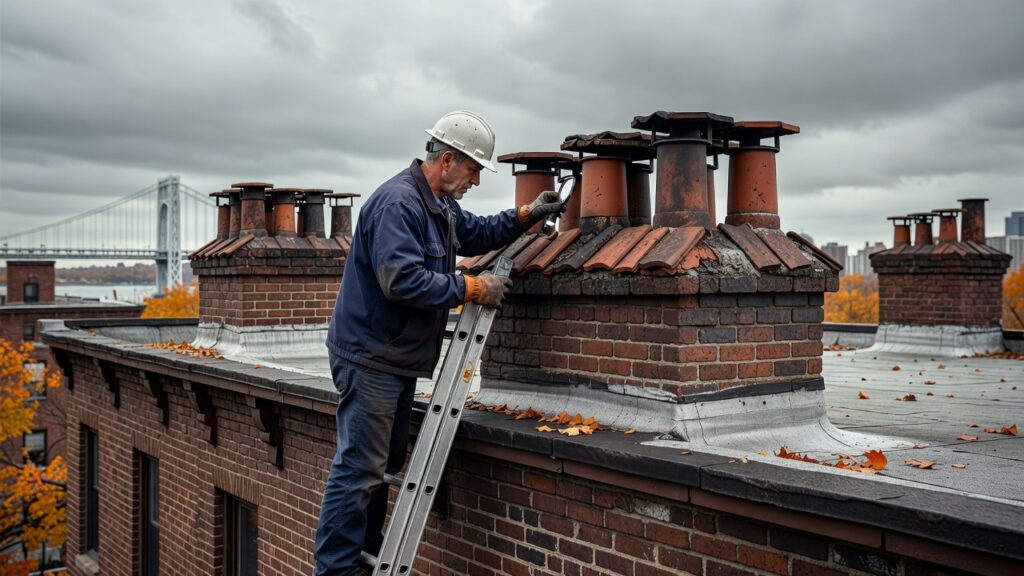
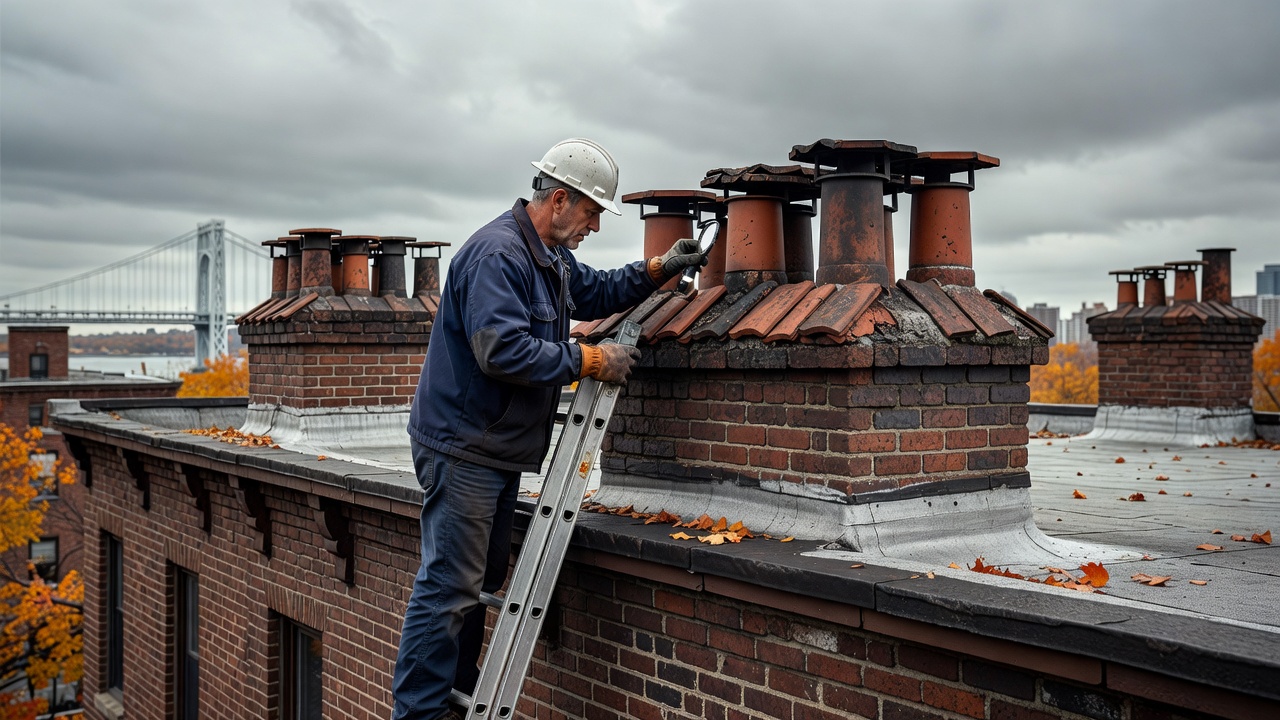
Smart Chimney Cleaning Cost New York City 2026: Timing Guide for Washington Heights Residents
Most Washington Heights homeowners don’t think about their chimney until something goes wrong a smoky living room, a strange smell coming through the flue, or a neighbor mentioning a chimney fire in the building next door. By then, what could have been a routine cleaning has often turned into a costly repair. Understanding the chimney cleaning cost New York City 2026 is only half the picture. The other half is knowing when to schedule service because in this neighborhood, timing can be the difference between a $200 cleaning and a $2,000 repair bill.
We work up and down Broadway from 155th Street to Dyckman, in the old six-story pre-war buildings near Fort Tryon Park, and in the attached brownstones along Cabrini Boulevard. We see the same pattern every year: residents who put off scheduling until the cold hits, then scramble and face longer wait times, higher demand pricing, and worst of all fire risk from a flue that hasn’t been touched in two or three seasons.
What Chimney Cleaning Actually Costs in New York City in 2026
Let’s put real numbers on the table. In Manhattan, a standard Level 1 chimney cleaning for a single flue runs between $180 and $280 in 2026. Buildings in Washington Heights with multiple flues common in the large prewar co-ops near 181st Street often run $150 to $220 per additional flue. If our technicians find significant creosote buildup, heavy debris, or damage requiring a Level 2 inspection with camera equipment, that adds $100 to $200 to the total.
Repairs are a different story. Crown rebuilds, flue relining, and firebox repointing in Manhattan factoring in access, labor, and material costs typically range from $800 to over $3,500 depending on severity. Every one of those jobs we see could have been caught earlier with a cleaning and inspection. That’s not a sales pitch. That’s just what the work looks like after years of doing it.
The Worst Time to Discover Your Chimney Has a Problem
Last October, a building manager on West 187th Street called us after a tenant complained about smoke backing up into a third-floor apartment every time the fireplace was used. The flue hadn’t been cleaned in at least two winters. When our crew got up there, we found third-degree glazed creosote coating the interior — the kind that looks almost like black glass and won’t brush off. According to the Chimney Safety Institute of America (CSIA), glazed creosote is extremely difficult to remove and is highly flammable. It required chemical treatment before we could even begin mechanical cleaning, which pushed the total cost well above a standard service call.
The tenant had been using the fireplace for two weeks before the smoke issue forced the call. That’s two weeks of risk. The building manager, to his credit, acted fast once he knew. But the point is that the problem had been growing for seasons before anyone noticed.
Season by Season: When to Book and What’s at Stake
Late Summer (August – September): The Best Window
This is the smartest time to book chimney cleaning in Washington Heights. Demand is low, scheduling is flexible, and our crews can often get to you within a week. You have time to address any repairs before the first cold snap which in northern Manhattan can arrive earlier than most people expect, sometimes in early October. Pricing is stable in this window, and you’re not competing with the rush that hits once October arrives.
Early Fall (October): Still Good, but the Clock Is Running
October is when phone volume picks up fast. Residents in Inwood, Washington Heights, and Morningside Heights are lighting their first fires of the season, and that’s when they discover the problem. We can still get to most jobs in October, but scheduling gets tighter by the third week of the month. If repairs are needed, lead times on materials and labor stretch out. Don’t assume a quick October call means a quick October fix.
November Through February: High Risk, High Demand, Higher Cost
This is when the real danger sets in. The U.S. Fire Administration reports that heating fires account for approximately 15 percent of all residential structure fires in the United States, with chimney-related failures being a leading cause. In a dense, attached building stock like Washington Heights where many buildings share flue chases and walls a chimney fire doesn’t stay contained to one unit. We’ve seen it firsthand in buildings off Overlook Terrace and near the George Washington Bridge approach on 178th Street.
Emergency service calls in winter months carry premium pricing, and rightfully so the work is harder, access is more difficult, and demand far exceeds available crew time. If you call us in January because your chimney is backing up smoke, we’ll come. But you’ll pay more, wait longer, and your fireplace will have been sitting dirty and potentially dangerous for months before the call.
Spring (March – May): Cleanup Season, Not Startup Season
Spring cleaning applies to chimneys too. If you used your fireplace through the winter without a pre-season cleaning, spring is the time to clear out ash, soot, and any accumulated debris before it bakes into the flue during summer heat. This is also a good window for cap inspections and masonry checks, since freeze-thaw cycles through a New York City winter are hard on mortar joints and crowns. Buildings near the northern tip of Manhattan from Dyckman up to the Inwood Hill Park area tend to see more moisture-driven masonry damage because of the tree canopy and elevated humidity.
According to the National Fire Protection Association (NFPA 211), chimneys, fireplaces, and vents should be inspected at least once per year and cleaned as necessary to reduce fire and carbon monoxide risks. A spring visit satisfies that annual requirement and gives you the whole off-season to address anything our technicians find.
If You Wait Too Long, the Problem Gets More Expensive and More Dangerous
A dirty chimney is not a static problem. Creosote accumulates with each use. Small cracks in the flue liner widen over freeze-thaw cycles. Bird nests and debris block airflow. Carbon monoxide odorless, colorless, and lethal can enter living spaces when a blocked or deteriorated flue fails to vent properly. In Washington Heights, where many apartments rely on older fireplace and heating systems that haven’t been updated in decades, this is a real and immediate hazard, not a hypothetical one.
We’ve walked into apartments in co-ops on Bennett Avenue and in townhouses near Audubon Terrace that had visible water staining in the firebox, crumbling mortar, and no record of any chimney service in the building’s maintenance logs. Every one of those was a liability waiting to happen. The cleaning cost was manageable. The deferred repair costs were not.
How to Plan Your 2026 Chimney Cleaning in Washington Heights
Our honest recommendation: book in August or early September. You’ll get the best availability, stable pricing, and peace of mind going into the heating season. If you missed that window, call us in early October not after the first cold night, because by then everyone else is calling too. And if you haven’t had a cleaning in more than a year, don’t wait for a symptom. The whole point of annual maintenance is that problems get caught before they announce themselves with smoke or worse.
What is the typical chimney cleaning cost in New York City in 2026?
For a single-flue cleaning in Manhattan, most homeowners pay between $180 and $280 in 2026. Multi-flue buildings common in the large prewar co-ops in Washington Heights add $150 to $220 per additional flue. If a Level 2 inspection with camera equipment is needed due to visible damage or heavy creosote buildup, expect an additional $100 to $200. Emergency or peak-season calls during winter months typically carry higher rates due to demand. Scheduling in late summer is the most cost-effective approach.
How often should a chimney in a Washington Heights apartment building be cleaned?
At minimum, once per year regardless of how often the fireplace is used. NFPA 211 requires annual inspection and cleaning as necessary. In multi-family buildings common to Washington Heights, shared flue chases mean that one dirty or damaged flue can affect neighboring units. Buildings under NYC Fire Code are also required to maintain chimney systems in compliance with NFPA 211 standards. If a fireplace is used regularly throughout the heating season, a post-winter spring cleaning is also advisable.
What happens if I skip chimney cleaning for more than one season?
Creosote accumulates with each use and hardens over time into a glazed, highly flammable residue that is significantly harder and more expensive to remove. Small cracks in the flue liner can widen through freeze-thaw cycles, leading to carbon monoxide intrusion into living spaces. According to the CSIA, third-degree glazed creosote requires chemical treatment before mechanical cleaning can begin, adding cost and time. Beyond the expense, the safety risk is real a blocked or deteriorated flue in a dense building like those in Washington Heights can affect multiple units. Skipping a year isn’t just a maintenance gap; it’s a compounding hazard.
If you’re in Washington Heights, Inwood, or anywhere in upper Manhattan and you’re not sure when your chimney was last serviced, the answer is probably too long ago. Our team at Chimney Manhattan works throughout the neighborhood year-round. Give us a call or reach out through chimneymanhhattan.com to schedule your 2026 cleaning and inspection before the fall rush hits. Don’t wait for smoke to tell you there’s a problem.
Schedule Your Chimney Cleaning Before the Fall Rush
If you live in Washington Heights, Inwood, or elsewhere in Upper Manhattan and you’re unsure when your chimney was last serviced, scheduling an inspection before the heating season is a practical way to prepare your fireplace for winter.
At Chimney Manhattan, we provide professional chimney cleaning and inspections throughout Upper Manhattan. Our technicians inspect the flue, chimney liner, fireplace, damper, and other accessible components to help ensure your chimney system is ready for the season ahead.
Contact Chimney Manhattan today to schedule your chimney cleaning and inspection before fall appointment availability becomes limited.