
Your Chimney Is Telling You Something: Warning Signs You Need a Chimney Sweep in Washington Heights Manhattan
Most chimney problems don’t announce themselves with a bang. They show up quietly a faint smell, a small stain, a draft that feels slightly off. Up here in northern Manhattan, where we service everything from the grand pre-war co-ops along Fort Washington Avenue to the older brownstones tucked behind Broadway in Washington Heights, we see homeowners miss these early signals all the time. By the time they call us, what could have been a routine chimney sweep in Washington Heights Manhattan has turned into a liner repair or a full masonry job. That gap between “noticed something odd” and “called a professional” is where most of the real damage happens.
This post is for residents in Washington Heights, Inwood, and the Upper West Side who want to know what to actually look for not vague platitudes, but specific, observable things you can see, hear, or smell from your living room. We’ve broken them into signs that mean call us today versus signs you can watch for another week or two.
The Mistake That Costs Washington Heights Homeowners the Most
The single most common mistake we see is treating the chimney like it’s someone else’s responsibility especially in co-ops and multi-family buildings. In Washington Heights and Inwood, a significant portion of the housing stock is pre-war multi-family, and residents often assume the building super handles chimney maintenance. Sometimes he does. Often he doesn’t, or he hires whoever’s cheapest. According to the National Fire Protection Association (NFPA 211), chimneys, fireplaces, and vents should be inspected at least once per year and cleaned as necessary to reduce fire and carbon monoxide risks. That standard applies to your unit whether or not your building’s management company has scheduled anything.
The second most common mistake: waiting for a visible fire or a CO alarm before calling anyone. By that point, the warning signs were there for months.
Warning Signs That Mean Call Now — Don’t Wait
A Smoky or Burning Smell When the Fireplace Isn’t in Use
This is the one we hear about most from Upper West Side residents, particularly in the older buildings along West End Avenue and Riverside Drive. If you’re catching a smoky or charred smell on a Tuesday afternoon when the fireplace hasn’t been lit in days, that’s not a drafting quirk. It usually means creosote has built up heavily enough in the flue that air movement is pulling the odor into the living space. The Chimney Safety Institute of America (CSIA) states that creosote a byproduct of wood combustion is the leading cause of chimney fires and that third-degree glazed creosote is extremely difficult to remove and highly flammable. Stop using the fireplace and call us.
Visible Black or Dark Brown Residue Around the Firebox Opening
Take a flashlight and look at the area just inside the firebox, around the throat of the damper. A thin layer of gray ash is normal. Black, oily, or tarlike residue smeared on the walls, or flaking down onto the hearth, is not. That’s third-stage creosote beginning to migrate, and it means the flue is dangerously overdue for cleaning. This is a call-now situation.
White Efflorescence Staining on the Exterior Masonry
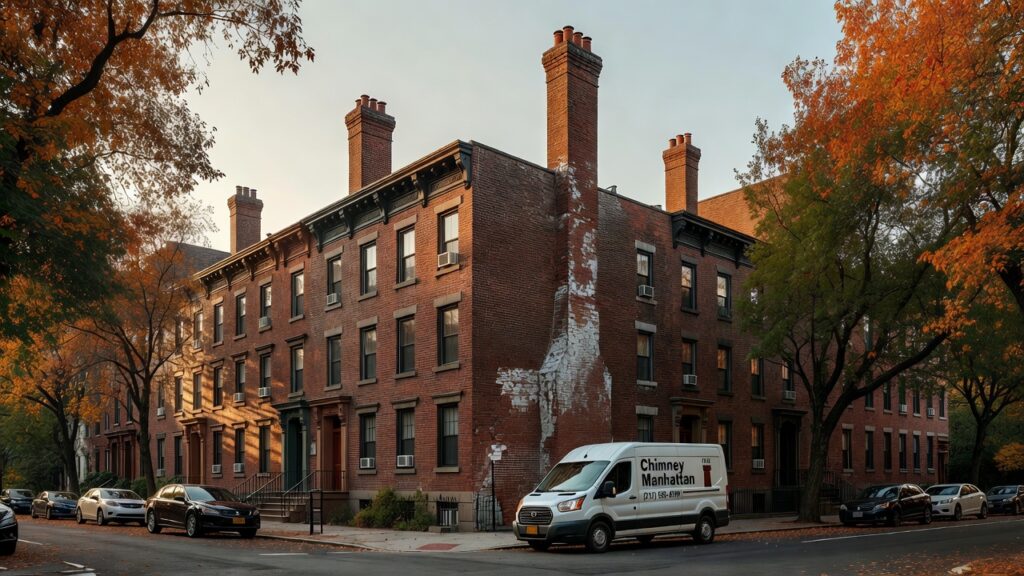
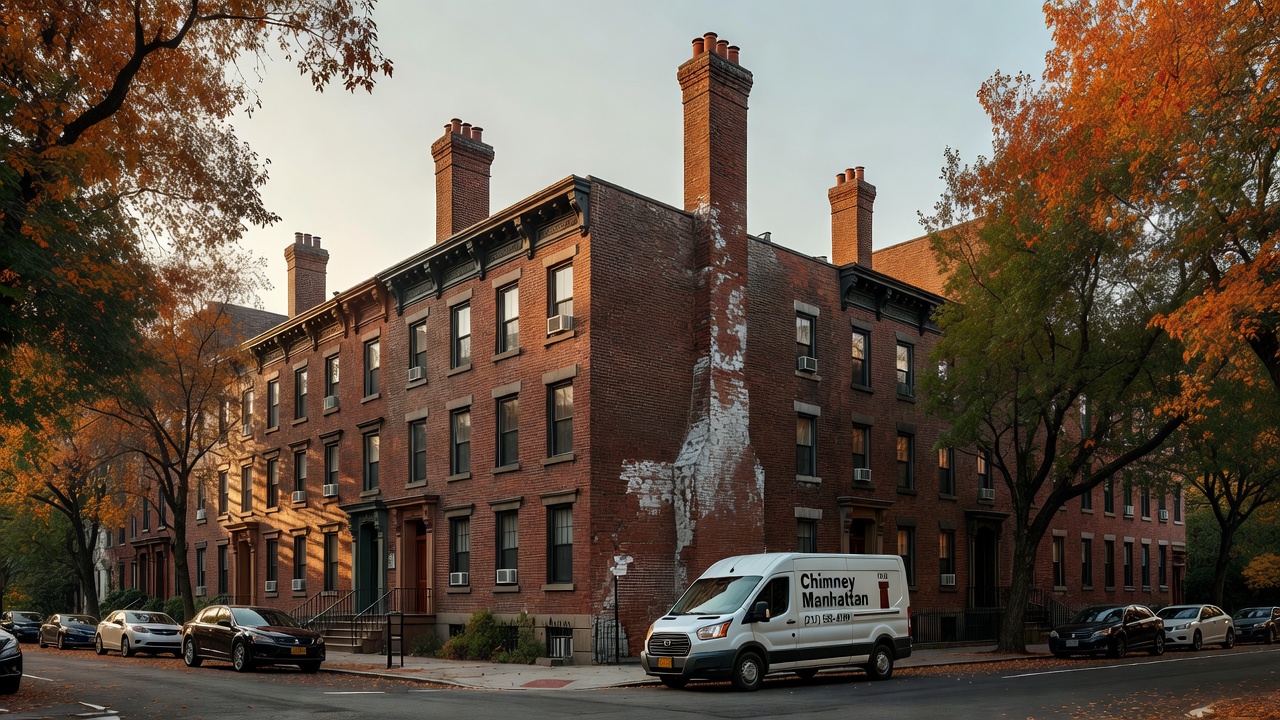
If you’re in one of the rowhouses or attached townhouses in Hamilton Heights or Sugar Hill and you’ve noticed chalky white streaks running down the outside of your chimney stack, that’s efflorescence mineral salts being pushed through the brick by water infiltration. It means moisture is getting into the masonry. Left alone, that moisture freezes in winter, expands, and cracks the brick from the inside. This one warrants a call within the week, not six months from now.
Damper That Won’t Open, Close, or Seal Completely
We replaced two dampers last winter in a Morningside Heights building where residents had been losing heat for two full seasons without connecting it to the chimney. A damper stuck open is like leaving a window cracked all winter. A damper stuck closed means your fireplace will backdraft the moment you light it. Neither is a “check on it later” situation. If you can feel cold air dropping into the firebox with the damper supposedly closed, the damper needs service now.
Water in the Firebox After Rain
A wet firebox floor after a heavy rain means the chimney cap is cracked, missing, or inadequately sized, or the flashing around the chimney base has failed. We see this regularly in the older rooftop-access buildings near Dyckman Street in Inwood and in some of the converted townhouses in Harlem. Water and masonry don’t coexist peacefully. Even one season of unchecked water intrusion can deteriorate a clay tile liner. Call us when you see it don’t wait to see if it dries out and stops.
Crumbling Mortar or Spalling Brick on the Chimney Stack
If you can see this from the street or from a window, the deterioration visible from the outside is almost always worse closer up. Mortar joints that are cracked, recessed, or missing entirely allow water to penetrate the chimney structure and compromise the structural integrity of the stack. The U.S. Fire Administration reports that heating fires account for approximately 15 percent of all residential structure fires in the United States, with chimney-related failures being a leading cause. Structural masonry issues belong in the call-now column, not the watch-and-wait column.
Warning Signs Worth Monitoring but Don’t Ignore
Smoke Takes Longer Than Usual to Draw Up the Flue
If you’re noticing that when you first light a fire, smoke hangs in the room for a few minutes before the draft establishes, that’s worth noting. It could be a cold flue, a minor blockage, or a pressure issue common in tightly-sealed newer renovations. It’s not necessarily an emergency, but if it keeps happening or gets worse, schedule a cleaning and inspection within the next 30 days.
Small Debris or Pieces of Clay Tile in the Firebox
Finding tiny ceramic or tile fragments on the floor of the firebox is a subtle sign that the clay liner is beginning to deteriorate. This is a watch-closely situation that frequently escalates if you find this once, schedule an inspection within two weeks. If you find it multiple times, call us immediately and stop using the fireplace entirely until the liner is assessed.
Animal Sounds or Nesting Material Coming from the Flue
Starlings and raccoons are common in northern Manhattan we’ve pulled nests from flues as far south as Chelsea and as far north as Inwood. If you hear scratching, chirping, or rustling above the damper, don’t light a fire. You risk a chimney fire or forcing carbon monoxide into the living space. Call for an inspection and removal. This is not a DIY situation.
What a Proper chimney sweep Washington Heights Manhattan Appointment Actually Covers
A lot of homeowners in this part of the city have been quoted “$89 chimney cleaning” deals from services found on generic search results. We understand the appeal. But a professional chimney sweep in Washington Heights Manhattan done correctly includes a visual inspection of the firebox, liner, damper, and crown, a cleaning with proper HEPA-rated equipment so your apartment isn’t covered in soot, and a written report noting any conditions that need follow-up. The CSIA recommends that homeowners hire only CSIA-certified chimney sweeps, noting that certified professionals are trained to identify structural hazards, code violations, and venting problems that untrained workers may miss. Ask for certification before anyone opens their drop cloth in your home.
In 2026, a standard Level 1 inspection and cleaning in Manhattan typically runs between $250 and $400 depending on flue height, accessibility, and condition. If someone is quoting you $89 without having seen the chimney, that number will change once they’re in the door. We quote honestly upfront.
A Real Call We Got From the Upper West Side
Last October, a resident on West 108th Street near Broadway contacted us after noticing a persistent smoky smell every time the heat clicked on, she’d assumed it was coming from the building’s boiler. Her apartment had a decorative fireplace she hadn’t used in years, and the damper had been left open the entire time she’d owned the unit. We found significant creosote accumulation in the flue, a cracked clay tile at about 14 feet up, and a damper that no longer seated properly. What began as a routine cleaning turned into a liner inspection and damper replacement. The job took two visits and cost roughly $780 total still far less than it would have cost if that flue had sparked during a winter with higher particulate in the air. She later told us she’d noticed the smell for two full years before calling.
How often do I need a chimney sweep in Washington Heights Manhattan if I only use my fireplace a few times a year?
Once per year, regardless of use frequency. NFPA 211 requires annual inspection and cleaning as necessary and even infrequently used flues can accumulate debris, animal nests, and moisture damage between seasons. If your fireplace sat unused all of 2025, schedule an inspection before you light it in 2026.
My building in Washington Heights has a super who handles maintenance. Does that mean my chimney is covered?
Not necessarily. NYC Fire Code (Title 29, Chapter 1) requires that chimneys in multi-family dwellings be inspected and maintained to NFPA 211 standards, but enforcement is inconsistent and building management often defers chimney work unless there’s a complaint or violation. Ask your management company for documentation of the last inspection. If they can’t produce it, call us independently your safety doesn’t depend on someone else’s schedule.
What does a chimney sweep appointment cost in Upper Manhattan in 2026?
For a standard Level 1 inspection and cleaning in Washington Heights, Inwood, or the Upper West Side, expect to pay between $250 and $400 in 2026. Factors that affect price include flue height, access difficulty (especially in rooftop-access pre-war buildings), and the degree of creosote buildup. We provide an honest written estimate before any work begins.
If any of the warning signs above sound familiar, don’t put the call off until spring. Our team at Chimney Manhattan serves Washington Heights, Inwood, the Upper West Side, Harlem, and the full length of Manhattan and we’re scheduling inspections and cleanings throughout 2026. Call us or use the contact form on our site to book a visit. We’ll give you a straight answer on what your chimney actually needs.
Related from Chimney Manhattan: Essential Chimney Sweep Washington Heights Manhattan · Professional Chimney Cleaning Services in Manhattan, NYC · Chimney Repair NYC — Expert Masonry & Structural Repairs in Manhat