Published November 4, 2026
What Does Chimney Cleaning Cost in Upper West Side? Real New York City 2026 Prices Explained
Wondering what chimney cleaning costs in New York City in 2026 before you pick up the phone? You’re not alone. Last October, a homeowner in a prewar co-op on West 86th Street near Riverside Drive called us after her building’s property manager told her she’d need a sweep before the gas logs could be relit for the season. She’d gotten two quotes ranging from $129 to $340 and had no idea why the spread was so wide or what she actually needed. The chimney cleaning cost New York City 2026 question comes up every fall, and the answer depends on more than just square footage.
According to the National Fire Protection Association (NFPA 211), chimneys, fireplaces, and vents should be inspected at least once per year and cleaned as necessary to reduce fire and carbon monoxide risks. That standard applies whether you’re in a Riverside Drive co-op, a brownstone on West 109th Street in Morningside Heights, a townhouse in the West Village, or a walk-up in Harlem.
Below, we answer the questions we hear most from Upper West Side homeowners, including what you can safely handle yourself and what genuinely needs a professional.
Chimney Cleaning Cost New York City 2026: The Questions That Actually Matter
How Much Does a Basic Chimney Cleaning Cost in Upper West Side Right Now?
Quick answer: Most standard chimney sweeps in Manhattan run between $175 and $299 in 2026, depending on flue type and condition.
A single-flue wood-burning fireplace in decent condition, typical in the prewar buildings that line West End Avenue and Central Park West, usually falls in the $175–$225 range for a cleaning alone. Add a Level 1 inspection and that number moves to $225–$299. If your flue is gas, prices are sometimes slightly lower because there’s less creosote, but the inspection is equally important. Pricing varies by borough, and Manhattan commands a premium over outer-borough rates because of access constraints, parking costs for service vehicles, and building logistics in high-rises. Any quote significantly below $150 warrants a closer look at what’s actually included.
What Does That Price Actually Include, and What Gets Charged Extra?
Quick answer: A standard sweep covers brushing the flue and removing loose debris; inspections, camera scans, and repairs are almost always extra.
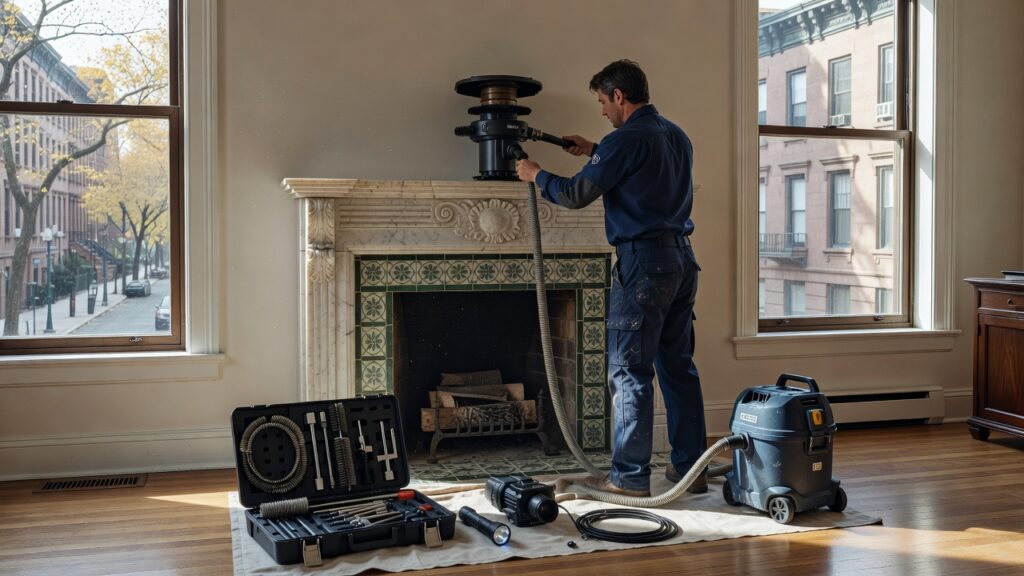
A base sweep typically includes rotary or rod brushing of the flue liner, removal of soot and loose debris into a vacuum system, and a visual check of accessible components. It does not automatically include a Level 2 inspection with camera, smoke testing, or any repair work. In Manhattan buildings, especially the older stock between 72nd and 110th Streets on the Upper West Side, chimney techs frequently find cracked clay tile liners, deteriorated mortar joints, and missing damper components that weren’t visible until the camera went up. Those findings carry separate line items. Ask your sweep to itemize the quote before work starts.
Can I Clean My Own Chimney and Skip the Pro?
Quick answer: You can do light fireplace maintenance yourself, but actual flue cleaning is not a safe DIY job in a Manhattan apartment or co-op.
Homeowners can safely do a few things: remove ash from the firebox after it’s fully cool, check that the damper opens and closes freely, and look up the flue with a flashlight for obvious blockages like bird nests. That’s about where DIY ends. Brushing a flue without industrial vacuum containment fills a room, and in a prewar co-op on a street like West 76th, that soot gets into neighboring units and common areas. Beyond the mess, correctly identifying creosote stage, first-degree flaky deposits versus third-degree glazed buildup, requires training. The Chimney Safety Institute of America states that third-degree creosote is extremely difficult to remove and highly flammable, and misidentifying it means leaving a fire hazard in place.
What About Using One of Those Chimney Cleaning Logs?
Quick answer: Creosote-sweeping logs can reduce light deposits between professional cleanings, but they don’t replace a sweep.
These products work by releasing chemicals during a fire that make first-degree creosote more brittle so it falls into the firebox. They have a limited effect on heavier buildups and no effect on structural issues, blockages, or liner cracks. If you burn wood regularly in a fireplace in Riverside Drive or Hamilton Heights and use a sweeping log between annual professional cleanings, that’s a reasonable practice. Using them as a substitute for a professional cleaning, especially in a building where the flue hasn’t been serviced in multiple seasons, is not. The CSIA is clear that professional inspection remains necessary regardless of supplemental products used.
Are There Financial Assistance Programs That Can Offset Chimney Service Costs?
Quick answer: New York State’s HEAP (Home Energy Assistance Program) can help income-qualifying households with heating-related costs, though chimney cleaning eligibility varies.
New York State has opened regular HEAP applications for the 2025–2026 heating season, with benefits of up to $1,086 available to qualifying low-income households. HEAP is primarily designed for fuel costs, but some households have used crisis-tier HEAP funds for heating system repairs when a blocked or damaged flue creates an unsafe condition. If you’re in Washington Heights, Inwood, or the northern Upper West Side and you’re income-qualifying, it’s worth contacting your local social services office to ask whether a documented chimney hazard qualifies for crisis assistance. We can provide written documentation of unsafe conditions found during an inspection if that helps your application.
Why Do Two Quotes for the Same Job Differ by $100 or More?
Quick answer: Scope, equipment, certifications, and what happens when the technician actually looks up the flue all drive that spread.
That West 86th Street homeowner’s $129–$340 spread is not unusual. The low quote was for a cleaning only, no inspection, no camera, one tech, 30 minutes in and out. The higher quote included a Level 1 inspection, a camera scan, and documentation, standard practice for a co-op building that may require paperwork for the board or building manager. CSIA recommends hiring only CSIA-certified chimney sweeps, noting that certified professionals are trained to identify structural hazards, code violations, and venting problems that untrained workers may miss. Certification, liability insurance, and the time it takes to do the job correctly all affect price. The cheapest quote is not automatically the right one.
How Often Should an Upper West Side Homeowner Actually Book a Cleaning?
Quick answer: Once per year at minimum, before the heating season, for any actively used fireplace or wood stove.
NFPA 211 sets annual inspection as the baseline for all chimneys, fireplaces, and vents. For wood-burning systems used regularly through a Manhattan winter, once per year is a floor, not a ceiling. If you burned more than two to three cords of wood last season or noticed more smoke in the room than usual, have the flue checked mid-season. For decorative fireplaces that haven’t been used in years, common in converted apartments between 90th and 110th Streets, a Level 2 inspection before first use is worth the cost. You don’t know what’s been nesting up there or whether the liner is intact.
What Additional Repairs Commonly Come Up During a Cleaning in Manhattan Buildings?
Quick answer: Cracked liner tiles, failed dampers, deteriorated mortar caps, and missing or damaged chase covers are the most common findings.
Manhattan’s prewar building stock is extraordinary, but those chimneys are old. Clay tile liners installed in the 1920s and 1930s crack over decades of thermal cycling. Mortar crowns on rooftop chimney stacks take weather damage. Dampers corrode or warp. In co-ops and condos from Chelsea to Morningside Heights, we also find that previous repairs were done with the wrong materials, refractory mortar over regular mortar, for instance, which fail within a few seasons. Liner repairs in Manhattan typically run $600–$2,500 depending on severity and access. Full stainless liner installs in a multi-story building can reach $3,000–$5,500. These are not scare figures; they reflect actual labor and material costs in this market.
Does a Co-op Board or Building Management Need to Be Involved?
Quick answer: In most Manhattan co-ops and condos, yes, building management usually needs to be notified, and some boards require documentation of annual service.
New York City Local Law and the NYC Fire Code (Title 29, Chapter 1) require that chimneys and flue systems in multi-family dwellings be inspected and maintained to comply with NFPA 211 standards. In practice, many Upper West Side co-op boards send annual notices to shareholders reminding them to have their flues serviced, and some require a service record on file with the building manager. We provide written documentation after every inspection and cleaning, a simple report noting what was found and what was done, that satisfies most building requirements. If your board has a specific form or format they want, let us know before we arrive and we’ll fill it out on-site.
How Do I Know If a Chimney Company Working in My Building Is Legitimate?
Quick answer: Ask for CSIA certification, proof of liability insurance, and a written quote before anyone touches the flue.
Manhattan has no shortage of people advertising chimney services, and not all of them are qualified. A legitimate sweep will carry CSIA certification (verifiable on the CSIA website), hold general liability insurance adequate for work in a residential building, and provide a written scope of work before starting. They’ll use proper containment equipment so they don’t dust your apartment. They won’t pressure you into repairs on the spot without showing you photographic evidence from a camera inspection. If a tech arrives, does a visual look into the firebox from below, and quotes major liner work without sending a camera up, that’s a problem. Ask to see the camera footage before agreeing to any repair.
Summary: What to Expect at a Glance
| Service | Typical 2026 Price Range (Manhattan) | DIY Option? |
|---|---|---|
| Chimney sweep (cleaning only, single flue) | $175, $225 | No |
| Cleaning + Level 1 inspection | $225, $299 | No |
| Level 2 inspection with camera | $300, $450 | No |
| Firebox ash removal | DIY-safe | Yes |
| Damper check (visual) | DIY-safe | Yes |
| Creosote sweeping log (between cleanings) | $20, $35 retail | Yes (supplemental only) |
| Liner repair (partial) | $600, $2,500 | No |
| Full stainless liner install | $3,000, $5,500 | No |
| Mortar crown repair | $350, $900 | No |
Price ranges reflect 2026 Manhattan market conditions. Final pricing depends on flue length, access, building type, and findings. All figures are estimates; contact us for a site-specific quote.
Schedule Your Upper West Side Chimney Cleaning
Our team serves the Upper West Side from 59th Street through 110th Street and beyond, co-ops on Central Park West, brownstones on West End Avenue, and everything in between. We carry CSIA certification and full liability insurance, we bring containment equipment to every job, and we provide written documentation you can share with your building manager or co-op board. If you’ve been putting off this season’s service, now is the time to book before the late-fall rush fills our calendar. Contact Chimney Manhattan to schedule an inspection and cleaning, or just to get a straight answer on what your flue actually needs.
Frequently Asked Questions
Is chimney cleaning cost in New York City 2026 higher than in previous years?
Quick answer: Yes, modestly. Labor costs in Manhattan have continued to rise, and 2026 prices are generally 8–12% higher than 2023 rates for the same services. A sweep that ran $160–$180 three years ago is more likely to be $175–$225 today. That said, the cost of skipping service, a chimney fire, a carbon monoxide event, or a failed liner that the co-op board holds you responsible for, is far higher. Annual cleaning remains one of the lower-cost maintenance items for a Manhattan apartment with a working fireplace.
My Upper West Side apartment has a gas fireplace, do I still need a chimney cleaning?
Quick answer: Yes. Gas fireplaces produce less creosote than wood, but the flue still needs annual inspection for blockages, liner condition, and proper venting. Birds, debris, and moisture can obstruct a gas flue just as easily as a wood-burning one, and a blocked gas flue creates a carbon monoxide risk rather than a creosote fire risk, which is arguably more immediately dangerous. NFPA 211 applies to gas venting systems as well as wood-burning ones. Many Upper West Side co-op boards require documented annual service for gas fireplaces for exactly this reason.
Can a chimney cleaning be combined with other building maintenance to save money?
Quick answer: Sometimes, though chimney work has specific requirements that don’t combine well with general handyman services. Where you can save is by scheduling multiple units in the same building on the same day. We work with building managers in Upper West Side co-ops and condos to schedule several apartments in one visit, which reduces per-unit travel costs. If your building has four or five shareholders who all need sweeps, coordinating through the building manager and booking a block of appointments is a practical way to get better pricing than each resident booking separately. Ask us about multi-unit scheduling when you call.
Related from Chimney Manhattan: Chimney Repair in Upper East Side · Professional Chimney Cleaning Services in Manhattan, NYC