
Essential Chimney Crown Repair Manhattan NYC: 2026 Guide for Greenwich Village Residents
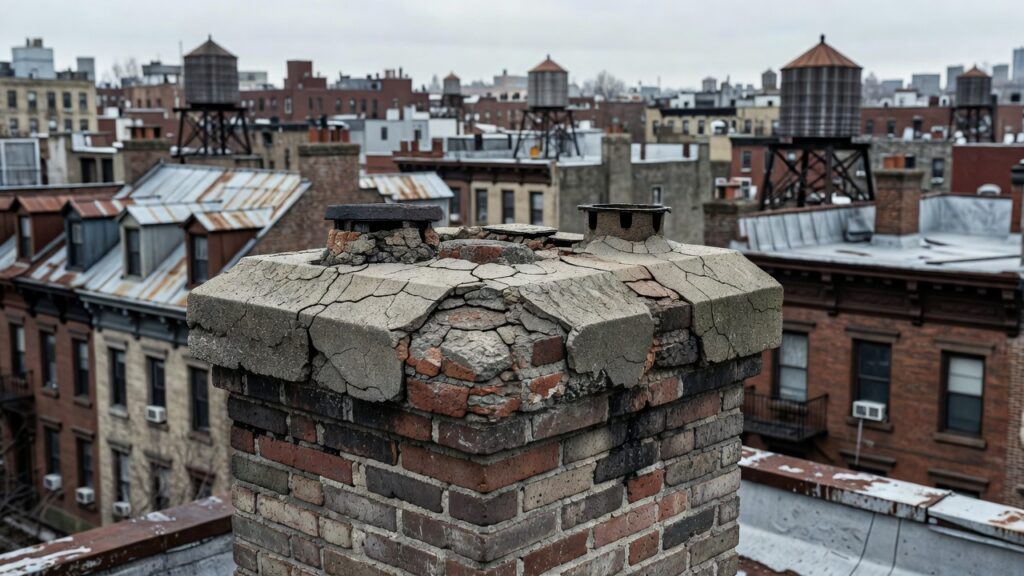
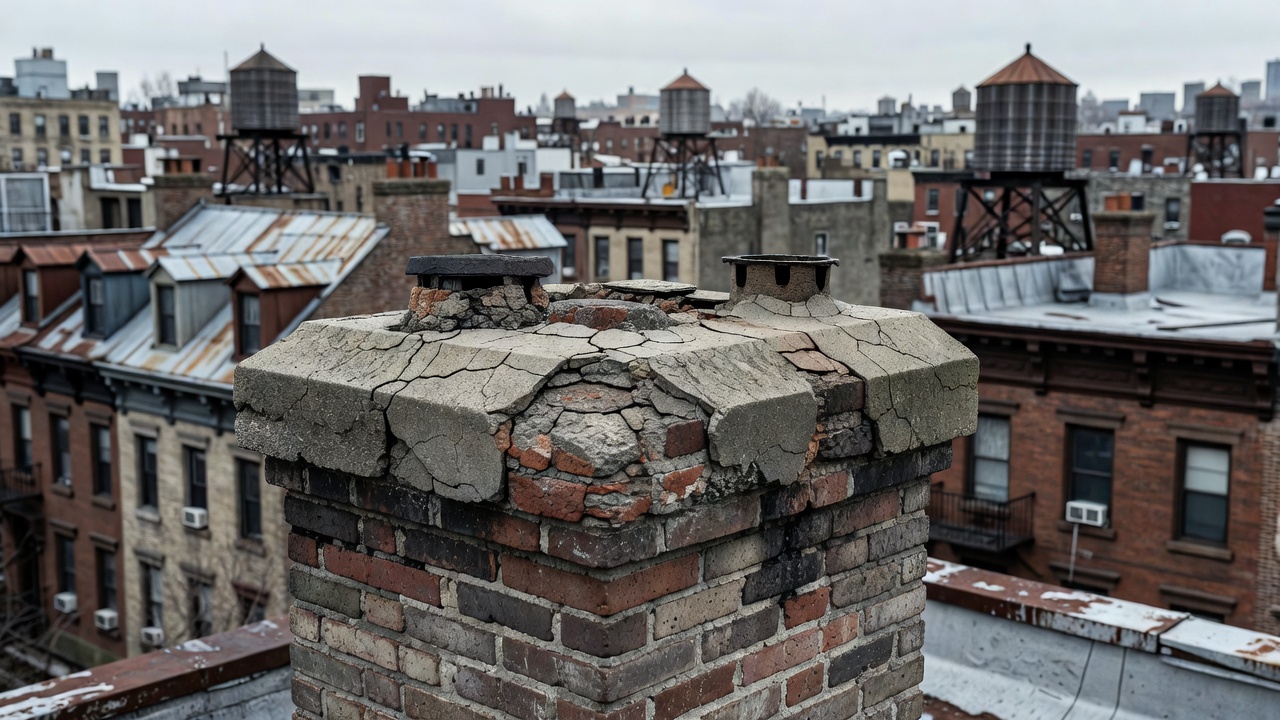
Most people do not give their chimney crown a second thought until water is dripping into their firebox or plaster is cracking along the breast wall. We have been doing chimney crown repair Manhattan NYC work long enough to know that by the time the damage is visible inside an apartment or townhouse, it has usually been building for two or three winters. A Greenwich Village homeowner on Bedford Street called us in February 2026 after her co-op board flagged persistent water staining on the ceiling of her top-floor unit. She assumed the roof was leaking. It was not. The crown on her 1920s chimney had split clean through, and every rainstorm since the previous fall had been funneling water straight into the flue.
That situation is not unusual in this neighborhood. Greenwich Village is dense with pre-war buildings Federal-style rowhouses on Commerce Street, landmarked co-ops near Washington Square Park, narrow brownstones tucked along Minetta Lane. These structures are beautiful and they are old, and their chimneys reflect that age. What surprises us is how much confusion exists about what a chimney crown actually is, what it does, and why neglecting it is genuinely dangerous rather than just an inconvenience.
The Crown Is Not the Cap and the Confusion Costs Homeowners Real Money
The single most common misunderstanding we hear, from Greenwich Village to Inwood, is that the chimney cap and the chimney crown are the same thing. They are not. The cap is the metal cover that sits over the flue opening to keep rain and animals out. The crown is a mortar or concrete slab that spans the entire top of the chimney, sloped outward so water sheds away from the flue liner and the brick. Both matter. But the crown is load-bearing in the sense that it protects the entire masonry structure below it. When a cap fails, water enters the flue. When a crown fails, water enters the chimney from every direction — soaking into the brick, freezing in winter, and accelerating the kind of structural deterioration that turns a $400 repair into a $4,000 rebuild.
The reason this confusion persists is partly because the two components look similar from street level — or rather, neither is visible from street level in most Manhattan buildings. Homeowners in Murray Hill or Gramercy Park are not climbing onto their roofs to inspect masonry. They rely on whoever last worked on the building to have flagged problems, and that does not always happen.
Why “It Looked Fine Last Time” Is Not a Reliable Standard
Another thing we hear regularly: “Our super looked at it last year and said it was okay.” We understand why people say this. In a city where building superintendents handle dozens of maintenance issues simultaneously, a quick visual from the roof hatch does not constitute a chimney inspection. A crown can appear intact from three feet away and still have hairline cracks running through its center that are actively directing water into the chimney system.
Concrete and mortar crowns in Manhattan’s climate take a real beating. Freeze-thaw cycling through a New York winter and 2025-2026 delivered a sharp one opens small cracks into large ones within a single season. According to the National Fire Protection Association (NFPA 211), chimneys, fireplaces, and vents should be inspected at least once per year and cleaned as necessary to reduce fire and carbon monoxide risks. That standard exists precisely because deterioration is incremental and not always obvious. A visual check by a non-specialist is not the same as a level-one inspection by a trained sweep who knows what crown failure looks like from the inside out.
The Water Problem Is Also a Carbon Monoxide Problem
Here is where the safety angle becomes something homeowners genuinely need to understand. Most people hear “chimney crown damage” and think water damage staining, efflorescence on the brick face, maybe some spalling. Those are real concerns. But a deteriorated crown that allows sustained water intrusion can compromise the flue liner itself, and a compromised liner is a carbon monoxide risk. Combustion gases that should vent up and out of the building can migrate laterally through cracks in the liner, entering living spaces. In a Greenwich Village townhouse with multiple floors and families, that is not a hypothetical scenario.
The U.S. Fire Administration reports that heating fires account for approximately 15 percent of all residential structure fires in the United States, with chimney-related failures being a leading cause. Crown failure sits at the beginning of that deterioration chain it is the entry point for the moisture that weakens liner joints, corrodes dampers, and eventually degrades the entire venting system. Treating it as a cosmetic issue or a low-priority repair is the wrong call, and we say that not to alarm anyone but because we have seen what happens when buildings in Chelsea and the West Village defer this work across multiple winters.
DIY Crown Sealant Is Not the Same as Crown Repair
Walk into any hardware store and you will find brush-on elastomeric sealants marketed for chimney crowns. They work — under a specific set of conditions. If a crown is structurally sound and has minor surface crazing, a quality sealant applied correctly can extend its life by several years. But sealant painted over a cracked or crumbling crown does not fill the crack. It bridges it at the surface. Water still enters, the crack continues to move seasonally, and the sealant delaminates within one or two freeze-thaw cycles. We have inspected buildings in Morningside Heights and Washington Heights where well-intentioned super repairs created a false sense of security while water damage continued underground, so to speak, within the masonry.
The Chimney Safety Institute of America (CSIA) recommends that homeowners hire only CSIA-certified chimney sweeps, noting that certified professionals are trained to identify structural hazards, code violations, and venting problems that untrained workers may miss. That guidance exists for exactly this reason. Crown repair, done correctly, involves removing deteriorated material, building proper slope and overhang, and applying the right materials for the specific crown geometry. A townhouse on Grove Street with a wide multi-flue chase has different crown requirements than a narrow flue stack on a Tribeca loft conversion. Getting that wrong the first time means doing it again and paying twice.
Waiting Until Spring Is Not as Safe as It Sounds
We hear this one constantly: “We’ll deal with it in spring when the weather warms up.” The instinct makes sense. Nobody wants masonry work done in January. But a crown that is already cracked going into late winter in Manhattan is absorbing water through February and March often the wettest stretch of the year. Every rain event drives moisture deeper into the chimney structure. By the time a crew can practically access the roof in April or May, the damage has compounded. In some cases, what would have been a crown rebuild becomes a partial chimney rebuild, including liner sections, because the water got into the wrong places over the wrong months.
Our honest advice: get the inspection done in fall, before temperatures drop below freezing consistently. For Greenwich Village residents, that means September or October. If crown damage is found, address it before the first hard frost. The repair window is real, and missing it has consequences that show up on the repair invoice.
What Chimney Crown Repair Actually Involves in a Manhattan Building
Access is the first challenge. In Greenwich Village, roof access varies dramatically by building some have walkable flat roofs, others require equipment, and landmarked buildings occasionally have restrictions on how work can be staged. Our team coordinates with building management and, where required, obtains the necessary permits through the NYC Department of Buildings. The work itself typically involves removing the failed crown to sound material, forming and pouring a new crown with the correct slope and drip edge overhang, and in many cases applying a breathable waterproof coating once the crown has cured. Total project time on a single-flue stack is usually a half to full day on the roof, depending on condition and access.
Pricing in 2026 for a standard chimney crown repair in Manhattan runs roughly $400 to $900 for straightforward work, with more extensive rebuilds on multi-flue stacks running higher. Those numbers vary based on access difficulty, crown size, and liner condition. Any company quoting you a price without first doing a roof inspection is guessing, and in this neighborhood, guessing tends to go wrong.
Frequently Asked Questions
How do I know if my chimney crown needs repair and not just sealing?
The honest answer is that you need a roof-level inspection to know for certain. Surface crazing fine hairline cracking across the crown face can often be addressed with a quality sealant if the underlying structure is sound. But if the crown has gaps wider than a credit card, missing sections, significant crumbling at the edges, or if water has already entered the flue system, sealing alone will not solve the problem. Our technicians assess crown condition as part of every chimney inspection and will tell you plainly what category the damage falls into.
Does chimney crown repair require a permit in New York City?
Standard crown repair removing deteriorated material and pouring a new crown typically falls under ordinary repairs and does not require a permit through the NYC Department of Buildings. However, if the work involves structural changes to the chimney itself, liner replacement, or if the building is a landmarked structure subject to Landmarks Preservation Commission review, additional approvals may be required. We handle that coordination on behalf of our clients and will flag any regulatory requirements before work begins.
Our building has multiple flues — does each one need its own crown assessment?
Yes. In multi-flue chimney stacks, which are common in Greenwich Village townhouses and co-op buildings throughout Manhattan, the crown spans all flue openings as a single slab. But individual flue liners can be in different states of condition, and deterioration around one flue opening does not always mirror what is happening at another. A thorough inspection covers the entire crown surface, all flue collar joints, and ideally the condition of the liner below. We assess each flue independently and give building owners a clear picture of the full system, not just the most obvious problem area.
Schedule Your Chimney Crown Inspection Today
If you own or manage a building in Greenwich Village, the West Village, or anywhere else in Manhattan and you have not had your chimney crown looked at since 2024 or earlier, this is the year to change that. Water damage to masonry is cumulative and not forgiving. Our team at Chimney Manhattan does roof-level crown inspections throughout the borough, from the tip of Inwood down to Tribeca, and we will give you a straight assessment with no unnecessary upsell. Call us or reach out through chimneymanhhattan.com to schedule an inspection before the next rainy season does any more work on that crown.
Related from Chimney Manhattan: Smart Pre-Winter Chimney Inspection Manhattan · Chimney Repair NYC — Expert Masonry & Structural Repairs in Manhat · Professional Chimney Cleaning Services in Manhattan, NYC