
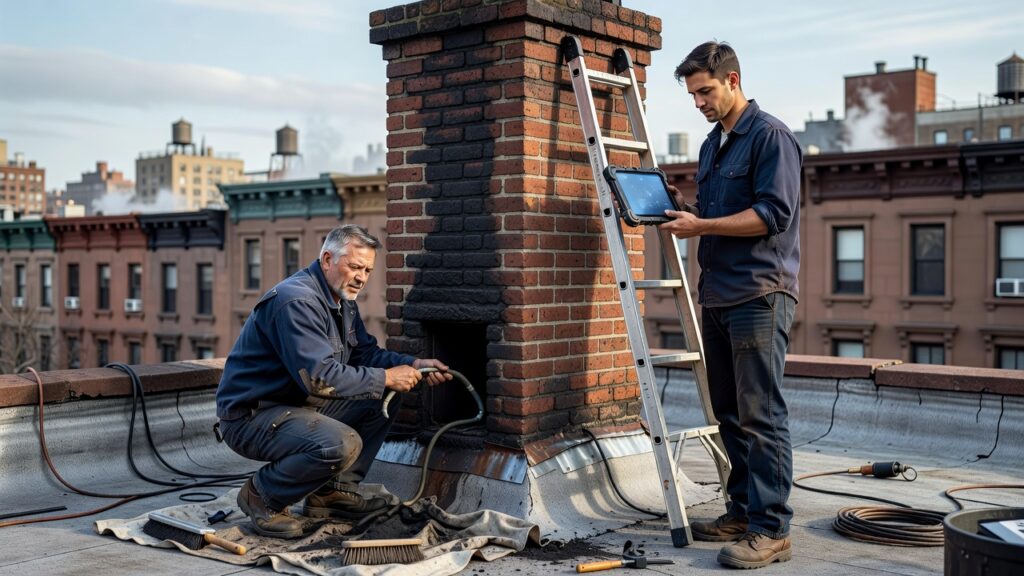
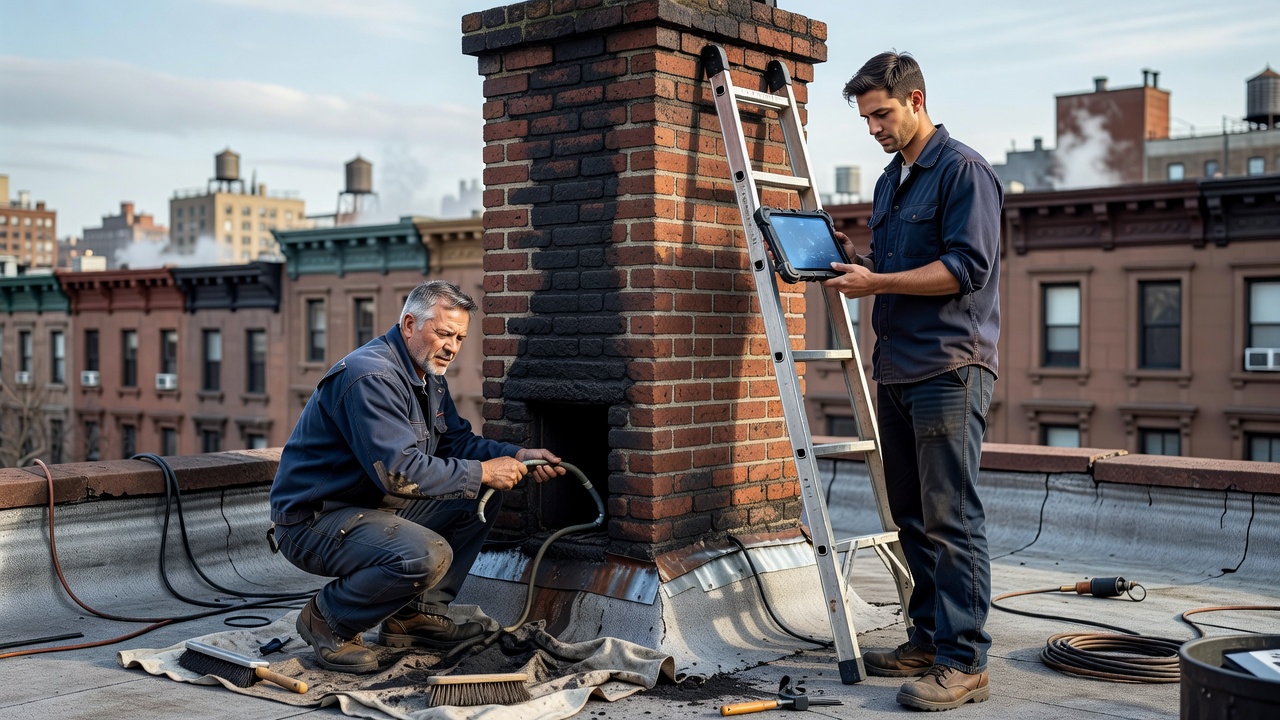
Smart Pre-Winter Chimney Inspection Manhattan: 2026 Guide for Greenwich Village Residents
Last October, a co-op owner on West 10th Street in Greenwich Village called us three days before the building’s first fire of the season. She’d cleaned the glass on her gas fireplace, wiped down the surround, and assumed that was enough. It wasn’t. Our technician found a cracked clay tile liner and a damper that had corroded almost completely shut neither visible without a proper camera inspection. Pre-winter chimney inspection Manhattan homeowners often treat as optional had just become very necessary, very fast.
We hear versions of this story every fall. Greenwich Village has some of the most charming and most demanding residential chimneys in the city. Pre-war townhouses on Bedford Street, century-old brownstones near Bleecker, converted carriage houses off Commerce Street they’re beautiful, but their flue systems were designed for coal and wood long before current safety codes existed. So before you light your first fire of 2026, here’s an honest breakdown of what you can do yourself and what you should leave to a certified professional.
What You Can Safely Handle on Your Own
We’re not going to pretend every part of chimney maintenance requires a truck and a technician. Some things a capable, careful homeowner can genuinely do.
You can safely clean the firebox the interior brick chamber where the fire sits. Use a stiff bristle brush, a vacuum rated for ash, and warm soapy water on the surrounding tiles. Removing ash buildup from the firebox floor is straightforward and safe. You should also inspect the damper from below by shining a flashlight up and operating the handle you’re checking that it opens and closes fully and isn’t visibly bent or rusted stuck. If you can see daylight through it when it’s open and a solid seal when it’s closed, that’s a reasonable visual pass.
Cleaning glass fireplace doors, checking that your carbon monoxide detector is within ten feet of the fireplace and has a fresh battery, and making sure your firewood is stacked away from the hearth — all of this is squarely in DIY territory. So is a basic exterior check from the ground: look at the cap, look at the crown, and if you notice obvious missing mortar or a visibly tilted cap, you now have specific things to report when you call us.
Where the Real Risk Starts and Why You Need A Pro
Here’s where we have to be direct. The parts of a chimney inspection that matter most for safety are the parts you physically cannot see from a firebox or a rooftop. The flue liner whether clay tile, stainless steel, or cast-in-place runs the full height of your chimney and is the primary barrier between combustion gases and your living space. Cracks in that liner allow carbon monoxide and heat to migrate into wall cavities. You cannot assess liner condition without a camera on a flexible rod, and you should not attempt that equipment on your own.
The Chimney Safety Institute of America states that creosote a byproduct of wood combustion — is the leading cause of chimney fires, and that third-degree glazed creosote is extremely difficult to remove and highly flammable. Identifying which stage of creosote you’re dealing with requires trained eyes and, in many cases, a Level II inspection with video documentation. A homeowner who sweeps a flue with a brush and assumes the job is done has no way of knowing whether glazed creosote remains behind.
According to the National Fire Protection Association (NFPA 211), chimneys, fireplaces, and vents should be inspected at least once per year and cleaned as necessary to reduce fire and carbon monoxide risks. That standard exists precisely because the consequences of getting it wrong are serious — not inconvenient, serious.
There are also code considerations. New York City’s Fire Code requires that chimneys and flue systems in multi-family dwellings be maintained in compliance with NFPA 211. Greenwich Village has a high concentration of co-ops and multi-family brownstones. If your building has shared flue systems or party walls — common on Jane Street, on King Street, on the blocks west of Seventh Avenue — a problem in your liner can affect your neighbors. That’s a liability question a YouTube tutorial won’t resolve.
What a Pre-Winter Inspection Actually Costs in 2026
This is where we see the most confusion, so let’s be concrete. A standard Level I inspection in Manhattan runs between $150 and $250 in 2026. That covers a visual check of the accessible portions of the firebox, damper, smoke chamber, and exterior crown and cap. If we find nothing concerning, you’re done for the season and that’s a reasonable price for peace of mind.
A Level II inspection — which includes video camera documentation of the full flue runs $300 to $450 depending on flue height and accessibility. In Greenwich Village, where some townhouses have three or four separate flue systems stacked inside one chimney stack, that cost can reach the higher end. This is what you need if you’re buying a property, if there’s been any seismic activity, or if you haven’t had an inspection in more than two years.
What drives the price up: blocked flue caps, heavy creosote requiring chemical treatments, liner damage requiring relining (which can run $2,500 to $6,000 depending on liner length and material), or damaged crowns requiring parging. What drives the price down: a well-maintained system with annual service history, and easy rooftop access not always guaranteed in the Village, where some buildings require ladder permits.
The U.S. Fire Administration reports that heating fires account for approximately 15 percent of all residential structure fires in the United States, with chimney-related failures being a leading cause. A $200 inspection is not an expense. It’s leverage against a much larger one.
What Can Go Wrong When the Work Gets Skipped
We’ve cleaned up after DIY sweeping jobs where the homeowner brushed debris into the firebox without sealing the damper first coating an entire living room in soot. We’ve also done inspections in Morningside Heights, in Hell’s Kitchen, in Murray Hill, where the previous owner skipped service for five or six years and the liner had deteriorated to the point that relining was mandatory before a single fire could be lit.
In Greenwich Village specifically, we’ve seen fireplace inserts installed without proper clearance modifications a common issue in the neighborhood’s converted townhouses where someone added a wood-burning insert decades ago and never pulled a permit. Running that system without a documented inspection is a code violation and an insurance problem if something goes wrong.
Do the basic stuff yourself if you’re comfortable. But schedule a certified inspection before the first fire of the season. The two are not mutually exclusive.
Frequently Asked Questions
How often does a chimney in a Greenwich Village townhouse actually need a professional inspection?
Once per year is the NFPA 211 standard, and we stand by it — especially in pre-war buildings where liner materials age and mortar joints shift seasonally. If you burn wood more than a few times a month, or if your building shares flues with adjacent units, an annual inspection before the heating season is not optional. For gas fireplaces used only occasionally, every two years is defensible if the previous inspection was clean.
Is a Level I inspection enough, or do I need a Level II?
A Level I is sufficient if you’ve had regular annual service and haven’t made any changes to the appliance or venting system. You need a Level II — which includes camera documentation — if you’re buying or selling, if there’s been a chimney fire or unusual event, or if the system hasn’t been inspected in more than two years. In Greenwich Village, where we frequently find undocumented liner modifications in older townhouses, we recommend a Level II for any property without a documented service history.
What’s a fair price to pay for a pre-winter chimney inspection in Manhattan in 2026?
A Level I inspection should run between $150 and $250. A Level II with video documentation runs $300 to $450 in most Manhattan buildings, with the higher end applying to multi-flue stacks or difficult rooftop access. Be cautious of quotes below $100 — that price point often reflects a sweeping-only visit with no genuine structural assessment. Be equally cautious of quotes above $500 for a standard inspection without a clear explanation of what justifies the premium.
Schedule Your Greenwich Village Chimney Inspection
Our team serves Greenwich Village, the West Village, Tribeca, Chelsea, and neighborhoods across Manhattan year-round. If your last chimney inspection was more than a year ago, or if you can’t remember when it happened, that’s your answer. Contact Chimney Manhattan to schedule your pre-winter inspection — we book quickly in October and November, so earlier is always better.
Related from Chimney Manhattan: Professional Chimney Cleaning Services in Manhattan, NYC · Chimney Repair NYC — Expert Masonry & Structural Repairs in Manhat · Chimney Draft Problems Apartment