Published October 23, 2026
Chimney Sweep Upper West Side Manhattan: Warning Signs Your Fireplace Needs Attention Now
A resident on West 88th Street called us in early January 2026 the first genuinely cold week of the year because her fireplace kept pushing smoke back into her living room. She’d been using it on and off since October and figured the drafting issue would work itself out. It didn’t. When our technicians arrived, we found a flue packed with third-degree creosote, a cracked terra-cotta liner, and a damper that could no longer hold position. What she needed was a chimney sweep Upper West Side Manhattan homeowners should have scheduled before the season started. Instead, she was looking at a full liner relining on top of the standard cleaning cost.
That’s the situation we see play out repeatedly on the Upper West Side, from the prewar co-ops along Riverside Drive to the brownstones and capes on West End Avenue and the townhouses threading up toward Morningside Heights. Manhattan’s older buildings have character, but they also have age. Chimney systems in pre-war construction weren’t built to last forever, and most haven’t been touched in years.
The good news is that most of these problems announce themselves before they become emergencies. You just have to know what you’re looking at.
Why Upper West Side chimneys fail more often than owners expect
The housing stock between 59th Street and 110th Street is dense with buildings constructed between 1890 and 1940. Many of those chimneys were designed for coal, converted to gas, then converted back to wood-burning during the fireplace-renovation wave of the 2010s. Each conversion changes how the flue breathes, what byproducts it carries, and how the liner holds up. Add New York winters with rapid freeze-thaw cycles and you have conditions that accelerate deterioration faster than in newer construction.
According to the National Fire Protection Association (NFPA 211), chimneys, fireplaces, and vents should be inspected at least once per year and cleaned as necessary to reduce fire and carbon monoxide risks. Most Upper West Side homeowners we speak with haven’t had an inspection in three or more years. That gap is where the danger accumulates.
The Chimney Sweep Upper West Side Manhattan Warning Signs You Can Observe Yourself
Every sign below is something you can see, hear, or smell without any tools. If you notice one of these, it’s worth a call. If you notice two or more, stop using the fireplace until a certified technician has looked at it.
1. Smoke comes back into the room when you light a fire
A small puff when you first open the damper is normal. Sustained smoke rolling into the room is not. It usually means the flue is obstructed, the damper is seated incorrectly, or there’s a negative pressure issue inside your building. Pre-war apartment buildings on Central Park West often have HVAC systems that depressurize certain units, pulling combustion gases back down the chimney. Call a pro now.
2. You can smell smoke or something burning when the fireplace isn’t in use
This is one of the most overlooked signs we encounter. A persistent smoky smell in a room with a closed damper usually points to creosote buildup or a backdraft problem. The Chimney Safety Institute of America (CSIA) states that creosote, a byproduct of wood combustion, is the leading cause of chimney fires and that third-degree glazed creosote is extremely difficult to remove and highly flammable. If your Upper West Side apartment smells like a campfire in February and you haven’t lit a fire in weeks, something is wrong. Call a pro now.
3. Dark staining around the firebox opening or on the mantel
Black or brown staining above the firebox throat or on the surrounding wall is physical evidence of repeated backdrafting. The smoke found a way out it wasn’t supposed to use. Keep an eye on it if it’s very faint and your last fire was months ago. Call a pro now if the staining is fresh or growing.
4. White powder or salt deposits on the exterior chimney stack
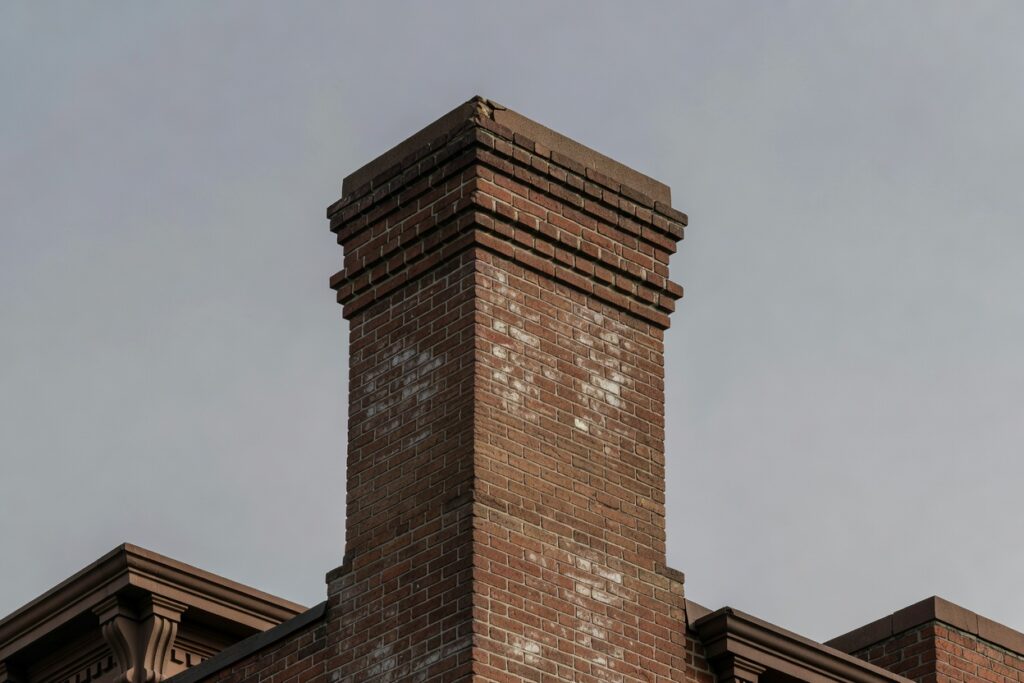
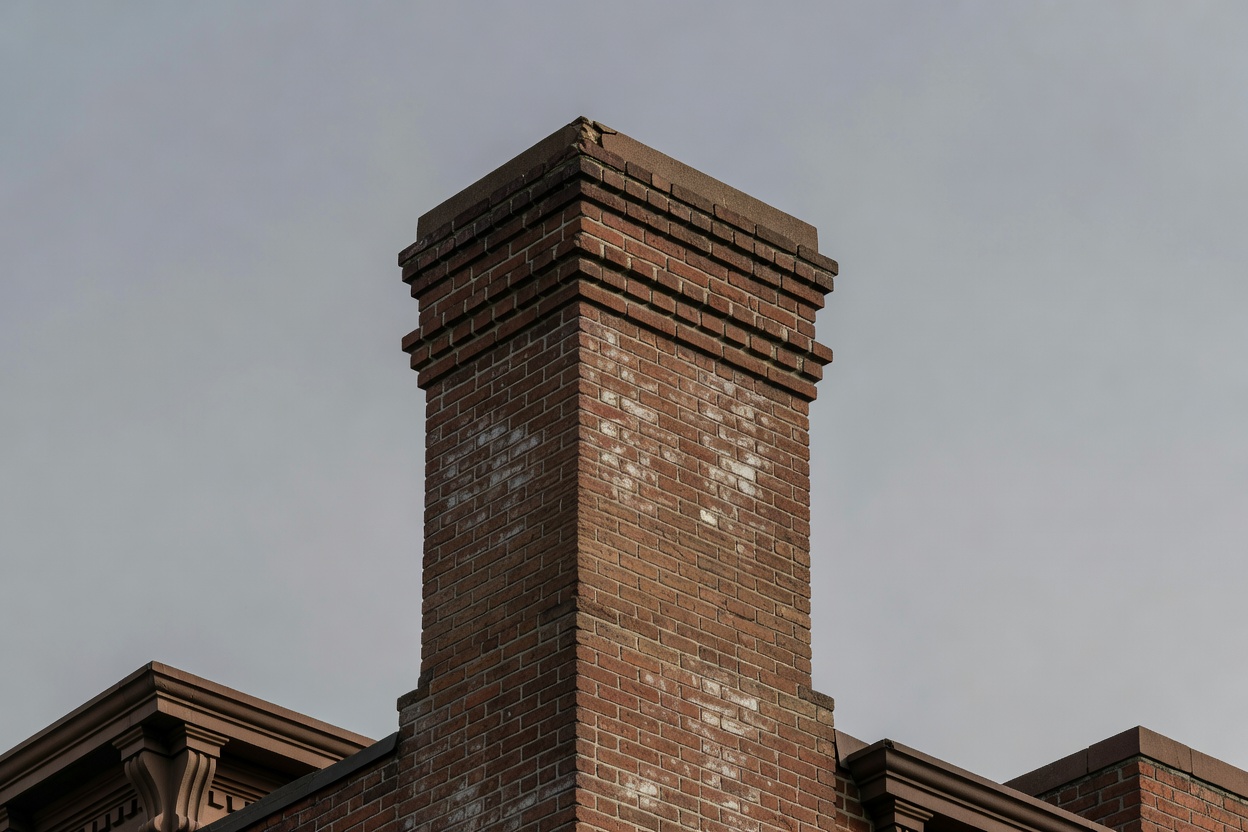
If you can see the exterior of your chimney from a rooftop, a window, or a courtyard, white chalky deposits are a sign of efflorescence: water is moving through the masonry and pulling salts to the surface. In a Manhattan winter, that same water freezes, expands, and fractures mortar joints. Buildings along Riverside Drive and West End Avenue are especially exposed to wind-driven rain. Keep an eye on light deposits. Call a pro now if the mortar joints look cracked or recessed alongside the staining.
5. Pieces of tile or masonry inside the firebox
If you find small chunks of orange terra-cotta or crumbled gray mortar at the base of your firebox, your liner is deteriorating. The liner is the only barrier between a chimney fire and the framing of your building. This is not a “keep an eye on it” situation under any circumstances. Stop using the fireplace and call us or another CSIA-certified sweep immediately.
6. A rumbling or roaring sound during a fire
An unusually loud, roaring draft is sometimes mistaken for good airflow. It can actually indicate that combustion gases and creosote are igniting inside the flue. Chimney fires can burn at over 2,000 degrees Fahrenheit and are often described by homeowners as sounding like a low-flying plane or a freight train. Call a pro now. Do not use the fireplace again until it has been inspected.
7. Animals or debris falling into the firebox
Birds, squirrels, and accumulated leaf debris are a common problem on chimney stacks above the brownstones and capes of the upper 90s and low 100s blocks near Morningside Heights. If something has fallen into your firebox, the chimney cap is either missing, damaged, or improperly fitted. The flue may also be obstructed. Keep an eye on it temporarily, but schedule a cap inspection and cleaning before the next fire.
8. Rust on the damper or firebox components
Surface rust on cast iron components tells you moisture has been getting into the firebox. That moisture comes from somewhere: a missing cap, a cracked crown, a failing chimney chase cover, or a deteriorated flue collar. A rusted damper that doesn’t open and close smoothly is also a carbon monoxide risk when the fireplace is in use. Call a pro now if the damper sticks or won’t fully open.
9. Your fireplace hasn’t been serviced in more than 12 months
This one doesn’t require anything visible. The U.S. Fire Administration reports that heating fires account for approximately 15 percent of all residential structure fires in the United States, with chimney-related failures being a leading cause. If you’re using a wood-burning fireplace in a prewar Upper West Side building and it hasn’t had a professional cleaning and inspection since before last heating season, you’re past due. Schedule it now, before the next cold snap forces the issue.
The Mistake that Turns a Routine Cleaning into a Major Repair
The most common mistake Upper West Side homeowners make isn’t ignoring a big dramatic sign. It’s waiting on a small one. A slightly smoky smell becomes a creosote fire. A few tiles in the firebox become a full liner replacement at $2,500 to $5,000 or more depending on flue length and access. A missing cap becomes water damage to the smoke chamber and firebox that runs well into four figures to repair.
We’ve done this work in buildings from the low 60s near Columbus Circle up through Washington Heights and Inwood, and the pattern holds everywhere: the homeowners who call us early pay for a sweep and a minor repair. The ones who wait pay for structural work. A chimney sweep on the Upper West Side typically runs $150 to $350 for a standard wood-burning flue in 2026, depending on the level of buildup and whether a camera inspection is included. That’s the cost of a couple of nice dinners on the Upper West Side, and it’s the difference between a safe heating season and a call to 911.
What a Professional Inspection Actually Covers
When our technicians arrive at a West Side address, we’re not just running a brush through the flue. We Check the liner condition, the damper operation, the firebox masonry, the smoke chamber, the chimney crown, and the cap. We use a camera on any job where we have reason to believe there’s liner damage or an older unlined flue. We document what we find so you have a record for your building’s managing agent or co-op board if one is required. CSIA-certified sweeps are trained to identify structural hazards, code violations, and venting problems that untrained workers may miss. Our team holds that certification.
If you’ve noticed any of the signs above, or if your fireplace simply hasn’t been serviced in the past year, contact Chimney Manhattan to Schedule an inspection. We serve the Upper West Side and all of Manhattan, from SoHo and Tribeca at the south end up through Harlem, Washington Heights, and Inwood. Don’t wait for a cold night to force the question.
Frequently Asked Questions About Chimney Sweep Service on the Upper West Side
How often does a wood-burning fireplace in an Upper West Side apartment need to be swept?
NFPA 211 requires an inspection at least once per year for any chimney in active use, with cleaning performed as needed based on buildup. For wood-burning fireplaces used regularly through a Manhattan heating season, an annual sweep before or at the start of the season is standard practice. If you burn more than two cords of wood per year or use unseasoned wood, more frequent cleaning may be warranted.
My co-op board is asking for chimney inspection documentation. What do I need?
Most co-op boards and managing agents on the Upper West Side want a written inspection report confirming the flue was cleaned and found to be in serviceable condition. Under the NYC Fire Code (Title 29, Chapter 1), chimneys in multi-family dwellings must be inspected and maintained to comply with NFPA 211 standards. A report from a CSIA-certified chimney sweep typically satisfies that requirement. Ask us about documentation format when you book.
What does a chimney sweep cost on the Upper West Side in 2026?
A standard chimney cleaning and Level 1 inspection for a wood-burning fireplace in Manhattan typically runs between $150 and $350 in 2026, depending on flue height, level of creosote buildup, and whether a video camera inspection is included. Repairs such as damper replacement, crown repair, or liner relining are priced separately after the inspection. Contact Chimney Manhattan for a specific estimate based on your building and flue type.
Related from Chimney Manhattan: Your Chimney Is Telling You Something · Smart Chimney Cleaning Manhattan NYC