
Smart Fireplace Cleaning Manhattan New York City: 2026 Guide for Yorkville Residents
Yorkville has more working fireplaces per block than most people outside the neighborhood realize. The pre-war co-ops along East 86th Street and the brownstones tucked between York Avenue and the park were built with masonry fireplaces as the primary heat source, and a good number of them are still in regular use today. We get more calls from this stretch of the Upper East Side than almost anywhere else in the borough, and the single biggest problem we see is not creosote buildup or cracked flues it is homeowners who hired the wrong contractor before they called us.
Choosing the right company for fireplace cleaning Manhattan New York City residents can trust is genuinely harder than it sounds. The barrier to entry is low. Anyone with a shop vac and a set of brushes can put up a website and start taking jobs. This guide walks you through exactly how to vet a chimney contractor before you let them into your home credentials, the right questions, and the warning signs that should send you looking elsewhere.
Before You Start: Know What You Are Actually Paying For
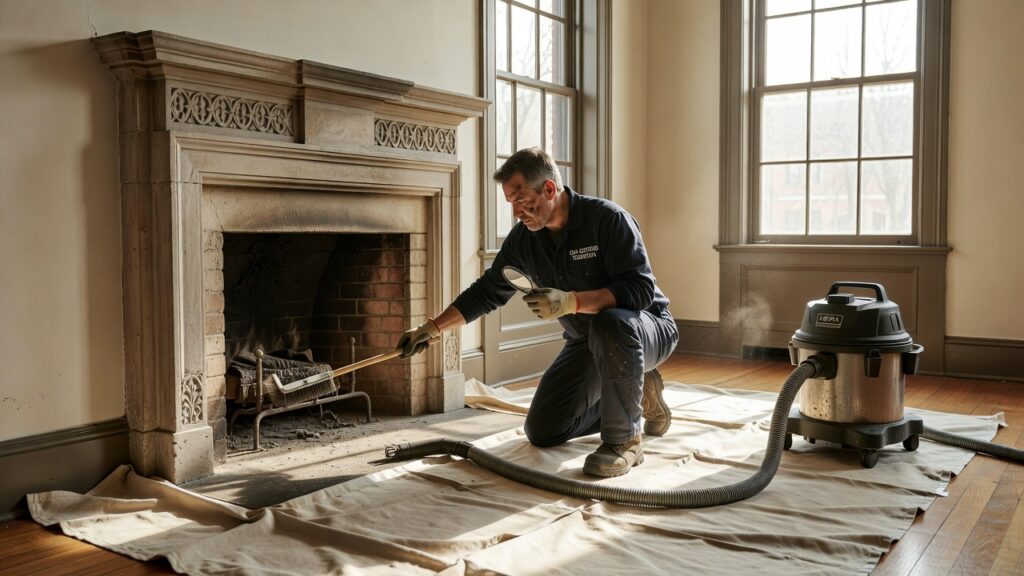
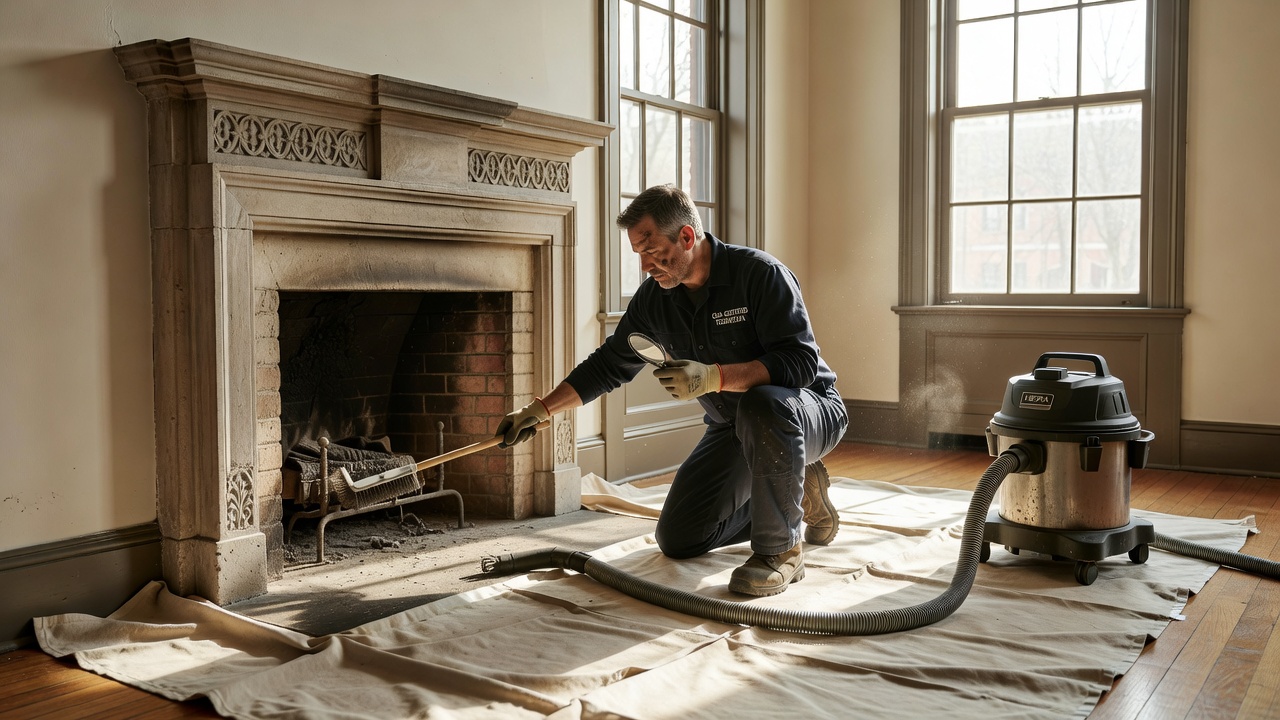
A professional fireplace cleaning is not a 20-minute sweep. A thorough job on a Manhattan pre-war fireplace includes removing firebox ash and debris, brushing the flue liner from crown to firebox, vacuuming particulates with HEPA-filtered equipment, and inspecting the damper, smoke chamber, and firebox refractory for damage. In 2026, a Level I inspection bundled with cleaning runs between $250 and $400 in most Manhattan neighborhoods. If a quote is significantly below that, find out why before you agree to it.
Also know your building situation. In a Yorkville co-op or condo, you may need board approval before any chimney work begins, and the contractor’s certificate of insurance must name the building’s managing agent. We pull this documentation routinely. An unlicensed contractor almost never carries the right coverage, which puts you personally on the hook if something goes wrong inside the flue chase.
Step 1: Verify CSIA Certification Before the First Phone Call
The Chimney Safety Institute of America (CSIA) certifies chimney sweeps through a rigorous exam covering fire safety, venting codes, and structural assessment. The CSIA states that certified professionals are trained to identify structural hazards, code violations, and venting problems that untrained workers may miss. Certification numbers are searchable on the CSIA website. If a company cannot give you a technician’s certification number, that is your answer keep looking.
We carry current CSIA credentials across our entire field team. When you ask us for certification documentation, we produce it without hesitation. Hold every contractor you interview to the same standard.
Step 2: Confirm Insurance and NYC Contractor Registration
New York City requires contractors performing work on chimneys and flue systems in multi-family dwellings to comply with the NYC Fire Code, Title 29, Chapter 1, which in turn references NFPA 211 standards for inspection and maintenance. Ask for a current certificate of general liability insurance and workers’ compensation coverage before scheduling. The policy limits should be clearly stated. A solo operator with a $100,000 GL policy is not adequate for a Yorkville co-op building with shared flue chases serving multiple units.
Also ask whether the contractor has experience specifically with multi-unit masonry systems. A company that mostly services detached homes in the suburbs may not understand how a shared flue stack in a six-story pre-war building actually functions and a mistake in that system can affect neighbors two floors away.
Step 3: Ask About Their Inspection Process and What They Document
According to the National Fire Protection Association, NFPA 211 requires that chimneys, fireplaces, and vents be inspected at least once per year and cleaned as necessary to reduce fire and carbon monoxide risks. A legitimate contractor will tell you exactly which level of inspection they are performing and why. They should offer a written report with photos after every visit.
We use camera equipment on every job we can access with it. On older Yorkville buildings the kind with unlined terra cotta flues from the 1920s a camera inspection is the only reliable way to know what is happening inside the flue beyond arm’s reach. If a contractor quotes you a cleaning without mentioning an inspection or offers to skip it to lower the price, walk away. Cleaning a flue with an undetected crack is a carbon monoxide risk, not a service.
Step 4: Get a Written Estimate That Itemizes the Work
A professional quote should list the scope of work line by line: cleaning, inspection level, any repairs identified, access method, and cleanup protocol. Vague language like “full service chimney cleaning” without itemization is a red flag. So is a contractor who gives you a price over the phone without asking about your fireplace type, flue dimensions, or last service date.
We always ask those questions before quoting, whether the job is in Yorkville, Murray Hill, Hell’s Kitchen, or Washington Heights. The details change the job. A wood-burning fireplace in a brownstone on East 90th Street with 60 years of use behind it is a different scope than a gas-log insert in a new conversion on East 79th.
Step 5: Check Reviews but Read Them Critically
Online reviews for chimney companies in Manhattan tend to skew positive because the work happens out of sight. A homeowner who hires an unqualified sweep usually does not find out until the following winter when the smoke smell returns or the inspector flags a problem during a sale. Look for reviews that describe specific details: how the technician handled the drop cloth and vacuum setup, whether they explained what they found, how long the job actually took.
Generically glowing reviews that could apply to any home service should be taken lightly. Reviews from identifiable Manhattan neighborhoods Morningside Heights, Gramercy Park, Tribeca, Chelsea with specific building context carry more weight.
Step 6: Ask One Direct Question About Creosote
Ask any contractor you are considering: what do you do if you find third-degree creosote in the flue? The CSIA states that glazed, third-degree creosote is extremely difficult to remove and highly flammable, and that it requires chemical treatment before mechanical removal can be safely attempted. A contractor who says they will just brush it out with standard equipment either does not know what they are talking about or is telling you what you want to hear. Either way, it is disqualifying.
A competent sweep will explain the treatment process, the additional cost involved, and recommend a follow-up inspection after treatment. That answer takes longer to give, and it is the right one.
Troubleshooting: What to Do If You Already Had Work Done and Something Feels Off
If you had a chimney cleaned recently and you are still getting smoky odors on cold days, or your carbon monoxide detector has triggered near the fireplace, stop using the fireplace immediately. Call for a second opinion from a CSIA-certified sweep who was not involved in the original work. We do second-opinion inspections regularly for Yorkville residents who are not sure whether the job they paid for was done correctly or done at all. A camera inspection of the flue will answer the question quickly and without guesswork.
Frequently Asked Questions
How often does a fireplace in a Yorkville pre-war building need to be cleaned?
NFPA 211 calls for at least one inspection per year for any chimney in active use. If you burn wood regularly through the winter even just on weekends an annual cleaning before each heating season is the right baseline. Older, unlined flues in pre-war Yorkville buildings may need more frequent attention because they accumulate debris faster and are more prone to deterioration. Our team can tell you after the first inspection what your specific system actually needs.
Does fireplace cleaning Manhattan New York City work require board approval in a co-op?
It depends on the building and the scope of work. Routine cleaning and inspection generally do not require prior board approval, but anything classified as a repair repointing, liner work, damper replacement usually does. Your proprietary lease or house rules will spell out the threshold. We are experienced working within co-op requirements across Manhattan and will help you understand what documentation your managing agent needs before we schedule.
What does a professional fireplace cleaning in Manhattan actually cost in 2026?
A standard cleaning bundled with a Level I inspection runs $250 to $400 for most Manhattan fireplaces in 2026. Camera inspections, chimney cap repairs, or treatment for heavy creosote buildup are additional and will be quoted separately after we assess the flue. Be cautious of quotes below $150 they almost always reflect either an incomplete scope of work or a contractor without proper credentials and insurance.
Ready to Schedule? We Work Throughout Manhattan — Including Yorkville
Our technicians are in Yorkville regularly, serving buildings along East 79th through East 96th Street and across to the park-side blocks. We are CSIA-certified, fully insured, and experienced with the specific chimney systems that Manhattan pre-war buildings actually have. If you want a straight answer about what your fireplace needs and a written report after every visit, contact Chimney Manhattan to schedule your 2026 inspection and cleaning. We will tell you exactly what we find no upsell, no pressure, no guesswork.
Related from Chimney Manhattan: Professional Chimney Cleaning Services in Manhattan, NYC · Smart Chimney Cleaning Cost New York City 2026 · Fireplace Damper Repair in Manhattan