
Essential Annual Chimney Cleaning Manhattan Apartment: 2026 Guide for Upper West Side Residents
Most Upper West Side residents assume chimney cleaning is an all-or-nothing job either you call someone or you ignore it entirely. The real picture is more practical than that. An annual chimney cleaning Manhattan apartment involves a handful of tasks a careful homeowner can actually handle, plus a short list of things that genuinely require professional tools, professional liability, and in some cases, a licensed contractor under New York City code. Knowing the difference saves money and, more importantly, keeps you and your neighbors safe in a building where flues are often shared.
A co-op owner on West 87th Street called us last winter after her managing agent flagged a fireplace that hadn’t been serviced in three years. She’d been burning wood on cold nights, occasionally noticed a faint smoke smell in the hallway, and assumed the building super had it covered. He hadn’t. When our technician opened the damper and ran a camera up the flue, we found a significant creosote shelf about eight feet up the kind that can ignite without warning. The flue liner had also developed a hairline crack, likely from a minor chimney fire she never knew happened. Two repairs later, she was clear. But she told us the thing that stuck with her most was that she’d been vacuuming the firebox herself every fall and thought that meant the chimney was fine. It isn’t the same thing.
What You Can Safely Do Yourself
Being honest here: a capable homeowner can handle several parts of basic fireplace upkeep without any special training. These tasks matter and shouldn’t be dismissed. They just don’t substitute for a professional inspection of the flue itself.
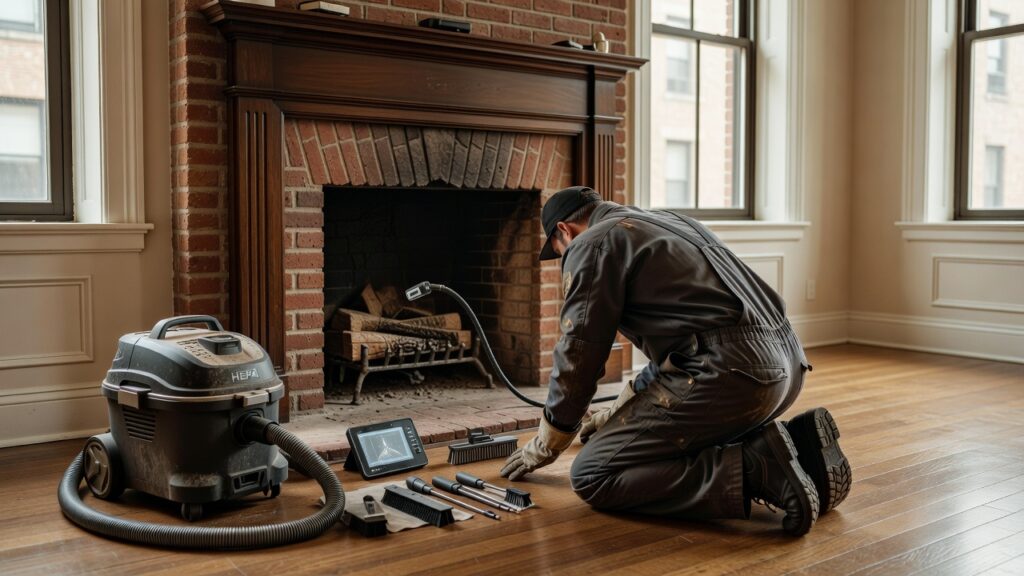
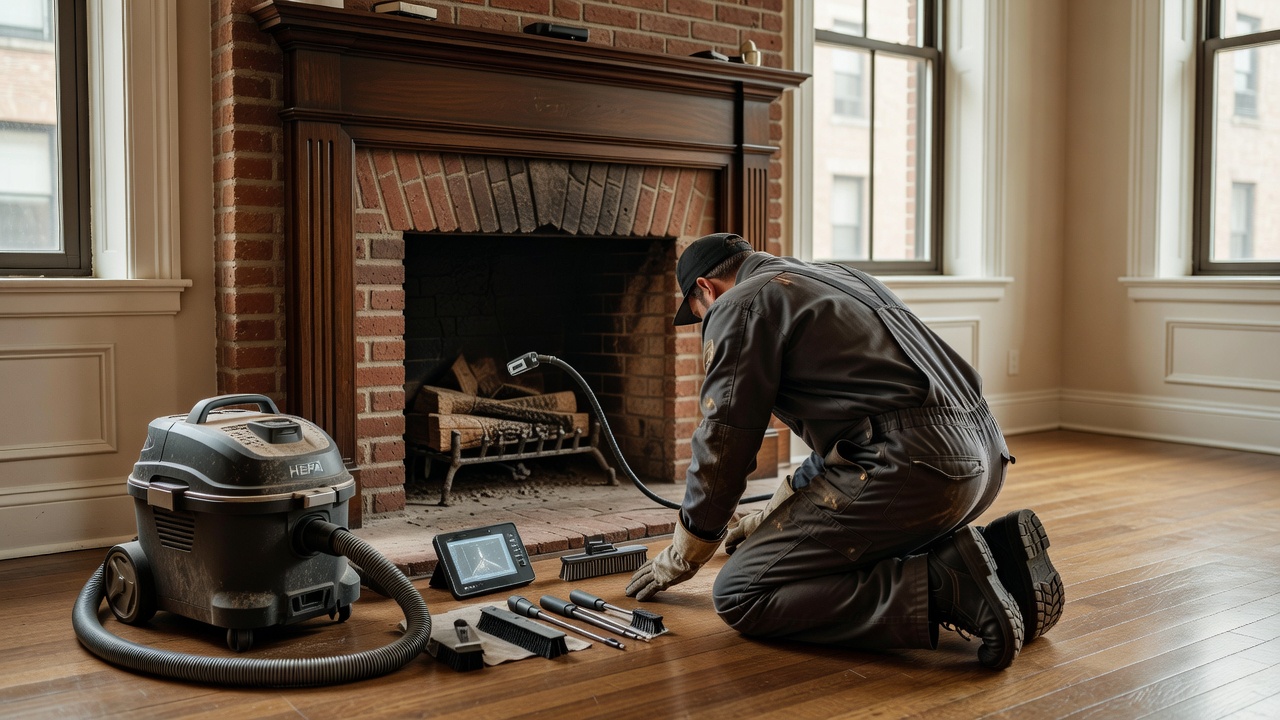
Cleaning the firebox. The brick chamber where wood burns collect ash, light soot, and debris. Waiting until ash is an inch or two deep, then scooping it into a metal bucket with a fireplace shovel and brush, is entirely safe DIY territory. Use a vacuum with a HEPA filter to avoid blowing fine particles through your apartment a genuine concern in a pre-war Upper West Side building with older windows and tight corridors.
Inspecting and cleaning the damper plate. The damper sits just above the firebox. You can reach it with a flashlight and gloved hand. Check that it opens and closes smoothly and that nothing is lodged against the plate. A stiff damper often just needs the accumulated grease and soot wiped away with a damp cloth. This is worth doing every season.
Looking up the flue with a flashlight. You won’t see everything the flue bends, and you’re not trained to read what you’re seeing but you can spot obvious blockages near the bottom, nesting material, or a damper that won’t open fully. This is a reasonable first check, not a substitute for a camera inspection.
Checking the firebox for spalling bricks or crumbling mortar at eye level. If you see loose mortar falling into the ash pile or bricks that look like they’re flaking in layers, note it and mention it when you call a professional. You’ve done something useful.
Annual Chimney Cleaning Manhattan Apartment: Where DIY Stops and Real Risk Begins
There’s a version of this conversation that’s condescending the one where every single task gets labeled dangerous so you’ll just hand over your wallet. That’s not where we’re coming from. But there are specific points where skipping a professional creates consequences that are difficult or impossible to undo.
Creosote removal above the firebox. The Chimney Safety Institute of America (CSIA) states that creosote — a byproduct of wood combustion is the leading cause of chimney fires, and that third-degree glazed creosote is extremely difficult to remove and highly flammable. Stage one creosote, the light dusty kind, can sometimes be brushed from a short accessible section. But stage two and three buildup deeper in the flue requires rotary cleaning systems, chemical treatments, and proper containment that a homeowner simply doesn’t have. Attempting to knock down a creosote shelf with a hardware store brush risks dislodging burning-hot residue into a flue that may already have a crack.
Flue liner inspection. This is the non-negotiable one. The liner clay tile in most pre-war Upper West Side buildings along Central Park West and Riverside Drive develops cracks from thermal cycling. A cracked liner allows carbon monoxide and combustion gases to migrate into adjacent flues or living spaces. You cannot assess this without a closed-circuit camera on a flexible rod. According to the National Fire Protection Association (NFPA 211), chimneys, fireplaces, and vents should be inspected at least once per year and cleaned as necessary to reduce fire and carbon monoxide risks. That standard exists precisely because liner failures are invisible until they’re dangerous.
Any repair to the flue, liner, crown, or chimney cap. In New York City, structural repairs to chimney systems in multi-family dwellings fall under New York City Local Law and the NYC Fire Code (Title 29, Chapter 1), which require that chimney and flue systems in multi-family dwellings be inspected and maintained in compliance with NFPA 211. A co-op board on West 107th Street in Morningside Heights learned this after a contractor not a chimney specialist patched a crown with the wrong mortar mix. It failed within one heating season, water got into the flue, and the repair bill was triple the original quote. Code compliance isn’t paperwork it’s the standard that determines who is liable when something goes wrong.
Gas fireplace servicing. If your Upper West Side apartment has a gas insert or gas log set, the venting, burner, and thermocouple connections require a licensed technician. Full stop. This is not a gray area.
The Mistakes That Actually Cost People
After years of servicing buildings from Inwood down through Hell’s Kitchen and into Tribeca, we see the same errors repeat. The most common: homeowners burn wood in October without scheduling any inspection since the previous spring, assuming the fireplace is fine because it drew well last year. Conditions change. Animals nest in summer. Rain deteriorates crowns. A flue that performed fine in March can be compromised by November.
The second most common mistake is hiring whoever is cheapest on a local app without verifying CSIA certification or NYC licensing. The CSIA recommends hiring only CSIA-certified chimney sweeps, noting that certified professionals are trained to identify structural hazards, code violations, and venting problems that untrained workers may miss. In a Manhattan co-op, an uncertified sweep who misses a liner crack and signs off on a cleaning report creates liability for the building and for you.
The third mistake is treating the annual service as optional in years when the fireplace isn’t used much. Infrequent use doesn’t mean no risk. A fireplace that sat unused all of 2025 still needs an inspection before the 2026 heating season. Birds, moisture, and settling all happen whether or not you light a fire.
What a Professional Appointment Actually Covers
When our team visits an apartment in Yorkville, Chelsea, or Murray Hill, the cleaning appointment is never just sweeping. It includes a Level 1 visual inspection of accessible portions of the system, camera imaging of the flue liner, a written report, and documentation that satisfies most co-op board requirements. We use drop cloths, HEPA vacuums, and containment systems. The apartment stays clean. The whole visit runs about 90 minutes for a standard single-flue fireplace. In 2026, a professional annual cleaning in Manhattan typically ranges from $225 to $325 for a standard wood-burning flue more if repairs or Level 2 inspections are needed.
Frequently Asked Questions
How often does an Upper West Side apartment fireplace actually need professional cleaning?
Once per year is the standard, and it’s backed by NFPA 211 regardless of how much you use the fireplace. If you burned wood frequently through the winter more than a dozen fires scheduling a cleaning before the next heating season rather than after is the smarter move. Co-op boards along Central Park West and Riverside Drive increasingly require annual documentation of chimney service.
Can I use one of those chimney cleaning logs instead of hiring someone for the annual chimney cleaning Manhattan apartment service?
Chimney cleaning logs can loosen light stage-one creosote deposits, and they’re not a scam they do something. What they don’t do is remove the loosened debris, inspect the liner, check the damper seal, clear animal nesting material, or produce any documentation your building requires. Use them as a supplement between professional cleanings if you burn frequently, not as a replacement for the annual service.
My co-op on the Upper West Side says I need a chimney inspection letter. What does that involve?
Most co-op boards want written confirmation from a qualified chimney professional that the fireplace and flue have been inspected and are safe to operate. That typically means a Level 1 inspection visual assessment of accessible components plus a cleaning if needed, and a signed report on company letterhead. Some older buildings along West End Avenue also require documentation that any work performed complied with NYC Fire Code standards. We provide that paperwork as part of every appointment.
If your Upper West Side apartment fireplace is due for service or overdue reach out to our team at Chimney Manhattan. We work throughout Manhattan, from Washington Heights to the Financial District, and we understand the specific requirements of pre-war co-ops and condos. We’ll tell you honestly what needs professional attention and what you can handle on your own. Schedule your 2026 annual inspection by calling us directly or submitting a request through chimneymanhhattan.com.
Related from Chimney Manhattan: Smart Chimney Sweep Upper West Side Manhattan · Professional Chimney Cleaning Services in Manhattan, NYC · Essential Chimney Waterproofing Manhattan NYC