
Reliable Why Masonry and Brick Repair Services in Manhattan Are Not Optional: A 2026 Guide for Manhattan Residents
Most Manhattan homeowners don’t think about their brick until a chunk of it lands on the sidewalk. We get it life moves fast here, and a little surface cracking on a brownstone facade in Hamilton Heights or a slightly sunken mortar joint on a Gramercy Park townhouse doesn’t feel urgent. But understanding why masonry and brick repair services matter and what happens when the warning signs get ignored is exactly where most costly mistakes begin. We’ve seen the results firsthand, from Washington Heights to Tribeca, and the pattern is consistent: small problems left alone become structural ones.
Last winter, a co-op board in Morningside Heights contacted us after residents on the upper floors started smelling something damp and musty every time the heat kicked on. The building super had already patched the flashing on the roof, so everyone assumed the issue was resolved. When our technicians got eyes on the chimney stack and the surrounding parapet, the real picture was different. The mortar between the bricks had eroded so completely in several horizontal joints that water had been migrating into the flue liner for at least two seasons. The smell wasn’t a flashing problem. It was saturated brick and deteriorating mortar pulling moisture directly into the interior wall cavity.
That’s the kind of diagnostic gap we want to close with this piece.
The Mistake of Treating Surface Damage as Cosmetic
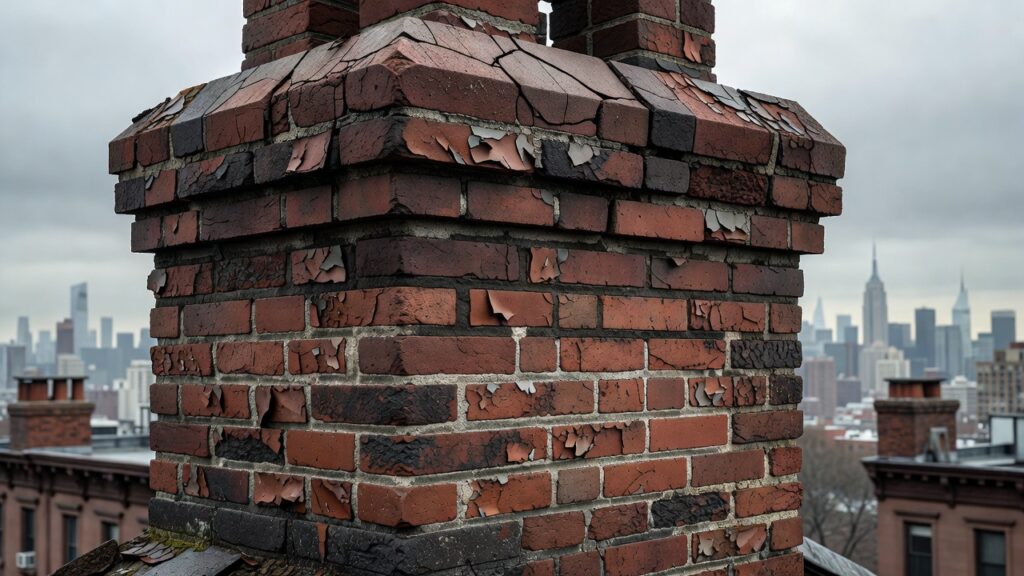
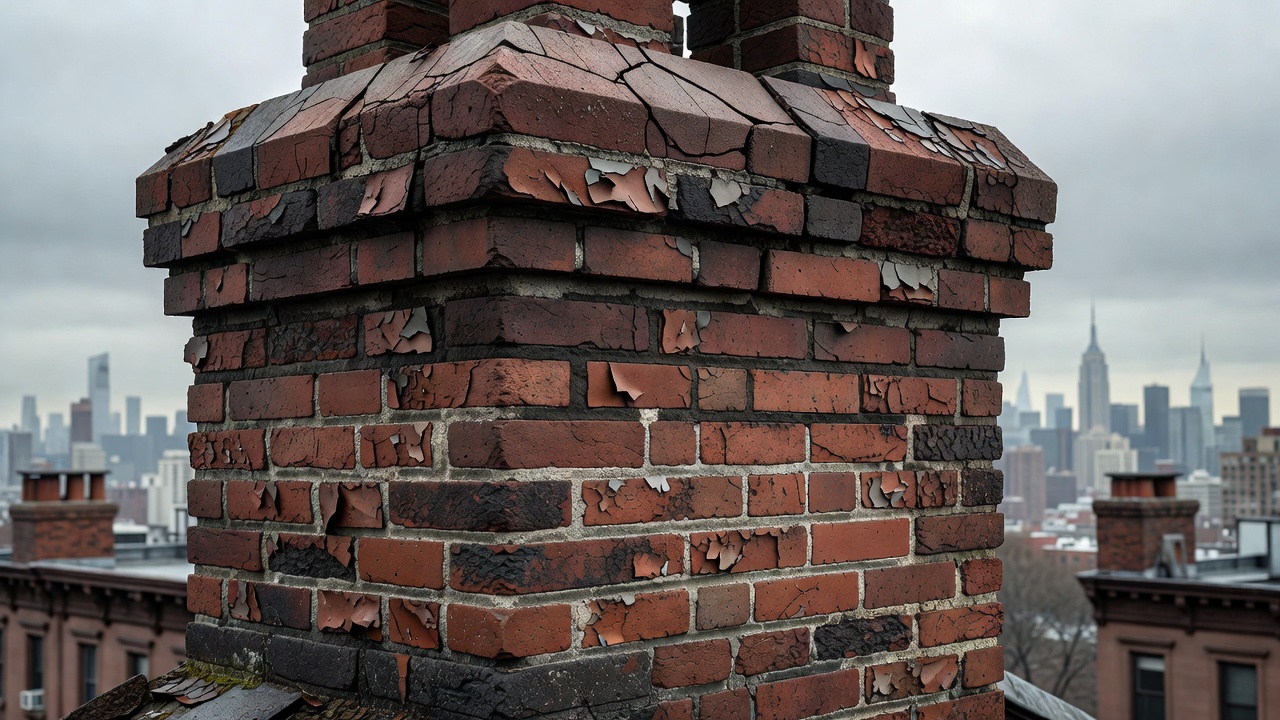
Spalling brick — where the face of the brick flakes or pops off looks like a cosmetic issue. It isn’t. Brick is fired clay, and its outer layer is the densest, most water-resistant part. Once that face is gone, the softer interior absorbs water readily. In Manhattan’s climate, where temperatures swing hard between January freezes and July humidity, that water cycles through freeze-thaw expansion dozens of times per season. Each cycle opens the crack wider. By the time visible spalling is apparent on a Chelsea rowhouse or a Hell’s Kitchen tenement, the damage behind it is often two to three times more extensive than the surface suggests.
The professional fix involves removing the compromised brick units entirely not patching over them sourcing matching brick (which in pre-war Manhattan buildings requires some hunting, since many original bricks are no longer manufactured), and rebuilding the section with appropriate mortar mix. Slapping hydraulic cement or caulk over spalled brick is one of the most common homeowners mistakes we encounter, and it accelerates the damage by trapping moisture inside.
Why Mortar Joint Failure Gets Misdiagnosed
Homeowners often look at the brick faces, not the joints. Mortar joints are the first line of defense in any masonry system, and they’re designed to be the sacrificial component softer than the brick so they take the brunt of movement and moisture. Repointing (tuckpointing) replaces that degraded mortar before it lets water get to the brick itself.
The diagnostic mistake we see most often is property owners hiring general contractors who use the wrong mortar hardness. Pre-1940s Manhattan buildings and there are a lot of them, from Inwood down through the Upper West Side were built with lime-based mortars that are softer and more flexible than modern Portland cement mixes. Repointing those joints with a hard Portland mix creates a mismatch: the mortar becomes harder than the brick, and now the brick faces the stress instead of the joint. Within a few winters, the brick itself begins to crack and spall. Undoing that kind of repair costs significantly more than doing it right the first time we’re talking the difference between a $2,500 repointing job and a $15,000 partial rebuild.
Crown and Cap Failures That Go Unnoticed for Years
The chimney crown is the concrete or mortar cap that seals the top of the chimney stack around the flue. It slopes outward to shed water away from the brick below. Cracks in the crown are invisible from street level, which is why they’re routinely missed during casual inspections. Water enters the crack, freezes, expands, and widens it every winter. Within two or three seasons, the crown can split entirely, and water now runs freely down into the flue system and the surrounding masonry.
According to the National Fire Protection Association (NFPA 211), chimneys, fireplaces, and vents should be inspected at least once per year and cleaned as necessary to reduce fire and carbon monoxide risks. That annual inspection is exactly when crown damage gets caught before it turns into a liner replacement and a chimney rebuild. We see neglected crowns regularly on buildings throughout Murray Hill and Yorkville, where absentee owners aren’t climbing up for a look between tenants.
The fix for a cracked crown depends on severity. Hairline cracks get sealed with a flexible elastomeric crown sealant. Crowns that have split or begun to separate require demolition and pouring a new crown entirely. This is not a DIY repair crown work done at height on a Manhattan rooftop requires proper staging and anchoring.
Efflorescence: What That White Staining Is Actually Telling You
White, chalky staining on brick called efflorescence is soluble salts being carried to the surface by water moving through the masonry. Homeowners frequently pressure-wash it off and consider the matter closed. That’s the wrong move, and here’s why: efflorescence is a symptom, not the problem. The problem is water infiltration. Cleaning the staining without addressing the source just means it comes back, usually heavier, within a season.
The Chimney Safety Institute of America (CSIA) emphasizes that moisture intrusion is among the most destructive forces acting on masonry chimney systems and efflorescence is one of the clearest early signals that moisture is active inside the assembly. Proper diagnosis means tracing the water pathway: Is it entering through failed flashing? An open crown? Deteriorated mortar joints? Improperly pitched cap flashing on a parapet? Each source has a different fix and treating them all the same way wastes money and time.
Lintel Rust and What It Means for the Brick Above
Steel lintels the horizontal supports that carry the brick load over window and door openings — rust when water gets to them. As they rust, they expand, and that expansion pushes outward against the surrounding brick. The result is a characteristic stair-step cracking pattern that runs diagonally up from the corners of the opening. We see this frequently in older Harlem brownstones and pre-war apartment buildings throughout the Upper East Side.
The homeowner mistake here is patching just the cracked mortar joints without replacing the lintel. The rust continues, the expansion continues, and the repair fails within a year or two. The correct sequence is: remove the affected brick above the opening, cut out and replace the corroded lintel with a properly sized steel or stainless alternative, treat the surrounding masonry for any moisture damage, and then rebuild the brick above it. It’s a multi-day job. Done right once, it holds for decades.
Can Any of This Be Prevented?
Yes — and the prevention is straightforward. A professional masonry inspection every one to two years, a properly applied breathable water repellent on exterior brick surfaces every five to seven years, and keeping gutters, leaders, and flashing in good condition so water isn’t being directed toward masonry rather than away from it. The U.S. Fire Administration reports that heating fires account for approximately 15% of all residential structure fires in the United States, with chimney-related failures being a leading cause — and most of those failures have a masonry component that could have been caught earlier.
Manhattan’s dense housing stock means your masonry problems aren’t just your problems — deteriorating brick on a shared party wall or a poorly maintained chimney stack affects the buildings on either side of you. Co-op and condo boards that build masonry maintenance into their capital plans consistently spend less over a ten-year window than those who wait for a repair emergency.
Frequently Asked Questions
How do I know if my building needs brick repointing or a full rebuild?
Repointing addresses deteriorated mortar joints while the brick units themselves remain structurally sound. If the brick faces are cracked through, spalling deeply, or have moved out of alignment, you’re likely looking at a partial or full rebuild of that section. A qualified masonry inspector can probe the joints and assess brick integrity on-site — this isn’t something you can reliably determine from a photograph or street-level observation. We offer professional assessments throughout Manhattan, from Inwood to Tribeca.
What does a professional brick and masonry repair typically cost in Manhattan in 2026?
Costs vary considerably depending on scope, access requirements, and the age of the structure. Basic chimney repointing on a single-family brownstone typically runs between $1,500 and $4,500 in 2026, depending on the number of linear feet involved and the staging required. Crown replacement ranges from $800 to $2,500. Partial brick rebuilds replacing spalled or structurally compromised units can run $5,000 to $20,000 or more depending on extent. Manhattan’s scaffolding and permitting requirements add to base costs compared to suburban markets. We provide written estimates before any work begins.
Does my NYC co-op or condo association need to be involved in chimney and masonry repairs?
In most cases, yes. Exterior masonry including chimney stacks, parapets, and facade brick is typically classified as common area under New York City co-op and condo governing documents, which means the board is responsible for maintenance and repair, not the individual unit owner. The NYC Fire Code (Title 29) and Local Law requirements around chimney inspection and maintenance apply to building management in multi-family dwellings. If you’re a unit owner experiencing problems, document everything in writing to your managing agent and request a formal inspection. We work directly with property managers and co-op boards across Manhattan.
Talk to Our Team Before a Small Problem Becomes a Big One
We’ve been diagnosing and repairing masonry on Manhattan buildings long enough to know that the jobs that hurt the most financially and structurally are the ones where the right call was delayed by a year or two. If you’ve noticed cracking, staining, soft mortar, or anything unusual on your chimney or brick exterior, contact Chimney Manhattan for a professional assessment. We serve the full length of the island, and we’ll give you a straight answer about what’s actually happening and what it will take to fix it properly.
Related from Chimney Manhattan: Chimney Repair NYC — Expert Masonry & Structural Repairs in Manhat · Professional Chimney Cleaning Services in Manhattan, NYC