
Essential Chimney Repair Harlem Homeowners Need Before Another Winter Hits
Chimney repair in Harlem is not something you schedule when it’s convenient it’s something you schedule when you see the signs, because waiting turns a $400 fix into a $4,000 rebuild. Harlem’s housing stock is old, dense, and unforgiving: pre-war co-ops on Convent Avenue, brownstones along West 120th Street, and century-old rowhouses in East Harlem all share the same vulnerability. Their chimneys have been standing for 80 to 120 years, and most of them have not been looked at seriously in decades.
The mistake we see constantly is homeowners treating chimney damage as a cosmetic problem something to fix when the living room gets a refresh. It isn’t. A deteriorating chimney is a structural and fire safety issue, and the warning signs are visible right now if you know what to look for.
A Customer Who Almost Waited Too Long
Last fall, a homeowner on West 136th Street in Hamilton Heights called us after her upstairs tenant complained about a faint smoky smell. She assumed it was draft related and figured she’d deal with it in the spring. We came out and found a cracked flue liner with third-degree creosote buildup and two spalled courses of brick at the crown. One more heating season and she would have been looking at a full flue rebuild and potential NYC Fire Code violations. We caught it in time but just barely.
The signs were there for at least a full season before she called. That’s the pattern we see from Morningside Heights down through Central Harlem and over into Spanish Harlem. Homeowners notice something odd, file it away, and call us twelve months later when the problem has doubled in scope and cost.
Warning Signs That Mean You Need Chimney Repair in Harlem Now
White Staining on the Exterior Brick
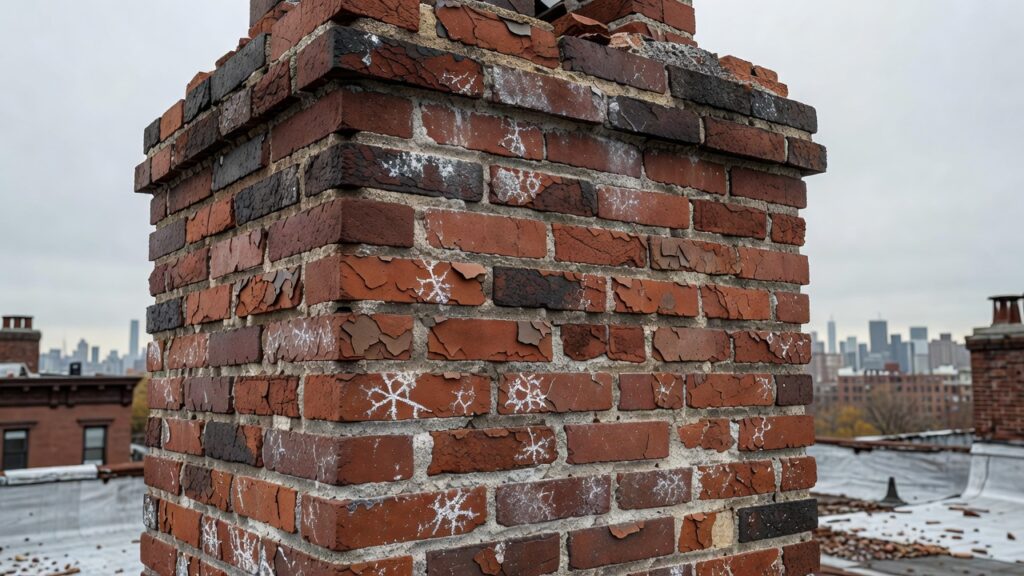
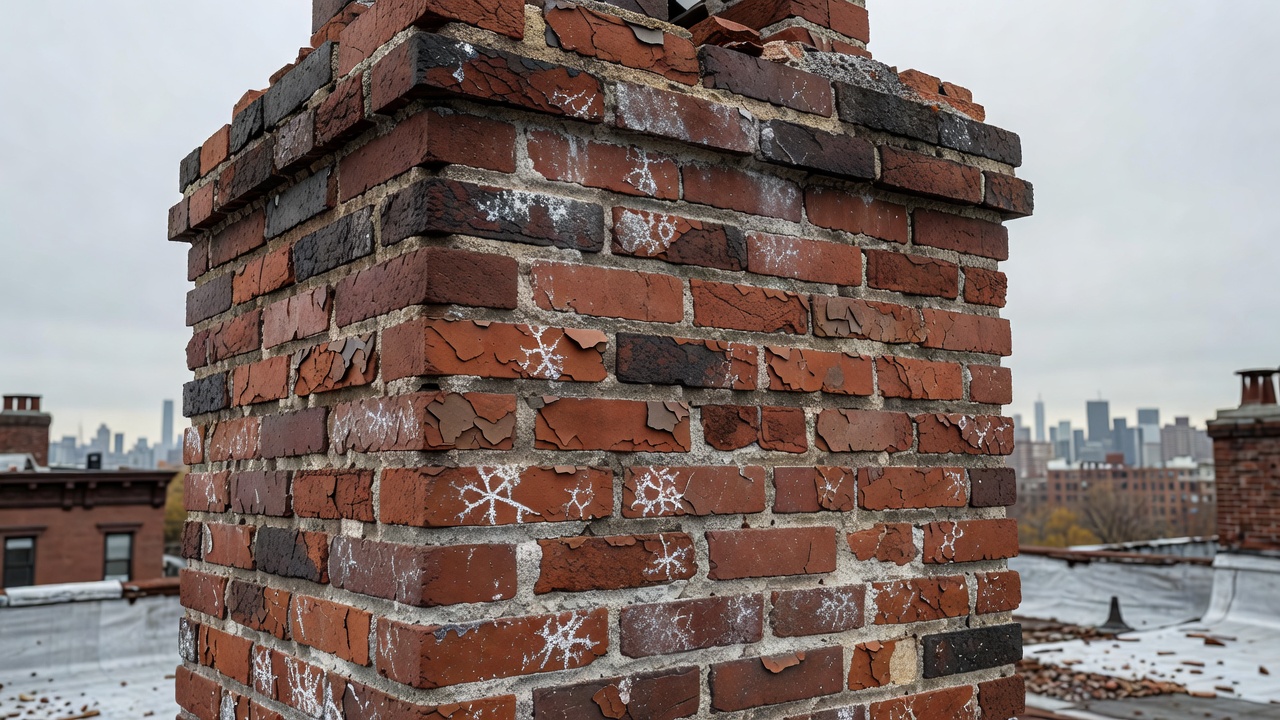
That chalky white residue on the outside of your chimney is called efflorescence. It means water is moving through the masonry, pulling salts to the surface. On its own it looks minor. What it signals is active moisture infiltration the kind that accelerates spalling and mortar erosion through freeze-thaw cycles. Call a pro now. This is not a “keep an eye on it” situation in a New York winter.
Crumbling or Missing Mortar Joints
Run your finger along the mortar between the bricks on your accessible chimney sections. If it crumbles, recesses more than a quarter inch, or is visibly absent in spots, the structural integrity of the chimney stack is compromised. Repointing fixes this but only if you catch it before water gets behind the brick face. If you see gaps wider than a pencil, call us. This is a now problem.
Spalled or Flaking Brick Faces
Spalling is when the face of a brick pops off or flakes away. You might find small brick fragments on your roof, your fire escape, or the sidewalk below. In a dense neighborhood like West Harlem or around 145th Street, falling masonry is not just a repair issue it’s a liability issue. This one move straight to the call-a-pro-now column, no hesitation.
A Smoky Smell When the Fireplace Is Not in Use
This is the sign most Harlem homeowners dismiss. They assume it’s a neighbor’s fireplace or the building’s shared flue. Sometimes that’s true. Often, it means your flue liner has a crack or gap allowing combustion gases including carbon monoxide to seep into your living space. According to the CSIA, creosote buildup and liner damage are the leading causes of chimney fires and carbon monoxide intrusion. If you smell smoke and nothing is burning, get an inspection scheduled immediately.
Rust on the Firebox or Damper
Open the damper and look up into the firebox. Rust on the firebox walls or the damper plate means moisture is getting in somewhere above typically a failed chimney cap, a cracked crown, or a deteriorated flashing seal. Keep-an-eye-on-it becomes call-a-pro the moment you see rust spreading or the damper plate no longer seals flush. A warped damper wastes heat and allows downdrafts that push smoke back into the room.
Visible Cracks in the Firebox Interior
Look inside the firebox with a flashlight. Hairline cracks in the refractory panels or the masonry lining are not cosmetic. They are pathways for heat and flame to reach combustible framing behind the wall. The National Fire Protection Association’s NFPA 211 standard requires that chimneys, fireplaces, and vents be inspected at least once per year and cleaned as necessary precisely because these interior cracks are invisible until someone actually looks. If you see cracks wider than a credit card or cracks running the full height of the firebox panel, stop using the fireplace and call for repair.
Deteriorated or Collapsed Chimney Crown
The chimney crown is the concrete or mortar cap that seals the top of the masonry chimney around the flue tile. Get on a ladder or pull up your building’s roof inspection photos. If the crown is cracked, has chunks missing, or has separated from the flue liner, every rain event is sending water directly into your flue. In Harlem’s pre-war brownstones many built without proper overhang crowns to begin with — this is an extremely common finding. Call a pro now.
Stains Inside the Firebox After Heavy Rain
If you notice water stains, damp ash, or a wet smell in the firebox after a rainstorm, water is entering the flue. This damages the liner, accelerates mortar erosion, and in winter will cause rapid freeze-thaw spalling inside the flue itself. Keep an eye on it only if the stain is minor and you already have a crown and cap in good condition. Otherwise, call for a full inspection.
The Mistakes That Make This Worse
The single most common mistake we see from homeowners in Harlem and across co-ops in Yorkville and Inwood and Hell’s Kitchen is hiring a general handyman for chimney work. Chimney repair requires understanding flue dynamics, NYC Fire Code compliance, and masonry behavior under thermal stress. The CSIA recommends hiring only CSIA-certified chimney sweeps, noting that certified professionals are trained to identify structural hazards, code violations, and venting problems that untrained workers may miss. A handyman who patches your crown with the wrong mortar mix can actually accelerate the damage by trapping moisture inside the masonry.
The second mistake: ignoring the problem until spring. Harlem winters are hard on brick. Every freeze-thaw cycle between November and March works existing cracks wider. What costs $600 to repoint in October can cost $2,500 to rebuild by April.
The third mistake and this one sting is assuming your building’s management has handled the shared flue inspection. In multi-family buildings, New York City Local Law and the NYC Fire Code (Title 29, Chapter 1) require that chimneys and flue systems in multi-family dwellings be inspected and maintained to NFPA 211 standards. That applies to the shared stack, but it does not necessarily cover the individual firebox and liner serving your unit. Verify what’s been inspected and what hasn’t before you assume you’re covered.
What the Repair Actually Involves
Depending on what we find, chimney repair in Harlem typically breaks into a few distinct scopes: tuckpointing and mortar repair, crown rebuilding or sealing, flue liner repair or relining, firebox panel replacement, and flashing repair where the chimney meets the roof. Most single-issue repairs on a Harlem brownstone or rowhouse run between $350 and $1,200 in 2026. Full flue relining the bigger job runs higher, typically $2,500 to $5,500 depending on flue height and liner type. We give honest assessments, not upsells.
The U.S. Fire Administration reports that heating fires account for approximately 15% of all residential structure fires in the United States, with chimney-related failures being a leading cause. In a borough as dense as Manhattan, a chimney fire does not stay contained to one unit. That’s not a scare tactic it’s just the reality of shared walls and narrow buildings packed side by side from 110th Street to the Harlem River.
Call Chimney Manhattan Before the Next Cold Front Moves In
Our technicians work throughout Harlem Central Harlem, East Harlem, Hamilton Heights, West Harlem and we know the building types, the common failure points, and the code requirements that apply in New York City. If you saw your chimney in any of the warning signs above, do not wait. Contact Chimney Manhattan to schedule an inspection or repair. We will tell you exactly what needs to be done, what can wait, and what the honest price is.
How much does chimney repair in Harlem typically cost in 2026?
Most targeted repairs tuckpointing, crown sealing, damper replacement, or minor firebox work run between $350 and $1,200 for a Harlem brownstone or rowhouse. Flue relining, which is the most extensive repair, generally runs $2,500 to $5,500 depending on flue height and liner material. We provide written estimates after inspection so there are no surprises.
Can I use my fireplace while waiting for chimney repair?
It depends on the issue. If you have a cracked flue liner, visible firebox cracks, or a smoky smell when the fireplace is not in use, you should not use it until a certified technician clears it. A functioning damper and no visible damage may be fine for limited use, but an annual inspection is the only reliable way to confirm that. When in doubt, leave it unlit and call for an assessment.
Does NYC require a permit for chimney repair in Harlem?
Minor repairs such as tuckpointing, crown patching, and cap replacement generally do not require a Department of Buildings permit in New York City. However, structural work including flue relining, full crown rebuilding, or any alteration to a shared flue in a multi-family building may require a permit and DOB filings. We advise on permit requirements specific to your property during the inspection and handle the necessary documentation when required.
Related from Chimney Manhattan: Chimney Repair NYC — Expert Masonry & Structural Repairs in Manhat · Chimney Flashing Repair NYC — Stop Leaks Before They Wreck Your Home · Professional Chimney Cleaning Services in Manhattan, NYC