Does Your Greenwich Village Chimney Get Every Job with Professionalism and Care?
That question matters more than it might sound. Every job with professionalism and care is what separates a safe, functioning fireplace from one that quietly builds toward a chimney fire or carbon monoxide leak. In a neighborhood like Greenwich Village, where pre-war townhouses and landmarked brownstones share walls with neighbors just a few feet away, the stakes are genuinely high. So before we talk about what chimney service costs here, let’s be direct: a chimney you ignore does not stay neutral. It gets worse.
Expect to pay somewhere between $175 and $600 for a professional chimney cleaning and Level 1 inspection in Greenwich Village in 2026. Where your specific job falls in that range depends on several real variables, each of which we’ll break down below.
A Scenario from Bedford Street
A homeowner on Bedford Street in Greenwich Village called us last winter after years without a chimney sweep. They’d used the fireplace occasionally, assumed no visible smoke meant no problem, and never scheduled an inspection. When our technicians arrived, we found third-degree glazed creosote coating roughly 40 percent of the flue liner, along with a partial blockage from a deteriorated clay tile. The cleaning alone required two visits and a chemical treatment. The total cost ran well above what a routine annual sweep would have cost over the same five-year period. The homeowner was lucky: the chimney had not yet ignited.
That scenario repeats itself across the West Village, SoHo, Gramercy Park, and Murray Hill every season. Deferred maintenance compounds the cost and the risk at the same time.
Why the Safety Risk Is Not Theoretical
The Chimney Safety Institute of America states that creosote, a byproduct of wood combustion, is the leading cause of chimney fires, and that third-degree glazed creosote is extremely difficult to remove and highly flammable. Once that glaze builds up, a single hot fire can ignite it. Chimney fires burn at temperatures exceeding 2,000 degrees Fahrenheit and can spread to adjacent framing or neighboring units inside the dense rowhouse blocks typical of Greenwich Village and nearby Chelsea.
The U.S. Fire Administration reports that heating fires account for approximately 15 percent of all residential structure fires in the United States, with chimney-related failures being a leading cause. In Manhattan’s older building stock, where flue systems may date back 80 or 100 years, that risk is not abstract.
Carbon monoxide is the quieter hazard. A cracked flue tile or a blocked cap can push combustion gases back into living spaces with no smoke, no smell, and no warning. In attached townhouses from Bleecker Street to Washington Square North, a flue failure can affect not just your unit but also your neighbor’s.
What Drives the Cost Up or Down
The price range of $175 to $600 is real, and the spread is real too. Here are the factors that move it:
Creosote buildup level. A lightly used fireplace cleaned on a regular annual schedule sits at the low end. A flue with years of buildup, or third-degree glazed deposits, requires chemical treatments and additional labor. That alone can double the base cleaning cost.
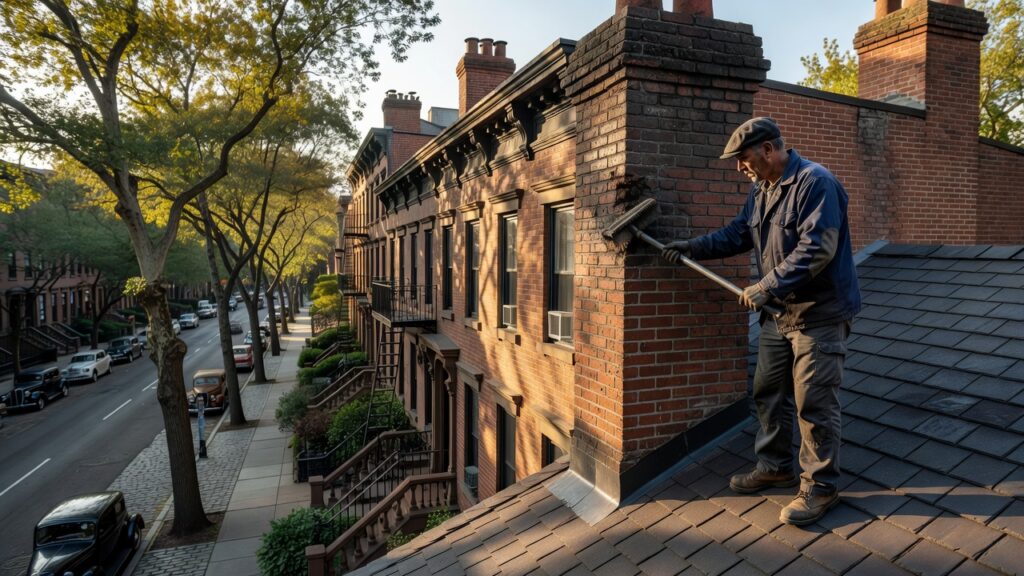
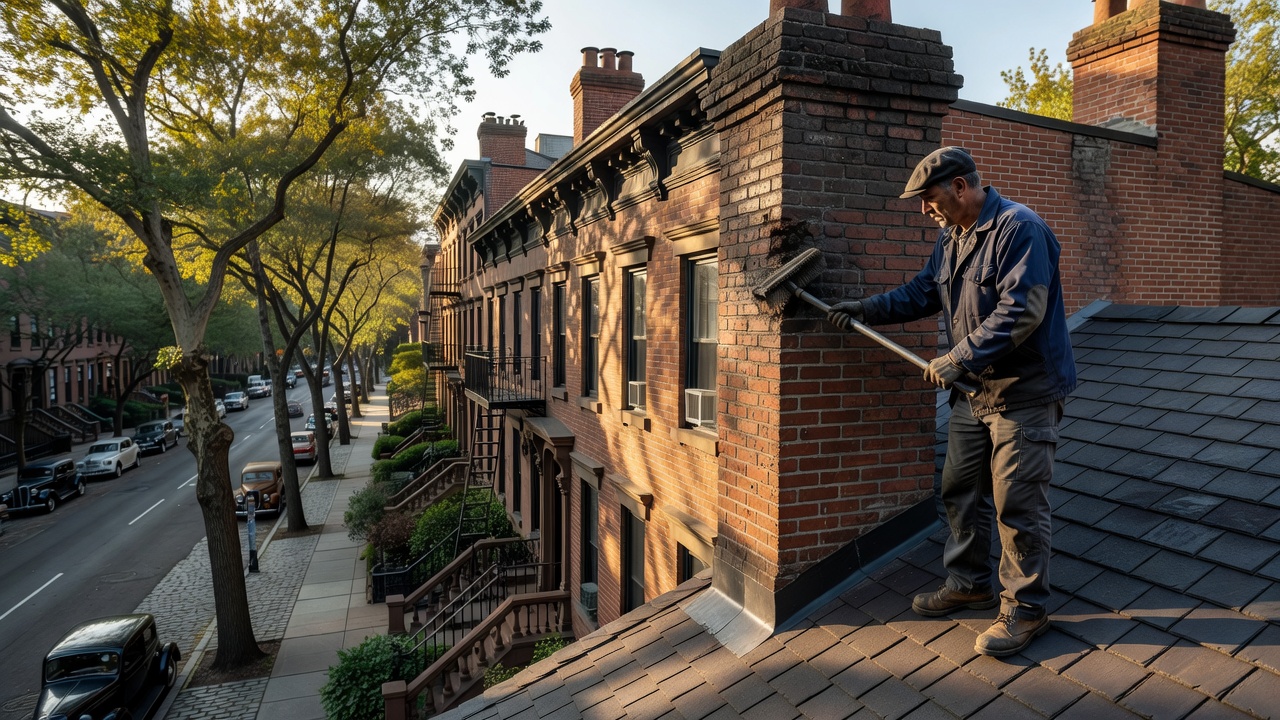
Flue height and accessibility. Greenwich Village townhouses often run four to five stories. A taller chimney stack requires more time on the roof and additional equipment. Rooftop access on a narrow Village block can also sting the schedule when scaffolding or a neighbor’s renovation is in the way.
Number of flues. Many pre-war brownstones have two or three separate flues serving the fireplace, a boiler, and a gas appliance. Each flue is a separate cleaning job with its own inspection.
Inspection level required. A Level 1 inspection is included in a standard sweep. If our technicians find structural concerns, a Level 2 inspection, which involves video scanning of the flue interior, adds to the cost. Under New York City Local Law and the NYC Fire Code (Title 29, Chapter 1), multi-family dwellings must maintain chimneys to NFPA 211 standards, and documented inspection records matter for building compliance.
Repairs discovered during cleaning. A displaced liner section, a missing or damaged chimney cap, or deteriorated mortar joints will each carry their own repair cost on top of the cleaning fee. We give written estimates before any additional work starts.
Time since last service. The longer the gap, the more labor the job takes. Annual service is consistently the cheapest way to own a fireplace.
What a Standard Cleaning Includes Versus What Costs Extra
| Included in Base Price | Typical Add-Ons (Billed Separately) |
|---|---|
| Chimney sweep (brush and vacuum method) | Level 2 video inspection |
| Level 1 visual inspection of accessible areas | Chemical creosote treatment (heavy buildup) |
| Written condition report | Chimney cap replacement |
| Drop cloths and interior protection | Mortar joint repointing |
| Firebox and smoke chamber brushing | Flue liner repair or relining |
The base service covers what NFPA 211 requires for an annual inspection and cleaning. Add-ons are priced only when they’re actually needed, not as a default upsell.
How to Avoid Overpaying
Schedule service in late summer or early fall, before peak demand. Chimney sweeps across Yorkville, Harlem, and Inwood book up fast once cold weather arrives in October. Booking in August or September typically means faster availability and no premium pricing from scarcity. Also, ask for a written scope of work before any technician starts. A reputable company doing every job with professionalism and care should be able to tell you exactly what the cleaning covers and what any additional work will cost before you agree to it. If a quote arrives with vague line items or pressure to approve repairs on the spot, that’s a reason to pause.
According to the National Fire Protection Association, chimneys should be inspected at least once per year and cleaned as necessary. One annual visit is enough to stay ahead of buildup for most Greenwich Village fireplaces used on a normal seasonal basis.
What Happens When You Wait
The Bedford Street job we described was not unusual. We’ve seen similar situations in Washington Heights, Hell’s Kitchen, and Tribeca. The pattern is always the same: a homeowner who used the fireplace occasionally, assumed everything was fine, and eventually faced a much larger repair bill than annual maintenance would have cost. In the worst cases, the delay creates a genuine fire hazard in a building with attached neighbors. Greenwich Village’s landmarked rowhouse blocks mean a chimney fire is never just your problem.
Every job with professionalism and care means arriving on time, protecting your floors and furniture, doing the work correctly, and telling you the truth about what we find. That’s how we approach every visit, whether it’s a routine sweep or a complex liner assessment.
Frequently Asked Questions
How much does chimney cleaning typically cost in Greenwich Village in 2026?
Most homeowners in Greenwich Village pay between $175 and $600 for a professional chimney cleaning and Level 1 inspection. The lower end applies to fireplaces cleaned on a regular annual basis with light creosote deposits. The higher end reflects older, multi-story chimneys with years of buildup, multiple flues, or additional repairs. We provide written estimates before any work beyond the standard cleaning begins.
Is it safe to use a fireplace in a Greenwich Village townhouse without a recent inspection?
The Chimney Safety Institute of America identifies creosote buildup and structural flue damage as leading causes of chimney fires and carbon monoxide exposure. In attached townhouses and brownstones, those risks extend beyond your unit to adjacent neighbors. The National Fire Protection Association (NFPA 211) recommends an annual inspection even for fireplaces used only occasionally. Using a fireplace without a current inspection, especially in pre-war construction, carries real risk.
What is the difference between a Level 1 and Level 2 chimney inspection?
A Level 1 inspection covers all accessible areas of the chimney, including the firebox, smoke chamber, and visible portions of the flue. It’s included with a standard cleaning. A Level 2 inspection adds a video scan of the full flue interior and is required when there’s been a change in the appliance, a suspected flue event such as a chimney fire, or before a real estate transaction. Level 2 inspections cost more and are ordered only when there is a specific reason to look deeper into the flue system.
Schedule Your Greenwich Village Chimney Cleaning
Creosote buildup, damaged flue liners, and blocked chimney caps can create fire and carbon monoxide risks if left unaddressed. Annual chimney inspections and cleaning when necessary can help identify developing problems before they lead to more extensive repairs. Whether you use your fireplace regularly or only occasionally, a professional assessment can help you understand its condition and what maintenance it needs.
Chimney Manhattan serves Greenwich Village, the West Village, SoHo, Chelsea, Tribeca, and surrounding Manhattan neighborhoods. Our team protects your home during service, documents inspection findings, and provides written estimates before additional repair work begins.
Visit chimneymanhhattan.com or contact Chimney Manhattan today to schedule your chimney cleaning and inspection.
Related from Chimney Manhattan: Chimney Sweep Lower East Side · Professional Chimney Cleaning Services in Manhattan, NYC · Chimney Repair NYC — Expert Masonry & Structural Repairs in Manhat