
Chimney Repair in SoHo: What You Can Do Yourself and When to Call a Pro
Most chimney repair in SoHo comes down to one question: is this cosmetic, or is it structural? Cosmetic issues a flaking mortar joint on the exterior, a stuck damper handle, surface staining on the firebox are things a careful homeowner can sometimes address. Structural problems inside the flue, at the crown, or in the liner are a different matter entirely, and getting that wrong in a cast-iron building on Broome Street can mean a carbon monoxide problem nobody sees coming.
Before you start: Understand what You’re actually Dealing with
A SoHo loft built in the 1880s as a cast-iron commercial building doesn’t have a chimney that looks like the ones on brownstones in Harlem or capes out in the boroughs. Many of these buildings were converted to residential use decades after construction, and the flue systems were retrofitted sometimes well, sometimes not. Before you pick up a trowel or call anyone, you need a clear picture of your chimney’s condition.
Pull out your last inspection report. If you don’t have one from the past twelve months, that’s your real starting point. According to the National Fire Protection Association (NFPA 211), chimneys, fireplaces, and vents should be inspected at least once per year and cleaned as necessary to reduce fire and carbon monoxide risks. In a multi-family building on, say, Spring Street or West Broadway, that inspection isn’t just a suggestion New York City Local Law and the NYC Fire Code (Title 29, Chapter 1) require that chimneys and flue systems in multi-family dwellings be inspected and maintained to comply with NFPA 211 standards.
Know your building’s co-op or condo rules before you touch anything. In most SoHo co-ops, the flue itself is a shared building system. You may own the firebox opening in your unit, but repairs above the damper often require board approval and a licensed contractor.
Step 1: Do a visual inspection from inside the firebox
Grab a flashlight and look up. You’re checking for obvious cracking in the smoke chamber, broken or missing damper components, and whether you can see daylight through the flue (you shouldn’t see it clearly that could mean a liner gap or a missing cap). Look at the firebox walls for white efflorescence, dark staining, or spalling brick. Take photos of everything.
This part is DIY-appropriate. You’re gathering information, not making repairs.
Step 2: Check the damper
A stiff or non-sealing damper is one of the few components a homeowner can reasonably address without professional help. If the throat damper is a simple pivot type and it’s just corroded, a wire brush and some heat-rated lubricant (not WD-40) can free it up. If the damper plate is cracked, warped, or the frame is rusted through, it needs replacement. Replacement itself is a confined, above-fire-opening job manageable for a handy person, but if the smoke shelf is cracked or there’s loose debris above, stop and call us.
Step 3: Assess mortar joints in the firebox and on the exterior
Minor tuckpointing in the visible firebox filling hairline mortar cracks between the firebricks is a task some homeowners handle with refractory mortar from a masonry supply house. The key word is minor. Cracks under 1/8 inch wide that haven’t shifted the brick are candidates for DIY patch work. Use only refractory-rated mortar, not standard Portland cement mix, which can’t handle the thermal cycling.
Anything wider than 1/8 inch, any crack that runs diagonally across multiple bricks, or any area where the brick face is spalling off in chunks is structural. In a SoHo building many of which sit on older foundations and have been through decades of vibration from subway lines and street traffic diagonal cracking in a firebox wall can signal settling that needs a professional assessment before any patching happens.
Step 4: look at the chimney crown and cap (from the roof, if safe access exists)
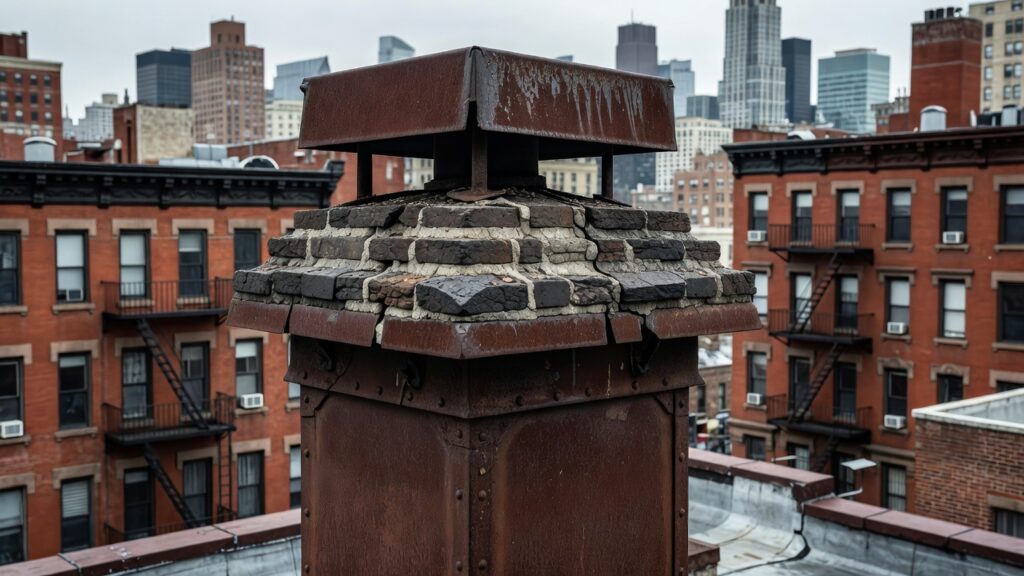
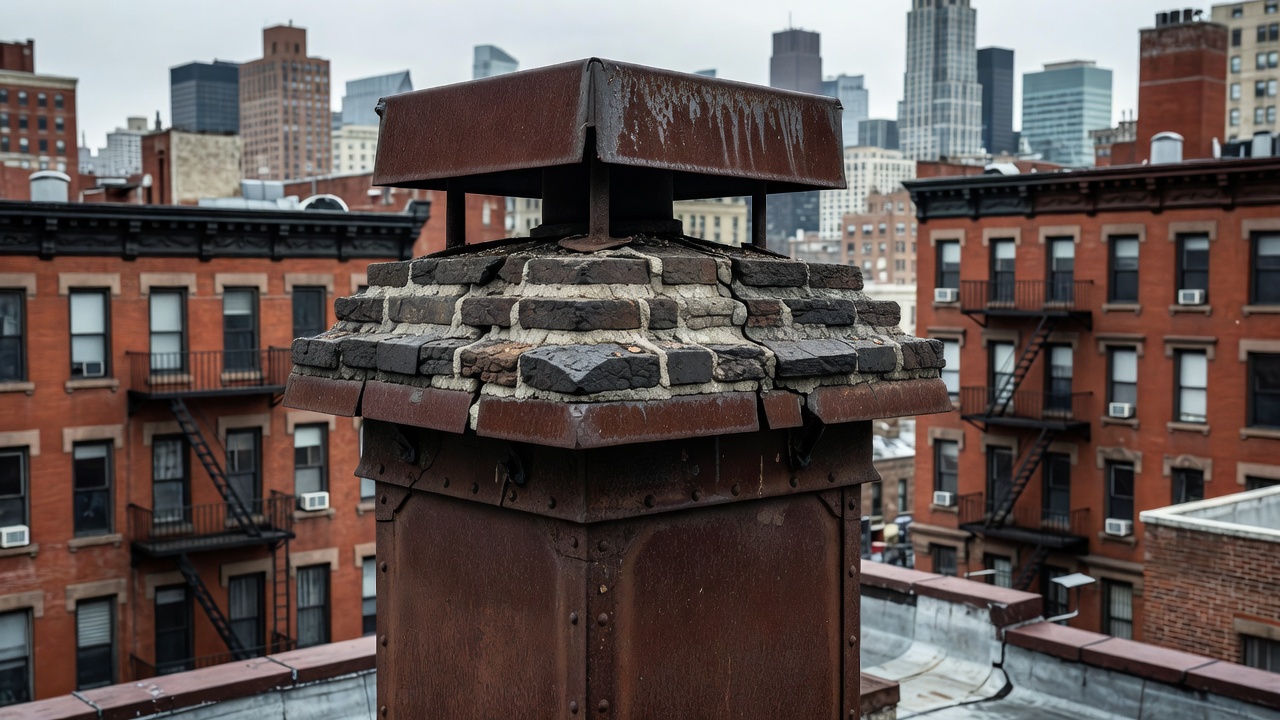
If your building gives you safe roof access, look at the chimney crown the concrete or mortar cap that seals the top of the chimney stack around the flue liner. Hairline surface cracks in the crown can be sealed with a flexible elastomeric crown sealer, which is a legitimate DIY repair. A crown that’s broken in sections, tilted, or showing open gaps around the liner needs professional rebuilding.
Do not attempt to work on a SoHo rooftop chimney without proper fall protection. Many of these buildings are five to seven stories with parapet walls that provide a false sense of security. If the crown or cap needs anything beyond a tube of sealer applied from a safe standing position, call a professional.
Step 5: know when the flue liner is the problem
This is where DIY ends, full stop. The Chimney Safety Institute of America (CSIA) states that creosote a byproduct of wood combustion is the leading cause of chimney fires, and that third-degree glazed creosote is extremely difficult to remove and highly flammable. But creosote buildup is only one liner issue. Cracked terracotta liner tiles, gaps between liner sections, and deteriorated mortar joints inside the flue are hazards you cannot diagnose accurately without a camera inspection, and you cannot repair them safely from the firebox opening.
We’ve done liner work in buildings throughout SoHo, Tribeca, the West Village, and Chelsea. In the older cast-iron conversions north of Canal Street especially, we find flue systems that were never designed for residential wood-burning use and have been running that way for thirty years. That’s the kind of situation that looks fine from the firebox but shows serious liner damage on camera.
Step 6: clean what you can, but don’t skip professional sweeping
You can clean the accessible firebox surfaces brush out ash, wipe down the fireback, clear the ash pit. That’s housekeeping, not chimney maintenance. Actual creosote removal from the flue walls requires rotary brush systems and sometimes chemical treatments that a CSIA-certified sweep handles. Attempting to brush a flue yourself without the right containment setup will coat your SoHo loft in fine black soot and won’t remove third-degree deposits anyway.
Troubleshooting tip: Smoky smell when the fireplace isn’t in use
A persistent smoky odor in the apartment especially in summer or on rainy days almost always means one of three things: a damaged or missing chimney cap letting moisture drive odors down, a negative pressure problem in the building pulling air down the flue, or creosote deposits off gassing in humid air. None of this resolve with cleaning alone. A cap replacement fixes the first. The second and third need a professional inspection to diagnose properly, because the fix might be a top-selling damper, a flue reline, or a ventilation adjustment. We get calls about this from buildings throughout Murray Hill and Gramercy Park as well it’s not unique to SoHo, but the older the building, the more likely the cause is structural rather than a simple fix.
How much does chimney repair in SoHo typically cost in 2026?
Minor repairs tuckpointing a few joints, replacing a damper, sealing a crown generally run between $250 and $800 depending on access and materials. A partial flue reline in a SoHo building with a five- or six-story stack can range from $2,500 to $6,000 or more. Full liner replacement with a stainless steel system in an older cast-iron conversion often comes in at $4,000 to $8,500. These are real numbers from our work in the neighborhood, not averages pulled from national databases, though every job has variables and a proper estimate requires an inspection.
Can I use my fireplace in my SoHo loft while waiting for a repair?
It depends entirely on the type and location of the damage. A cosmetic firebox crack that hasn’t shifted the brick and doesn’t involve the smoke chamber poses a lower immediate risk than a cracked flue liner or a damaged crown. That said, we don’t recommend using any fireplace that hasn’t passed a current inspection, particularly in a multi-unit SoHo building where a flue fire or carbon monoxide event can affect multiple households. If there’s any structural question, stop using the fireplace until a certified sweep has cleared it.
Does my SoHo co-op board need to approve chimney repairs?
For repairs inside your firebox only, most co-op boards in SoHo don’t require formal approval, though you should notify building management. Any work that involves the flue, liner, chimney stack, or rooftop components almost always requires board approval and a licensed, insured contractor under your proprietary lease terms. We’re familiar with the typical documentation requirements for SoHo and Tribeca co-op buildings and can provide the certificates and scope letters most boards ask for.
Schedule Your SoHo Chimney Repair Inspection
Minor cosmetic issues may be suitable for simple maintenance, but cracked flue liners, damaged chimney crowns, and structural masonry problems require professional assessment. If you notice unusual smoke odors, damaged bricks, or signs of deterioration, an inspection can help identify the cause and determine which repairs are necessary. When structural damage is suspected, avoid using the fireplace until it has been evaluated.
Chimney Manhattan serves SoHo, Tribeca, the West Village, Chelsea, and surrounding Manhattan neighborhoods. Our team understands the challenges of older cast-iron loft buildings and pre-war co-ops. We can assess your chimney, explain the findings, and provide an estimate to help you plan the next steps.
Visit chimneymanhhattan.com or contact Chimney Manhattan today to schedule your chimney inspection and request a repair estimate.
Related from Chimney Manhattan: Chimney Repair NYC — Expert Masonry & Structural Repairs in Manhat · Chimney Flashing Repair NYC — Stop Leaks Before They Wreck Your Home · Chimney Sweep & Repair in Harlem