Published November 3, 2026
Chimney Sweep West Harlem: What the Job Actually Involves Before You Book
Most West Harlem homeowners searching for a chimney sweep want the same thing a straight answer on what gets done, what it costs, and whether any of it is something they can handle themselves. A chimney sweep in West Harlem runs roughly $150 to $250 for a standard cleaning, and for that money you should know exactly what you’re getting and what you’re not.
The buildings here tell the whole story. From the landmarked rowhouses along Convent Avenue to the pre-war co-ops near Amsterdam Avenue and 125th Street, West Harlem has some of the oldest flue systems in the city. Many of those chimneys were built for coal, later converted to wood or gas, and haven’t been opened since a previous owner lit a fire. Understanding what a sweep actually does start to finish helps you decide what to ask for, what you can prep yourself, and when to walk away from a contractor who cuts corners.
A Real Job That Came Through Our Books
A homeowner on West 141st Street in Hamilton Heights called us in early spring 2026 after buying a four-story brownstone the previous fall. The home inspector had flagged the fireplace as “functional but uninspected.” The owner had burned a few cords of wood over the winter without giving it a second thought. When we ran a camera through the flue, we found third-degree glazed creosote coating nearly a quarter of the liner the kind that looks almost lacquered along with a cracked terracotta tile just below the smoke chamber. Neither issue was visible from the firebox. Neither would have shown up without a camera and a trained eye.
That job required a two-stage chemical treatment before any brushwork could happen, followed by a liner inspection report for the building’s records. It was not a $175 sweep. It was a $600-plus repair and cleaning job and the homeowner was glad to know before the next heating season, not after a chimney fire.
What You Can Safely Do Yourself
Being honest about this matters. A capable homeowner can handle several tasks around fireplace maintenance without calling anyone.
You can clear ash from the firebox once it’s fully cool typically 24 hours after the last fire. A metal ash bucket and a stiff brush are all you need. You can inspect the damper from below with a flashlight: open it, look up, check that it moves freely and seals when closed. You can examine the firebox walls for obvious cracking or spalling bricks. You can also clean the glass door on a gas insert using a non-abrasive fireplace glass cleaner.
None of that requires a professional and none of it voids any warranty on a modern insert.
What Actually Needs A Pro and Why
The tasks that genuinely require a certified sweep aren’t gatekept arbitrarily. They come down to three things: tools you don’t own, hazards you can’t see, and code requirements that carry real consequences.
A proper chimney sweep uses rotary brushes, shop-grade HEPA vacuums, and a video camera system. Without the vacuum running simultaneously with the brushing, you’re pushing creosote dust into the room. Without the camera, you’re cleaning blind. In older Harlem and Morningside Heights buildings where the flue may have never been relined, a brush pass without a camera inspection is half a job at best.
The Chimney Safety Institute of America states that creosote a byproduct of wood combustion is the leading cause of chimney fires, and that third-degree glazed creosote is extremely difficult to remove and highly flammable. Attempting to remove heavy glazed deposits without a chemical pre-treatment can fracture the liner or push burning material into concealed wall cavities. According to the National Fire Protection Association (NFPA 211), chimneys, fireplaces, and vents should be inspected at least once per year and cleaned as necessary to reduce fire and carbon monoxide risks. The U.S. Fire Administration reports that heating fires account for approximately 15% of all residential structure fires in the United States, with chimney-related failures being a leading cause.
In a multi-family building, which covers most of the housing stock from Washington Heights down through Central Harlem and into East Harlem the NYC Fire Code (Title 29, Chapter 1) requires that flue systems be inspected and maintained to comply with NFPA 211 standards. That means a written inspection record, not just a brushing. If your co-op board or building management asks for documentation, a receipt from an uncertified handyman won’t satisfy it.
The Concrete Risks of Getting It Wrong
Skipping a sweep or hiring someone who doesn’t do the full job creates specific, measurable problems.
A partially cleaned flue still has the combustible deposits that matter most the ones higher up near the smoke chamber, where a chimney fire typically starts. Cleaning the lower third and calling it done is a common shortcut. You also can’t verify damper function, liner integrity, or cap condition without going all the way up.
Carbon monoxide is the quieter risk. A cracked liner or a blocked flue cap common in older Harlem rowhouses with ornamental clay chimney pots can redirect combustion gases back into living spaces. That’s not a hypothetical. It’s the reason we carry CO monitors on every job and run them before we leave.
If you’ve had gas appliances vented through the same flue as a fireplace (a configuration we see frequently in converted brownstones in Hamilton Heights and Sugar Hill), a missed blockage affects both systems simultaneously.
What a Full Sweep Covers, Start to Finish
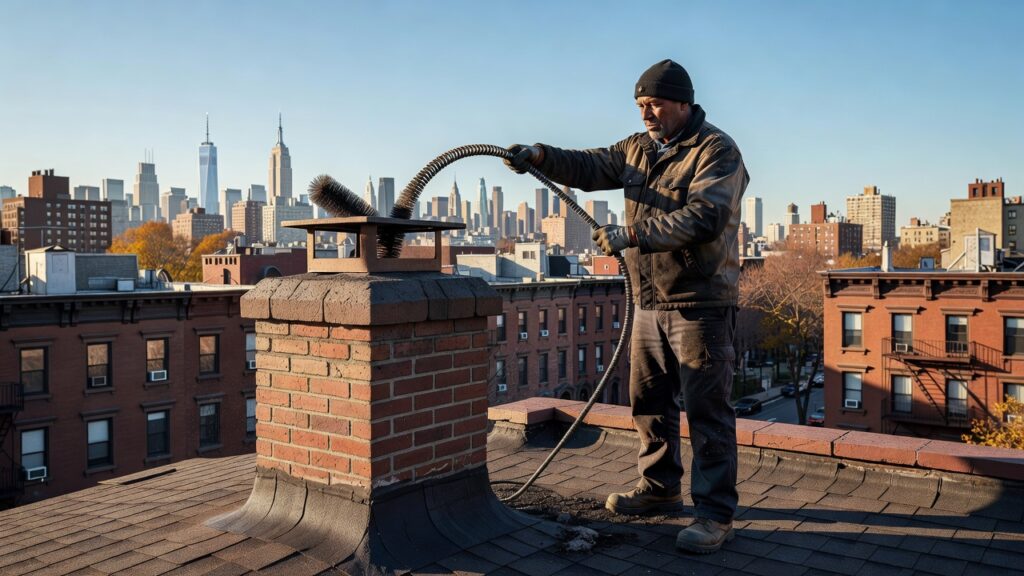
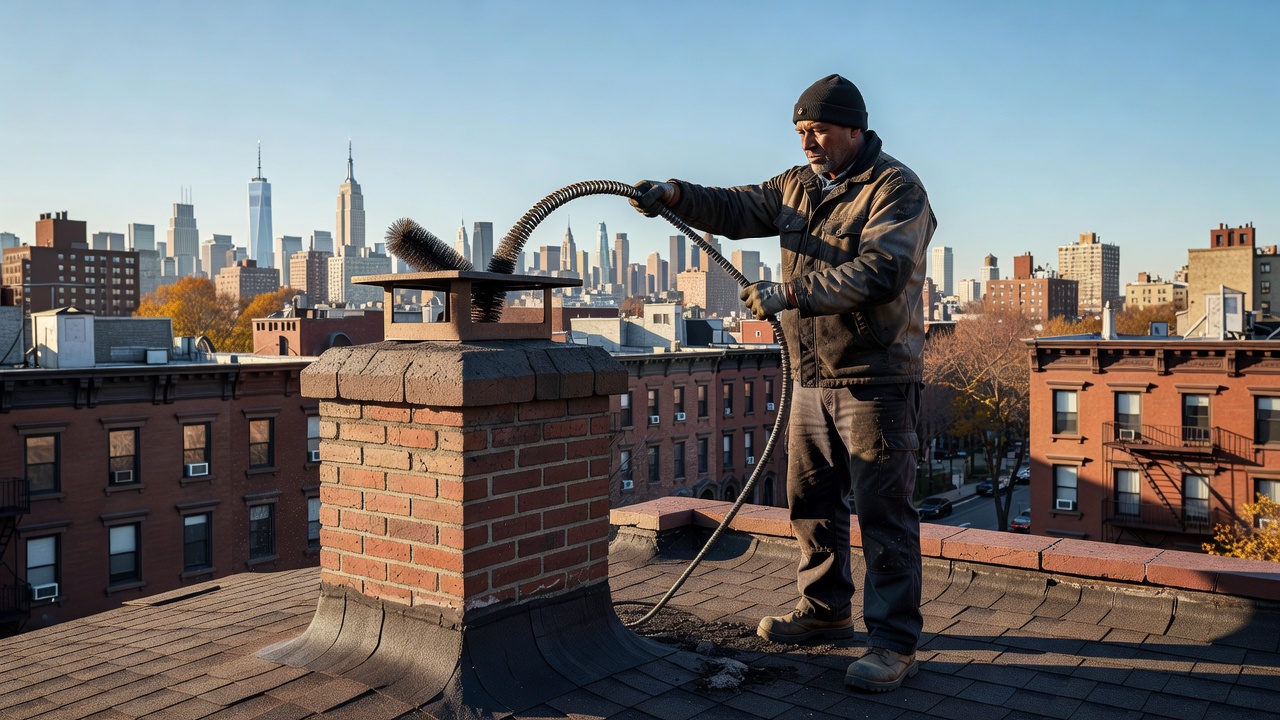
When our technicians arrive for a standard Level 1 inspection and cleaning, the job moves in a fixed sequence. We lay drop cloths and seal the firebox opening before any brushwork starts. The vacuum runs from the first brush stroke. We work from the top down, clearing the cap and crown before entering the flue, so debris falls into a contained system rather than your living room.
After brushing, we run the camera to document liner condition, check the smoke shelf for debris accumulation (a common spot for bird nests in Harlem buildings with uncapped flues), and test the damper. We photograph anything that warrants attention. You get a written summary before we leave not a verbal “looks good.”
For a straightforward single-family brownstone with one flue and no liner damage, that process takes about 90 minutes. For a building with multiple fireplaces like some of the larger townhouses near Strivers’ Row on West 138th Street plan on a half-day.
Schedule Your West Harlem Chimney Sweep
If your fireplace hasn’t been swept in the past 12 months, or if you’ve moved into a West Harlem home without inspection records, contact Chimney Manhattan to schedule a cleaning and Level 1 inspection. We work throughout West Harlem, Hamilton Heights, Morningside Heights, and the broader Manhattan area. Reach us through the contact form at chimneymanhhattan.com or call to confirm current availability and pricing for your building type.
Frequently Asked Questions
How often does a West Harlem fireplace need to be swept?
NFPA 211 requires at least one inspection per year for any chimney in active use. If you’re burning wood regularly through a New York winter, a cleaning before the season starts and a check mid-season is a reasonable standard. Gas fireplaces need annual inspection too the fuel burns cleaner, but liner cracks and blocked vents still happen.
What does a chimney sweep cost in West Harlem in 2026?
A standard cleaning and Level 1 inspection typically runs $150 to $250 for a single flue in good condition. Heavily soiled flues, glazed creosote deposits, or multi-flue buildings will cost more. Any contractor quoting well below $150 for a Manhattan building is almost certainly skipping the camera inspection or the HEPA vacuum setup both of which matter.
My West Harlem co-op requires a chimney inspection letter. What does that mean?
Under the NYC Fire Code, multi-family dwellings must maintain chimney and flue systems in compliance with NFPA 211 standards. A co-op inspection letter is typically a written report from a certified sweep confirming the flue was inspected and cleaned, noting any deficiencies. A receipt for a cleaning without a written condition report usually won’t satisfy a board’s request. Make sure whoever you hire can provide formal documentation, not just an invoice.
Related from Chimney Manhattan: Chimney Sweep & Repair in Harlem · Chimney Sweep Lower East Side · Professional Chimney Cleaning Services in Manhattan, NYC