
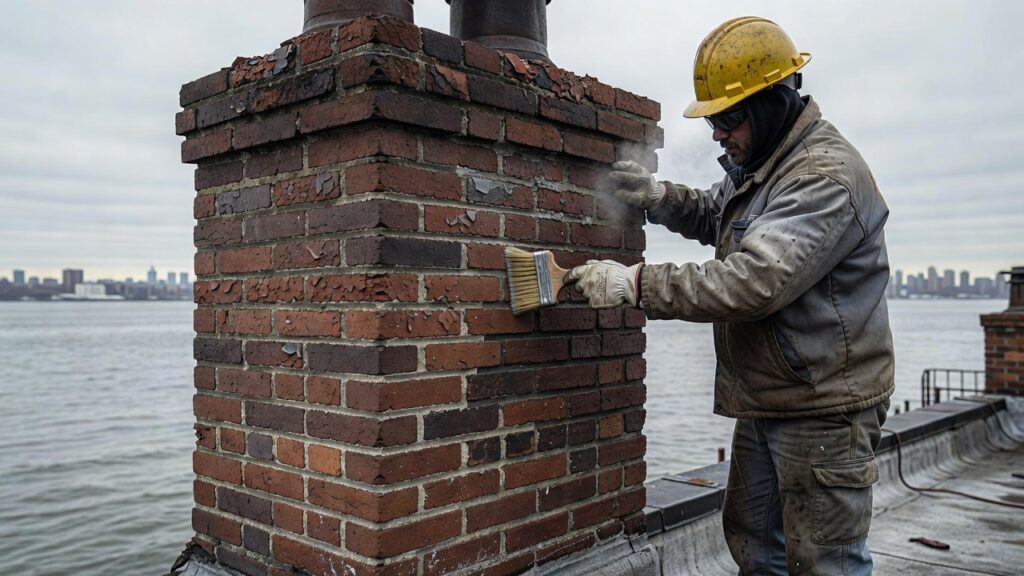
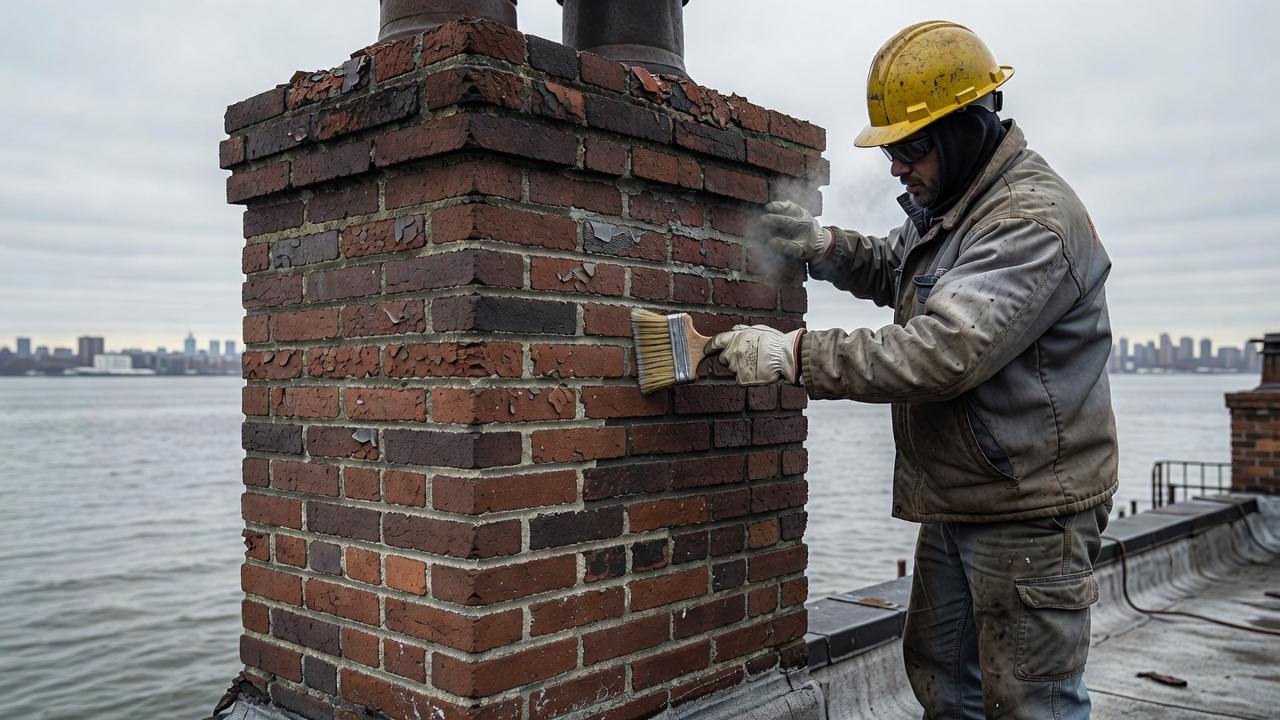
Reliable Chimney Waterproofing Manhattan NYC: 2026 Guide for Yorkville Residents
Most people assume chimney waterproofing Manhattan NYC is something you do after water damage shows up a stain on the ceiling, a crumbling mortar joint, maybe a musty smell near the firebox. That assumption is exactly backward. By the time water damage is visible inside your apartment or townhouse, the masonry has already been deteriorating for months, sometimes longer. The cost to fix what water has already done is almost always higher than what it would have cost to waterproof the chimney before the problem started.
We see this play out constantly in Yorkville specifically in the pre-war co-ops and five-story brownstones along East 83rd, 84th, and 86th Streets, where exposed brick chimneys take the brunt of every nor’easter and freeze-thaw cycle the East River corridor throws at them. This article breaks down what chimney waterproofing actually costs in 2026, what drives that number up or down, and how to make sure you’re not overpaying.
A Yorkville Homeowner’s Situation, and What It Actually Cost
Last spring, a co-op owner on East 85th Street in Yorkville called us after her building’s board flagged deteriorating mortar on the chimney crown during a routine facade inspection. She’d seen no interior water damage yet, which was lucky. We inspected the full flue and exterior stack. The chimney hadn’t been waterproofed in at least a decade, the crown had a hairline crack running across it, and the brick face was showing early-stage spalling on the north-facing side. She needed both crown repair and full waterproofing treatment. Total cost for her job came to roughly $950. Had she waited until the water worked its way through the liner and into the masonry below the roofline, she was looking at a rebuild starting well above $4,000.
That gap between proactive waterproofing and reactive repair is the real cost conversation.
What Chimney Waterproofing in Manhattan Actually Costs in 2026
For a standard single-flue chimney in Manhattan, waterproofing treatment alone applying a vapor-permeable masonry sealer to the exterior stack typically runs between $350 and $750. That range accounts for chimney height, accessibility, and the square footage of masonry being treated.
When you add related work that often accompanies waterproofing, the total project cost shifts. Here’s a realistic range table for Yorkville and surrounding neighborhoods on the Upper East Side:
| Scope of Work | Typical 2026 Range |
|---|---|
| Waterproofing sealer only (single flue) | $350 – $750 |
| Waterproofing + chimney crown repair | $700 – $1,400 |
| Waterproofing + tuckpointing (minor) | $900 – $1,800 |
| Full waterproofing project with crown, pointing, and flashing repair | $1,500 – $3,200 |
| Multi-flue chimney (common in larger Yorkville buildings) | Add $200 – $400 per additional flue |
These are honest working ranges, not lowball quotes designed to get a foot in the door. Any number far below these ranges in the Manhattan market deserves a close look at what’s actually being proposed.
What Drives the Cost Up or Down
Chimney waterproofing is not a commodity service where every job costs the same. In a dense urban environment like Manhattan from Yorkville down through Murray Hill, across to Hell’s Kitchen, and up into Washington Heights job conditions vary enormously and they move the price in predictable ways.
Chimney Height and Roof Access
A street-level chimney on a two-story Chelsea townhouse is completely different from a stack rising eight feet above a six-story Yorkville co-op roof. Working at height in Manhattan means navigating roof hatches, carrying equipment up fire stairs, and sometimes setting up scaffolding or a ladder lift. Taller stacks and harder-to-reach roofs cost more straightforwardly.
Condition of the Masonry Before Treatment
Vapor-permeable sealers work best on masonry that is structurally sound. If the mortar joints are crumbling, the crown is cracked, or the brick face is spalling, those issues have to be addressed before waterproofing is applied. Skipping that step produces a waterproofed chimney sitting on a broken foundation it doesn’t hold. So the worse shape the masonry is in, the more prep work precedes the sealer application, and the higher the total bill.
Flashing Integrity
The flashing at the roofline where the chimney meets the roof deck is the most common entry point for water intrusion on Manhattan rooftops. If the existing flashing is corroded, lifted, or improperly installed, resealing and waterproofing the chimney exterior without addressing the flashing is incomplete work. Flashing repairs add $300 to $700 to a typical project depending on the extent and material.
Number of Flues
Older Yorkville and Harlem brownstones were built with multiple flues serving different apartments and kitchen ranges. Each additional flue that needs sealer applied at the flue crown and liner top adds labor time and material cost.
Product Quality
Not all masonry sealers are equal. The industry standard for chimney waterproofing is a vapor-permeable formula one that keeps liquid water out while allowing the masonry to breathe and release interior moisture. Cheaper, non-permeable sealers trap moisture inside the masonry and accelerate the exact damage they’re supposed to prevent. The right product costs more. It’s worth it.
Borough-Specific Labor Costs
Manhattan labor rates are higher than the outer boroughs, and that’s reflected in chimney work. A job priced for a house in New Jersey doesn’t translate directly to a building in Yorkville or Gramercy Park. Parking, roof access logistics, and the cost of operating in the city all factor in.
What’s Included in a Standard Job and What’s an Add-On
A baseline chimney waterproofing service from a reputable contractor includes a pre-application inspection, surface preparation and cleaning, and application of a chimney-grade vapor-permeable sealer to all exposed masonry on the exterior stack. That’s it. Everything else crown repair, tuckpointing, flashing work, flue liner inspection is additional scope and should be priced separately with a clear written explanation of why it’s needed.
According to the Chimney Safety Institute of America (CSIA), certified chimney sweeps are trained to identify structural hazards and code violations that untrained workers may miss. That matters here because an honest inspector will tell you which repairs are necessary before waterproofing and which can wait. Anyone who quotes you a large repair bill without a clear inspection report to back it up deserves a second opinion.
The National Fire Protection Association’s NFPA 211 standard requires that chimneys be inspected at least once per year and cleaned as necessary. A waterproofing job is a good opportunity to combine that annual inspection with the sealer application saving a separate service visit.
One Way to Avoid Overpaying
Get a written, itemized estimate before any work starts. Not a ballpark figure by phone, not a single-line invoice after the fact a written breakdown that separates inspection, prep work, sealer application, and any repair items into individual line items with their own costs. This is the single most effective way to compare quotes fairly and catch scope creep before it happens.
We’ve seen Yorkville building owners get invoices after the fact for “additional materials” that were never discussed. An itemized estimate eliminates that. The U.S. Fire Administration reports that heating fires account for approximately 15% of all residential structure fires, with chimney-related failures being a leading cause which is reason enough to take maintenance seriously, but it’s also reason to hire people who treat the work with the same seriousness.
Why Yorkville Chimneys Are Particularly Vulnerable
Yorkville sits on the eastern edge of Manhattan, directly exposed to wind and moisture moving off the East River. The neighborhood’s housing stock predominantly pre-war buildings constructed between the 1900s and 1940s means most chimneys are made of original brick and mortar that was never designed to last a century without maintenance. Many of these stacks have gone decades without proper waterproofing treatment.
We work on chimneys in Yorkville and across the Upper East Side regularly, and the pattern is consistent: buildings that received proactive waterproofing and kept up with minor crown and mortar repairs have stacks in solid shape. Buildings that deferred that maintenance are now looking at full or partial rebuilds at a cost five to ten times higher than what prevention would have run.
The same dynamic plays out from Morningside Heights down through Tribeca. Manhattan masonry is durable. It is not indestructible, and water is patient.
Frequently Asked Questions
How often does a Manhattan chimney need to be waterproofed?
Most vapor-permeable masonry sealers are designed to last between five and ten years under normal conditions. In a high-exposure location like a Yorkville or Upper East Side rooftop where the chimney faces constant wind, rain, and freeze-thaw cycles we typically recommend a re-inspection every five years and reapplication when the sealer shows signs of wear. Your annual chimney inspection is a natural checkpoint for this.
Can a co-op or condo building be waterproofed, or is this only for private homes?
Chimney waterproofing applies to any building with exposed masonry chimney stacks co-ops, condos, brownstones, and single-family townhouses alike. In co-op buildings, the chimney stack is typically a shared building component, which means the board or managing agent usually authorizes and coordinates the work rather than individual unit owners. We work with building managers across Yorkville, Gramercy Park, and other Manhattan neighborhoods on exactly this type of coordinated project.
Does chimney waterproofing require a permit in New York City?
Applying a waterproofing sealer to existing masonry generally does not require a DOB permit in New York City. However, structural repairs that accompany waterproofing such as significant tuckpointing, crown reconstruction, or flashing replacement may require permits depending on the scope, particularly on landmark buildings or in historic districts. The NYC Fire Code (Title 29, Chapter 1) also requires that chimney systems in multi-family dwellings be maintained in compliance with NFPA 211 standards. We handle permit questions as part of our pre-project process, so nothing gets skipped.
Schedule Your Yorkville Chimney Waterproofing Assessment
If your Yorkville building is overdue for chimney waterproofing or if you’re not sure whether it’s been done at all contact our team at Chimney Manhattan. We serve the full length of the island, from Inwood and Washington Heights in the north to Tribeca and the Financial District in the south, and we give honest, itemized estimates before any work begins. Reach out to schedule an inspection and we’ll tell you exactly what your chimney needs and what it will cost.
Related from Chimney Manhattan: Professional Chimney Cleaning Services in Manhattan, NYC · Chimney Repair NYC — Expert Masonry & Structural Repairs in Manhat · Chimney Draft Problems Apartment