
Handling Every Job with Professionalism and Care in Manhattan: What Homeowners Get Wrong About Chimney Service
Here is what we see constantly: a homeowner books chimney cleaning, assumes it is basically a housekeeping task, and then is genuinely surprised when we flag a cracked flue liner, an improperly installed damper, or third-degree creosote that a casual sweep would have missed entirely. Approaching every job with professionalism and care in Manhattan is not a tagline for us it is the only way to work safely in a city where pre-war construction, shared flue systems, and dense residential buildings make even a “routine” cleaning a job that carries real stakes. Below, we clear up the misconceptions that lead homeowners to make decisions that cost them more money, more time, and sometimes their safety.
Last winter, a co-op owner on Riverside Drive in the upper 80s called us after a contractor she hired through a general handyman app told her the chimney was “fine.” Something still felt off a faint smoky smell lingering in the apartment even when the fireplace wasn’t in use. Our technicians came in, ran a Level II inspection with a camera, and found a significant crack in the clay tile liner about fifteen feet up the flue. The neighboring unit shared the chase. Carbon monoxide had a direct path into two apartments. This is exactly the kind of thing that gets missed when a job is treated as a commodity.
The Belief That Annual Inspections Are Optional
A surprising number of Manhattan residents treat chimney inspections as something you do only when something goes wrong a smell, visible smoke, or a bird that found its way inside. The reasoning is understandable: the fireplace worked last season, nothing broke, so what is there to check? The problem is that chimney deterioration is largely invisible from the firebox level. Mortar joints erode, flue tiles crack from thermal cycling, and creosote accumulates in layers you cannot see without a camera.
According to the National Fire Protection Association (NFPA 211), chimneys, fireplaces, and vents should be inspected at least once per year and cleaned as necessary to reduce fire and carbon monoxide risks. This is not an industry upsell. It is a baseline safety standard. In New York City, it carries legal weight: the NYC Fire Code (Title 29, Chapter 1) requires that chimneys and flue systems in multi-family dwellings be inspected and maintained in compliance with NFPA 211. For co-op and condo owners in buildings from Murray Hill to Morningside Heights, the building’s liability and your personal safety both depend on this being done on schedule.
Thinking the Lowest Bid Means the Same Work for Less Money
We get calls regularly from homeowners in Gramercy Park, Chelsea, and Hell’s Kitchen who went with a cut-rate sweep and are now calling us to fix what was left undone or, worse, what was done incorrectly. A $79 chimney cleaning special sounds reasonable until you find out it included a flashlight look-up the flue and nothing else no camera, no structural check, no documentation.
The Chimney Safety Institute of America (CSIA) recommends that homeowners hire only CSIA-certified chimney sweeps, noting that certified professionals are trained to identify structural hazards, code violations, and venting problems that untrained workers may miss. Certification is not red tape. It reflects training in NFPA standards, proper inspection levels, and hazard recognition. When we handle every job with professionalism and care, that means our technicians arrive knowing what a Level I versus Level II inspection involves, and they document what they find. A low-bid sweep typically does neither.
In Manhattan specifically, where a brownstone in Harlem might have three separate flue systems running through one chimney stack, or where a Washington Heights building was converted from oil heat decades ago and still has legacy liner issues, the stakes of cutting corners are higher than in a suburban house with a single, straightforward flue.
Underestimating Creosote as a Real Fire Hazard
Homeowners who burn wood occasionally a few fires a month in the colder months often assume they are not burning enough to generate dangerous creosote. The reality is that low, smoldering fires actually produce more creosote than hot, efficient ones. Slow combustion means more unburned particles traveling up the flue and condensing on cooler liner surfaces.
The CSIA states that creosote a byproduct of wood combustion is the leading cause of chimney fires, and that third-degree (glazed) creosote is extremely difficult to remove and highly flammable. We have found significant glazed creosote buildup in apartments on the Upper West Side where residents described burning “maybe four or five times a season.” The buildup was enough to warrant a chemical treatment before standard brushing could even begin. This is why we assess the type and degree of buildup before we start not after.
Assuming All Chimney Companies Know Manhattan’s Building Stock
Not every chimney company operates in a city where pre-war construction is the norm, not the exception. Manhattan’s residential buildings many dating from the 1890s through the 1940 have quirks that generic chimney service companies are not trained to navigate. Shared flues are common. Offset flues that angle around structural elements exist in many Yorkville and Inwood buildings. Some fireplaces were sealed decades ago and reopened without any inspection of what the intervening years did to the liner.
When a company commits to handling every job with professionalism and care in Manhattan, part of that commitment is actually knowing this city’s construction history and what it means for the work. We have seen flues in Tribeca loft conversions where industrial-era chimneys were integrated into residential renovations with no updated liner a code violation and a hazard. Recognizing that requires familiarity with New York’s specific building era, not just general sweep technique.
Believing a Visual Pass Replaces a Camera Inspection
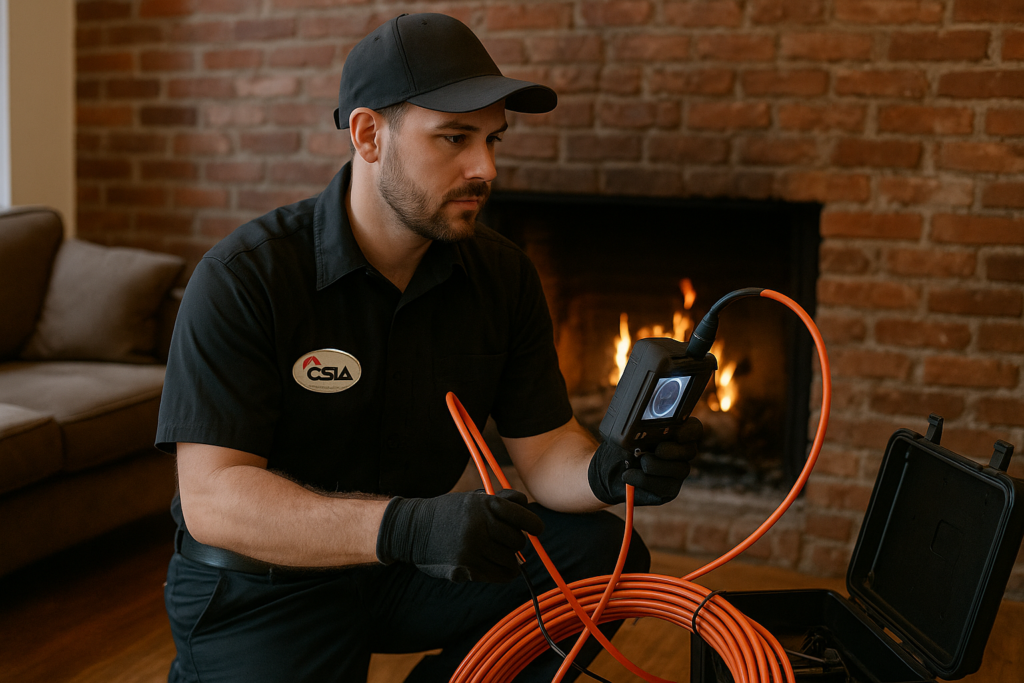
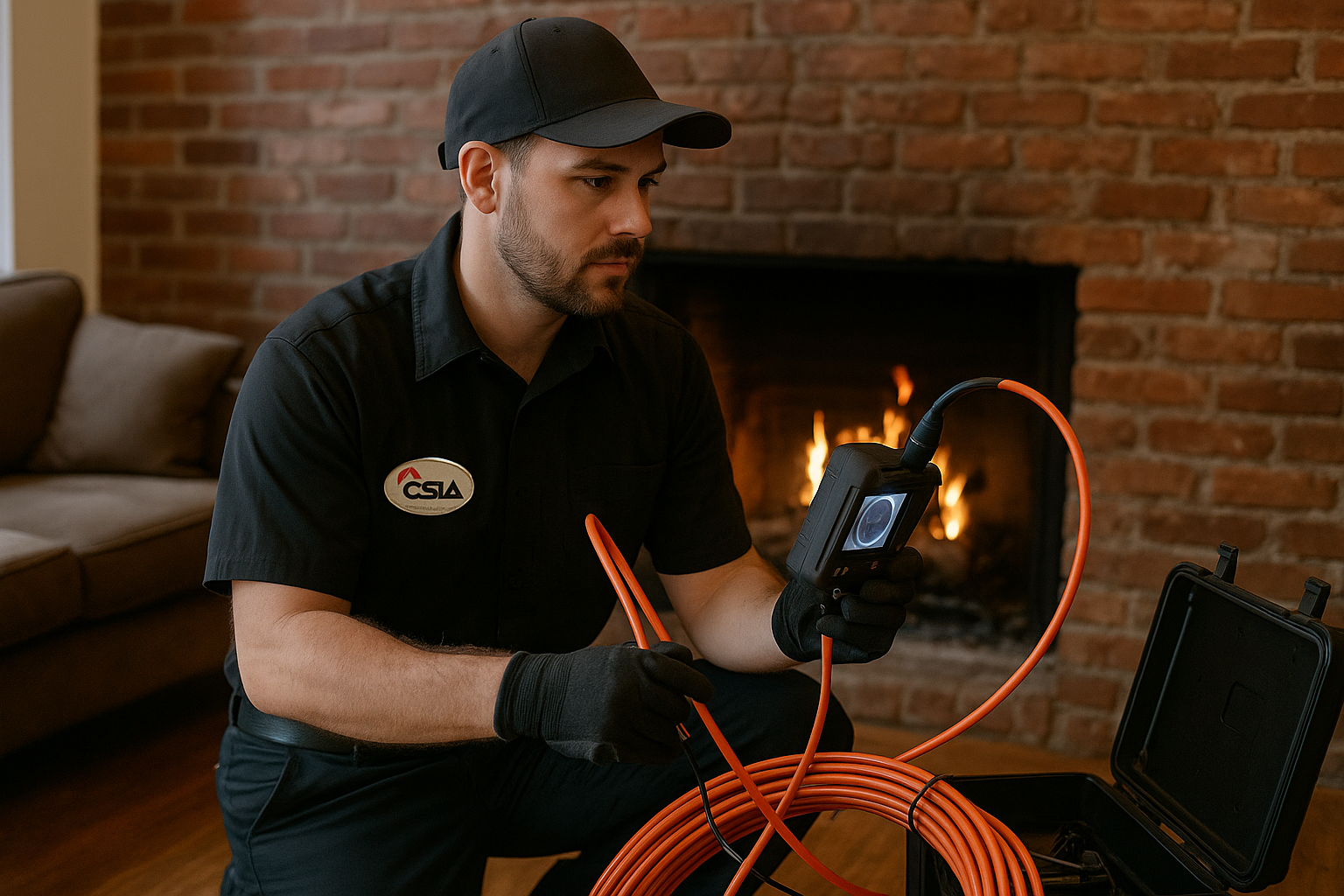
This one persists because a flashlight-and-mirror inspection looks thorough if you have never seen a camera inspection. Standing at the firebox and shining a light up gives you a view of perhaps the bottom third of the flue. A camera mounted on a flexible rod gives you a full, documented visual of the entire liner, from the firebox to the cap. Cracks in the upper sections, deteriorated mortar crowns, blockages from animal nesting, and collapsed liner segments are all things we have caught on camera that were invisible from below.
The U.S. Fire Administration reports that heating fires account for approximately 15% of all residential structure fires in the United States, with chimney-related failures being a leading cause. A visual-only pass leaves the primary failure points unexamined. For any Manhattan homeowner who has not had a camera inspection in the past few years or ever we consider that the starting point, not an upgrade.
Waiting Until Fall to Think About Chimney Service
Every September we are flooded with calls from residents across the city from the Financial District to Fort Washington who want to be ready for the first cold week and suddenly realize they have not scheduled service. The result is a backlog that pushes appointments into October and November, sometimes past the first frost. Booking in late spring or summer means earlier appointment windows, more scheduling flexibility, and enough time to address any repairs before you need the fireplace running.
Beyond scheduling convenience, summer inspections also catch issues that develop over the heating season cracks from thermal stress, cap damage from winter ice, or mortar that finally gave way. Addressing these in June costs less and takes less time than emergency repairs in November when everyone is calling at once.
Frequently Asked Questions
How do I know if the chimney company I am hiring is actually qualified to work in a Manhattan co-op or condo?
Ask whether the company employs CSIA-certified chimney sweeps and whether they carry current New York State liability insurance and workers’ compensation coverage. In a co-op or condo building, your building management will typically require proof of insurance before anyone comes through. A qualified company will have this documentation ready without you having to ask twice. Also ask whether they provide a written inspection report after the visit that documentation protects you, the building, and the company.
What is the difference between a Level I and Level II chimney inspection, and which one do I need?
A Level I inspection is appropriate when your chimney is in the same condition as the previous year same appliance, same fuel, no changes to the structure. It covers accessible portions of the exterior and interior and the firebox. A Level II inspection involves a camera scan of the full flue interior and is required any time there has been a change of ownership, a change in the heating appliance or fuel type, or after any event like a chimney fire, earthquake, or lightning strike. For any Manhattan homeowner who has never had a camera inspection done, a Level II is where we start particularly in older buildings where the liner history is unknown.
How often should Manhattan residents have their chimneys cleaned if they only use the fireplace a few times a year?
The NFPA standard is at least once per year regardless of use frequency and this applies in New York City under the local fire code for multi-family dwellings. Even occasional use generates creosote, and a chimney that sits unused collects debris, moisture damage, and sometimes animal nesting material. Annual inspection ensures the flue is structurally sound and clear before each season. If you use the fireplace more than two or three times a week during cold months, cleaning frequency should increase accordingly. Our technicians assess the buildup level during inspection and give you a straightforward recommendation based on what we actually find.
Schedule Your Manhattan Chimney Inspection
Don’t wait until the fall rush or until a chimney problem becomes an emergency. If your fireplace has not been inspected recently, a professional evaluation can help identify hidden liner damage, creosote buildup, blockages, or other issues before you use the system again.
Chimney Manhattan serves homeowners, co-op residents, and condo owners throughout Manhattan, from Inwood to the Financial District. Contact our team to schedule your chimney inspection and receive a clear written report of what we find. If repairs are needed, we’ll explain the options without pressure or unnecessary recommendations.
Call Chimney Manhattan today or use our contact form to schedule your 2026 chimney inspection.
Related from Chimney Manhattan: Professional Chimney Cleaning Services in Manhattan, NYC · Chimney Repair NYC — Expert Masonry & Structural Repairs in Manhat · Chimney Draft Problems Apartment