
Chimney Flashing Repair NYC — Stop Leaks Before They Wreck Your Home
Chimney flashing repair NYC is the process of restoring or replacing the metal seals where your chimney meets your roof the single most common entry point for water damage in Manhattan buildings. When that flashing cracks, separates, or corrodes, rainwater silently infiltrates your walls, attic, and ceilings, often going undetected until the repair bill is thousands of dollars larger than it needed to be. If you’ve noticed water stains near your fireplace, peeling paint on adjacent walls, or a damp smell after a rainstorm, failed flashing is almost always the culprit.
At Chimney Manhattan, we specialize exclusively in chimney work throughout Manhattan from pre-war co-ops on the Upper West Side to brownstones in Harlem and high-rise condos in Midtown. We understand the specific roofing configurations, older masonry substrates, and building-access challenges that are unique to New York City construction. Our licensed technicians don’t subcontract. When you call us, the crew that shows up knows Manhattan chimneys.
What Is Chimney Flashing and Why Does It Fail?
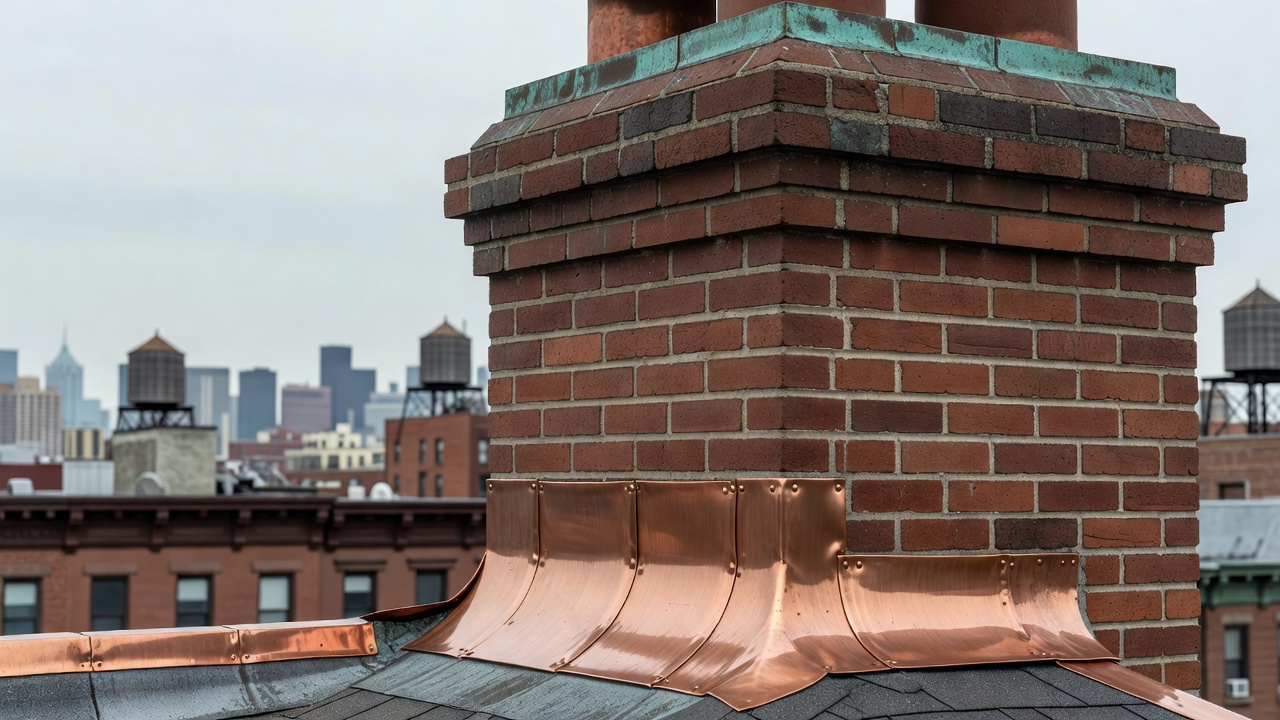
Chimney flashing is a two-part metal system typically galvanized steel, aluminum, or copper installed at the junction of your chimney and roof. It consists of base flashing (laid against the chimney’s base) and counterflashing (embedded into the mortar joints of the chimney itself). Together, they form a watertight barrier that flexes slightly as your building expands and contracts through New York’s extreme seasonal temperature swings.
Manhattan’s weather is punishing on flashing. Freeze-thaw cycles from December through March repeatedly expand and contract the metal and surrounding masonry. Decades-old mortar in pre-war buildings crumbles, letting counterflashing pull free. Rooftop tar or caulk patches common quick fixes dry out, crack, and fail within a season or two. Even high-quality original flashing has a service life of 25–30 years; many Manhattan chimneys are working with flashing that is well past that mark.
Who Needs Chimney Flashing Repair in NYC?
- Homeowners and co-op owners seeing water stains on ceilings or walls near the fireplace
- Building managers dealing with recurring roof-level leaks in top-floor units
- Brownstone owners in Harlem, the Upper West Side, or the West Village with aging masonry
- Anyone who has received a Level II chimney inspection flagging flashing deficiencies
- Buyers or sellers completing a real-estate transaction requiring a chimney inspection report
- Buildings where a roofer has already patched the flashing with tar or caulk — a temporary fix that needs a permanent solution
Our Chimney Flashing Repair NYC Process
We follow a structured, no-guesswork approach. Every job starts with a proper diagnosis, because replacing flashing over an unexamined substrate is just setting up the next failure.
Step 1 — Roof and Masonry Assessment
Our technician inspects the full chimney-to-roof interface: the condition of existing flashing metal, the integrity of the mortar joints where counterflashing is embedded, the roof deck around the base, and any signs of active moisture intrusion inside the chimney chase or attic space. We photograph everything and walk you through what we find — no jargon, no pressure.
Step 2 — Material Selection
We recommend the right metal for your building and budget. Copper is the premium choice for pre-war masonry — it conforms well, lasts 50+ years, and is the material of choice for historic brownstones. Lead-coated copper offers similar longevity with added UV resistance. Galvanized steel is a cost-effective option for newer construction. We never use aluminum on chimney masonry because it reacts adversely with the alkaline compounds in NYC mortar mixes over time.
Step 3 — Removal and Surface Preparation
We remove all old flashing and any tar, caulk, or foam patches. Mortar joints are raked out to a clean, stable depth — typically 1 inch before new counterflashing is installed. A clean substrate is non-negotiable for a repair that will actually last.
Step 4 — Installation
Base flashing is fitted and secured to the roof deck. Counter-flashing is cut, bent, and embedded into fresh mortar joints, then pointed with a flexible, weather-grade sealant rated for Manhattan’s temperature range (-20°F to 105°F). We use step flashing on sloped roofs and saddle (cricket) flashing behind chimneys wider than 30 inches to redirect water away from the back of the chimney a detail often skipped by general roofers that causes chronic rear-flashing leaks.
Step 5 — Final Inspection and Documentation
We perform a water-spray test at the completed repair, inspect the interior of the chimney for any moisture now visible, and provide you with before-and-after photographs plus a written report. If you’re building or board requires documentation of the completed work, we’ve got you covered.
What’s Included in Our Chimney Flashing Repair NYC Service
- Full pre-repair inspection of flashing, masonry, and surrounding roof surface
- Complete removal of failed flashing and all temporary patches
- Mortar joint preparation for counter-flashing re-embedding
- Installation of new base flashing and counterflashing in the material you select
- Saddle/cricket flashing where required by chimney width
- High-performance flexible sealant application at all transitions
- Post-installation water test
- Written report with photographs useful for co-op boards, building managers, and insurance claims
- Warranty on workmanship
Why Manhattan Buildings Need a Chimney Specialist — Not a General Roofer
General roofing contractors are excellent at what they do, but chimney flashing at the masonry interface requires a different skill set. The counterflashing must be correctly embedded into mortar joints if those joints are deteriorating (extremely common in Manhattan’s 80-to-120-year-old brownstones and pre-war apartment buildings), you need someone who understands masonry repair alongside the flashing work. A roofer who simply caulks over old flashing into crumbling mortar is giving you a fix that will fail in 12 to 18 months.
Chimney Manhattan holds the required New York City licensing for chimney work and carries full liability insurance. We work within DOB guidelines and are familiar with the access requirements for scaffolding and roof permits that Manhattan buildings often require. We’ve worked on buildings managed by some of the largest co-op boards in the city, and we understand how to coordinate access with building supers, property managers, and board approval processes.
Local Trust Signals
- Manhattan-only focus: We don’t stretch across five boroughs. Every job we take is in Manhattan, which means our technicians know this borough’s building stock, rooftop access challenges, and permit requirements cold.
- Licensed and insured in New York City: Fully compliant with NYC Department of Buildings requirements for chimney and masonry work.
- No-subcontract guarantee: The technicians who quote your job are the same crew that does the work.
- Experience with pre-war masonry: Manhattan is full of buildings constructed between 1880 and 1940. We understand how lime-mortar joints, soft historic brick, and vintage flashing materials interact — and how to repair them without causing new damage.
- Transparent, itemized quotes: You receive a written estimate broken down by material and labor before any work begins. No surprises on the invoice.
Frequently Asked Questions About Chimney Flashing Repair NYC
How do I know if my chimney flashing is causing my roof leak, or if it’s the roof itself?
The most reliable indicator is the location of the water intrusion. If water stains appear on ceilings or walls directly adjacent to or below the chimney especially after rain rather than snowmelt flashing is the primary suspect. A general roof leak will typically show up at low points away from the chimney. Our inspection will determine the exact source before any repair work is recommended, so you’re never paying for the wrong fix.
Can chimney flashing be repaired, or does it always need to be fully replaced?
It depends on the extent of the damage and the age of the existing flashing. If the metal itself is in sound condition but counterflashing has separated from deteriorating mortar joints, re-embedding and repointing may be sufficient. If the metal has significant rust, holes, or has been compromised by multiple layers of caulk and tar patches, full replacement is the more cost-effective long-term solution. We’ll give you an honest recommendation either way — we’re not going to push a full replacement when a targeted repair will hold.
How long does chimney flashing repair take, and will I need a DOB permit?
A standard flashing repair on a Manhattan brownstone or low-rise building typically takes one full workday. For larger buildings or more extensive masonry work, it may extend to two days. As for permits: routine flashing repair and repointing generally falls within maintenance work that does not require a DOB permit in New York City, but this depends on the scope and building classification. If a permit is required for your specific project, we will handle the filing and keep you informed throughout the process.
Get a Straight Answer and a Fair Quote Today
Water damage doesn’t pause while you’re waiting for estimates. If you have any reason to believe your chimney flashing is failing water stains, visible gaps, peeling mortar, or a recent inspection report flagging the flashing the right move is a professional evaluation now, before the next rainstorm compounds the problem.
Chimney Manhattan provides chimney flashing repair NYC homeowners, building managers, and co-op boards can rely on. We serve all of Manhattan, from Battery Park to Inwood. Contact us today for a no-obligation inspection and written estimate. We’ll tell you exactly what’s happening with your flashing, what it will cost to fix, and how long the repair will last no upselling, no runaround.
Call us or fill out our contact form to schedule your chimney flashing inspection. We typically respond within one business day and can often schedule assessments within the same week.
Related from Chimney Manhattan: Professional Chimney Cleaning Services in Manhattan, NYC · Chimney Draft Problems Apartment